
Surface Sizing Agent Supplier Audit: Capability Checks and Delivery Assurance
A surface sizing agent supplier audit answers three questions that no datasheet can settle on its own: can this supplier hold a declared specification inside its stated tolerance, can it prove that every batch did so, and can it place the contracted volume on the water when the mill needs it. For a buyer moving from evaluation into execution, the audit is the step that converts a sample that performed on the size press into a delivery schedule the paper machine can plan around.
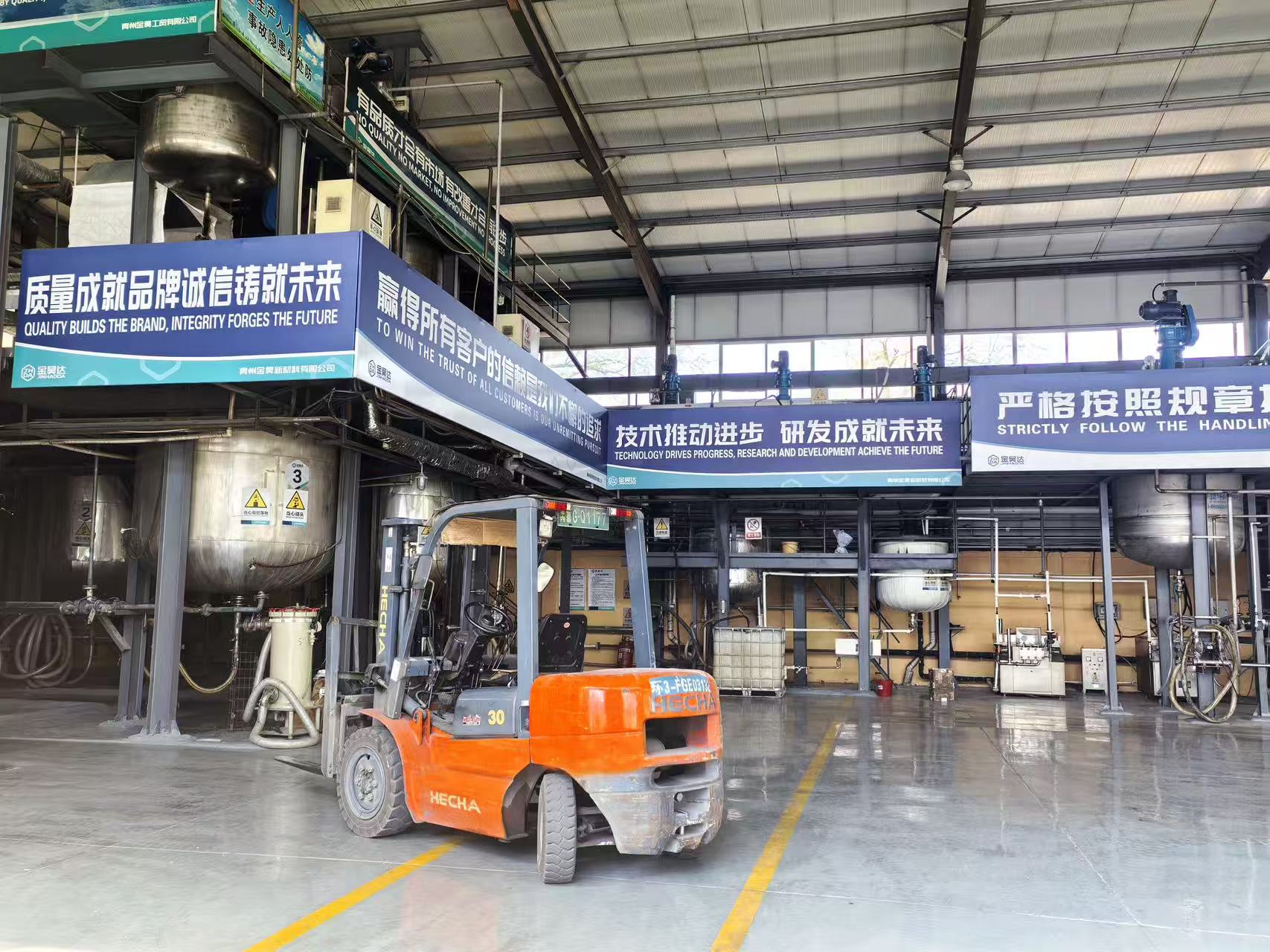
Qingzhou Jinhao New Material Co., Ltd., branded JHDA, is a papermaking chemicals manufacturer founded in 2005 and located in Mihe Industrial Park, Qingzhou City, Shandong Province, China. Its surface sizing range — including JH-600 moisture-resistant SAE surface sizing agent and JH-325 anionic surface sizing agent — is used here as a worked example, because both products carry published targets for solids, pH or viscosity that a buyer can test against rather than merely accept.
What a Surface Sizing Agent Supplier Audit Must Establish
An audit is not a factory visit and not a certificate collection. It is a structured verification that produces four outputs a procurement team can act on: a specification confirmed against real batch data, a document pack that will survive customs and a customer complaint, a written delivery commitment, and a defined release rule that tells the warehouse when to accept a container and when to hold it.
Three layers have to be separated, because suppliers often present them as one. Capability is whether the plant can produce the chemistry at all — production lines, reaction control, laboratory support and customization options. Consistency is whether batch 40 matches batch 4 within the stated window. Continuity is whether the committed volume arrives on the committed date with the committed paperwork. A supplier can pass the first and fail the second or third, which is precisely why the audit needs evidence from the past, not promises about the future.
For a sizing agent specifically, the audit has to be product-specific. Surface sizing agents are applied at the size press at relatively low add-on, so the audit questions differ from those asked of a wet-end strength resin: film formation, pick-up control and interaction with the starch or pigment recipe matter as much as the drum price.
Why Specification Drift, Not Price, Decides the Audit Outcome
Three declared parameters drive most of the practical risk in a surface sizing agent, and each one fails in a different way.
- Solids content determines how much active material lands on the sheet per unit of prepared size. A product declared at 30 ± 1% and one drifting to 28% deliver different add-on at the same metering setting, and the mill usually notices only as a Cobb or printability complaint several days later.
- pH signals the stability window of the emulsion or dispersion and its compatibility with the wet-end chemistry it will meet in the broke loop. A product declared at pH 2.0–5.0 is telling the buyer which side of the machine chemistry it is designed to sit on.
- Viscosity governs transfer at the size press and film uniformity. A viscosity ceiling such as <50 cps at 25 °C is only meaningful if the test method — temperature, spindle, rotation and measurement time — is also stated, because viscosity numbers measured under different methods are not comparable.
That is the core audit logic: a tolerance is a manufacturing release window, not automatically a shipping guarantee. The buyer's job is to establish whether the supplier reports actual measured values on each certificate of analysis or only the word "conforms". A certificate that repeats the specification is a formatting exercise; a certificate that shows the measured value inside the window is evidence.
Where Surface Sizing Sits in the Current Supply Picture
Surface sizing is a mature, moderately concentrated segment. Global Market Insights valued the overall sizing agents market at USD 2.98 billion in 2025, progressing to USD 3.1 billion in 2026, while Fact.MR placed the alkyl ketene dimer segment at USD 860 million in 2026 with standard AKD emulsions accounting for 54% of grade share. The same market research places the top five players at 48% collective share, with Kemira at 12%.
Two practical conclusions follow for a mill running an audit. First, a large share of supply comes from regional and mid-tier manufacturers rather than the top five, so the buyer's verification capability — not the supplier's brand recognition — is what actually controls risk. Second, surface sizing is normally dual-sourced, and the audit of the second source is where most mills carry hidden exposure: the first supplier was qualified years ago under conditions nobody documented.
Customs classification is a small but frequently missed audit item. Paper sizing agents excluding starch-based products sit under HS code 3809.92, and the classification on the commercial invoice should match the certificate of origin and the destination tariff line before the booking is made, not after the container is held at port.
The supply-chain consolidation trend adds a third consideration. A product positioned to replace separate AKD emulsion and SAE sizing agent purchases — JHDA lists JH-WH3364, a surface enhanced water-resistant agent, for exactly this role — reduces the number of tanks, certificates, shipments and suppliers a mill manages. It also concentrates risk: one product failure then affects two performance functions at once, so the equivalence evidence has to be audited before the consolidation, not after.
Reading Declared Specifications as Audit Criteria
The audit begins by turning each published value into a testable criterion. The table below shows how three JHDA surface sizing grades translate from a product listing into specific audit requests; the last column is the part most buyers skip.
| Product | Category as listed | Supplied specification points | What the audit must extract |
|---|---|---|---|
| JH-600 | Moisture-resistant SAE surface sizing agent | Solids 30 ± 1%; pH 2.0–5.0; viscosity <50 cps at 25 °C | Ten-batch trend for solids, pH and viscosity; the written method behind the viscosity figure (temperature, spindle, rotation, measurement time); whether the quoted window is a release window or a shipping guarantee |
| JH-325 | Anionic surface sizing agent | Solids 25.0 ± 1.0% | Solids trend across consecutive batches; a written statement of ionic character for the mill's wet-end chemistry; confirmation that dilution or storage does not shift the solids basis |
| JH-611 | Styrene-acrylic surface sizing agent | No numeric values in the public product listing reviewed | A current TDS with the complete specification set before any contract discussion; a grade without a numeric spec cannot be accepted on a certificate |
| JH-WH3364 | Surface enhanced water-resistant agent | Positioned to replace separate AKD emulsion and SAE sizing agent purchases | An equivalence test plan against the two-product system it replaces, run on the mill's own furnish and drying conditions, before the second tank is taken offline |

The Seven-Stage Audit Protocol
The sequence matters, because each stage either produces evidence for the next one or stops the process cheaply.
- Fix the acceptance specification before the RFQ. Write the solids, pH, viscosity and ionic requirements, the test methods, the sampling point and the tolerance action. A specification written after the quotation arrives is a negotiation, not an audit criterion.
- Request the document pack. TDS and MSDS with revision dates, a certificate of analysis series, management-system certificates, and any market-specific compliance documentation the destination requires.
- Desk-audit the numbers. Plot the certificate values. A supplier whose actuals cluster at the edge of the window is telling you something different from one whose actuals sit in the middle — and neither should be inferred from a single certificate.
- Verify on sample. Test the delivered sample at the mill laboratory against the same methods used in the acceptance clause. Where the mill cannot replicate a method, agree in writing which laboratory result governs.
- Verify production. Either visit the plant or audit remotely against production records. JHDA states that factory audit visits are supported for distributors and end paper manufacturers, which allows the scope — lines, laboratory, inspection point and warehouse — to be examined directly.
- Contract the commercial layer. MOQ, Incoterm, payment terms, acceptance test and lead time all go into the purchase agreement in the same round, so that delivery assurance is contractual rather than conversational.
- Set the release rule and the re-audit cadence. Define who signs off a container, what triggers a hold, and how often the documentation set is refreshed — annual for certificates and specifications, per shipment for certificates of analysis.
Capability Checks: Documentation, Storage and Customization
Batch documentation and traceability
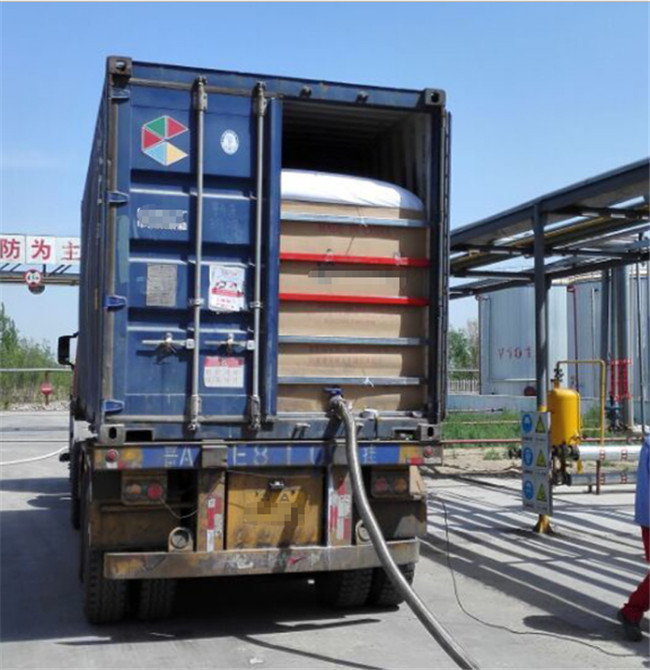
JHDA states that typical quality assurance tests cover particle size, appearance, solids, pH, viscosity and functional tests, and that specific QC procedures and reports can be provided per order. The audit question is not whether those tests exist but whether the paperwork links them: a batch number on the certificate should map to the same batch number on the drum or flexitank label, on the packing list and on the pre-shipment inspection report. If any of those four documents breaks the chain, a later complaint cannot be traced to a production record.
Storage stability
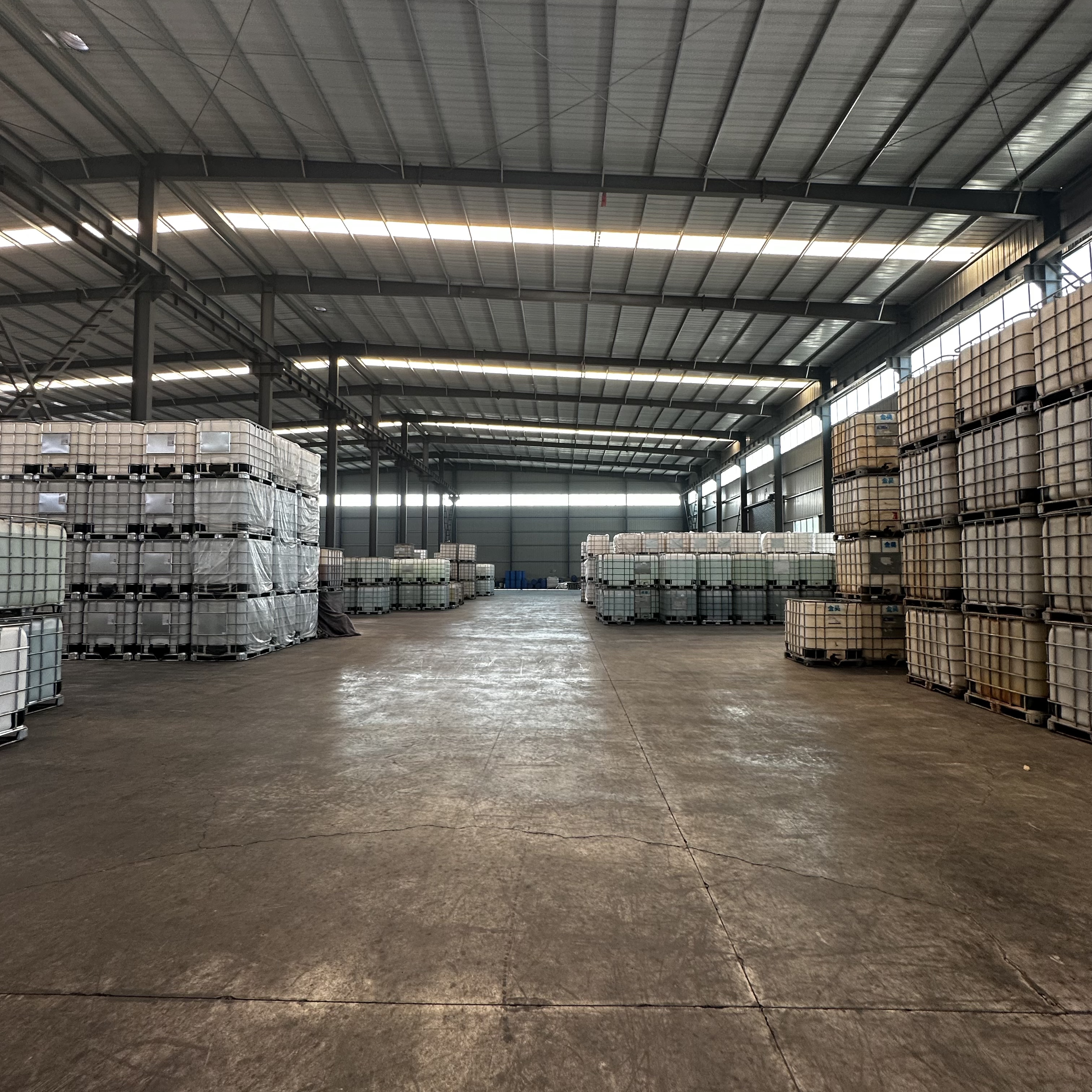
Storage stability is the audit item most often handled with a verbal reassurance. Ask for a written statement covering the recommended storage temperature band, the stated shelf life from the date of manufacture, freeze or high-temperature sensitivity, and what the supplier will do if a container arrives outside that band. Then walk the mill warehouse and confirm the stated band is physically available — a supplier specification of controlled storage is worthless in a yard that exceeds it in summer.
Customization and OEM capability
Customization is where capability claims most often outrun documentation. JHDA offers formulation customization, OEM and label production, and specification and packaging customization, with specific options confirmed with sales, and states that OEM, ODM and customizable production services are available. For an audit, the decisive question is version control: when a formulation or label is customized, which document number defines the approved version, who signs it, and how does the warehouse reject a shipment produced against the previous version. A private-label buyer who cannot answer that question is carrying the brand risk of the supplier's document control.
Delivery Assurance: Verifying the Date, Not the Promise
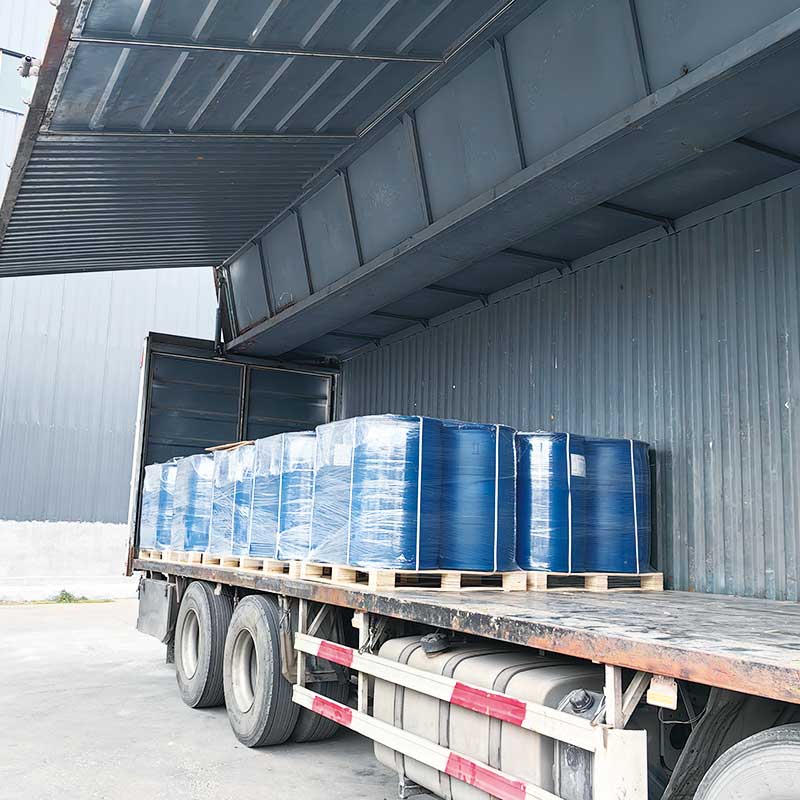
JHDA states a production time of four working days, a monthly capacity of 8,000 MT, an MOQ of 1 MT and a company-wide annual output of 100,000 tons. Each of those numbers is useful in an audit only when it is read with its boundary attached.
- Production time is not transit time. Four working days describes plant time; it excludes booking, inspection, inland haulage, port handling and ocean transit. A delivery assurance clause written against the production figure alone will be breached by logistics, not by the supplier.
- Capacity has to be compared with the order, not admired. A monthly capacity of 8,000 MT is meaningful to a mill taking 200 MT per month only when it is clear how much of that capacity is already committed. Ask what share of the monthly output the buyer's volume represents and what happens during peak season.
- Regional inventory shortens the chain. JHDA states an overseas supporting production entity, CRM Chemical Technology Co., Ltd., in Long An Province, Vietnam, established to serve ASEAN customers locally and shorten delivery cycles. For buyers in that region, the audit should establish which grades are actually held or produced there and which are still shipped from China.
- Export documentation gates the release. The stated export document service covers commercial invoice, packing list, certificate of origin, pre-shipment inspection report, MSDS, TDS and dangerous goods transport certification where the classification requires it. A missing certificate of origin or an outdated MSDS revision is a delivery failure even when the container arrives on time.
Purchasing Terms and Acceptance Criteria
The commercial layer is short, and it is where most audits quietly lose their value. The terms supplied for this review are MOQ 1 MT, delivery terms FOB or CIF, acceptance criteria defined as a pre-shipment test, and payment terms T/T or L/C, with sight L/C, T/T and DP available for large-volume orders. Two of those need translation before signature.
"Pre-shipment test" is an acceptance criterion only when four details are fixed: which parameters are tested, which laboratory performs the test, what result triggers rejection, and who pays for the re-test and the return if the result falls outside the window. Without those four, the clause is a description of an activity rather than a condition of acceptance.
Payment terms interact with delivery assurance. Under a sight L/C the document set becomes a payment instrument, so an MSDS revision date or a certificate of origin error creates a financial event, not just an administrative one. Buyers using T/T or DP should build the pre-shipment inspection report into the release step so that the same document that satisfies the bank also satisfies the mill.
Audit Scenarios: Three Buyer Situations That Change the Checklist
Scenario 1 — A packaging board mill adding a second surface sizing source
When a mill qualifies a second supplier for a moisture-resistant SAE grade such as JH-600, the audit emphasis shifts to side-by-side evidence: the same furnish, the same size press settings and the same Cobb measurement, run against the incumbent product. The specification check is necessary but not sufficient, because two products can both sit inside 30 ± 1% solids and still behave differently in the starch recipe. The JHDA-verified sourcing materials describe free trial samples and a pilot laboratory open to customers for formulation testing, which is the appropriate place to run that comparison before the tank is switched.
Scenario 2 — A mill reducing the number of sizing suppliers
A mill consolidating from separate AKD emulsion and SAE purchases into one water-resistant product is trading supplier complexity for concentration risk. The audit then has to answer a question the supplier cannot answer alone: what happens to the sheet if the consolidated product is delayed by two weeks? The answer belongs in the contract — a stated buffer, a dual-qualified fallback grade, or a safety stock agreed with the buyer's own warehouse. JHDA's stated position is that JH-WH3364 can replace separate AKD emulsion and SAE sizing agent purchases to simplify supply chains; the audit converts that claim into an equivalence test plus a continuity plan.
Scenario 3 — A distributor buying under its own label
For an OEM label buyer, the audit focus moves to document control and label approval. The grade specification stays the same, but the buyer now carries the compliance exposure, so TDS and MSDS must be issued under the correct identity, the label artwork must be version-controlled, and the pre-shipment inspection report must reference the buyer's own order number. JHDA states exports across Asia, Africa and South America, and its portfolio breadth is broad enough that a distributor may consolidate several product lines with one supplier — which raises, not lowers, the standard for version control.
Summary Comparison: Audit Dimensions, Evidence and Pass Conditions
The table below is the audit reduced to a working checklist. Each row pairs a dimension with the evidence that proves it and the condition that makes it a pass rather than a promise.
| Audit dimension | Evidence to request | Pass condition |
|---|---|---|
| Specification control | Certificate of analysis series for consecutive batches of the exact quoted grade | Measured values reported inside the declared window, not the word "conforms" |
| Test method clarity | Written method for solids, pH and viscosity, including temperature and instrument settings | Mill laboratory can reproduce the result within an agreed repeatability |
| Batch traceability | Batch number linking certificate, packaging label, packing list and inspection report | All four documents carry the same identifier for the sampled unit |
| Document pack | TDS, MSDS with revision dates, pre-shipment inspection report, certificate of origin, dangerous goods documentation where applicable | Complete and current before booking; HS classification consistent across invoice and origin |
| Certification status | ISO 9001 and ISO 14001 certificates with issue and expiry dates; HALAL certificate where the market requires it | Certificate in force on the shipment date, not the date of the supplier's brochure |
| Storage stability | Written storage temperature band, shelf life from manufacture date, out-of-band handling policy | Stated conditions physically available in the buyer's warehouse |
| Capacity and lead time | Monthly capacity statement, production lead time, committed share of output | Committed volume sits inside capacity with headroom; transit excluded from the production figure |
| Customization control | Version-controlled specification sheet and label artwork approval record | Only the approved version ships; label matches the buyer's registration |
| Commercial terms | MOQ, Incoterm, payment terms, acceptance test clause | Pre-shipment test named as the acceptance trigger with parameters and rejection action |
Frequently Asked Questions
Which documents should a surface sizing agent supplier provide before a shipment is released?
At minimum: a TDS and MSDS with revision dates, a certificate of analysis for the specific batch, a pre-shipment inspection report when the contract names pre-shipment testing as the acceptance criterion, a commercial invoice, packing list and certificate of origin, and dangerous goods transport documentation where the product classification requires it. Compliance evidence sits alongside: JHDA holds ISO 9001:2015 certificate 10423Q01592R1S and ISO 14001:2015 certificate 10423E01032R2S, both issued 16 August 2023 with a stated expiry of 18 August 2026 — so an audit conducted after that date must request the renewed certificates rather than accept the previous PDF. HALAL certificate 6637250000, issued by Shandong Halal Certification Service and valid from 29 August 2025 to 28 August 2028, covers paper-making industry additives for Indonesia and other Halal-compliant markets. Food-contact suitability is a separate question that must be confirmed against the destination market's own rules, not inferred from the words "food grade".
How can a mill confirm that JH-600 or JH-325 specifications are held batch after batch?
Request the certificate of analysis series for ten consecutive batches of the exact grade being quoted and plot the measured values against the declared window — 30 ± 1% solids, pH 2.0–5.0 and viscosity below 50 cps at 25 °C for JH-600, and 25.0 ± 1.0% solids for JH-325. Then confirm which tests are run on every batch. JHDA states that typical quality assurance tests include particle size, appearance, solids, pH, viscosity and functional tests, and that specific QC procedures and reports can be provided per order, so the buyer can specify the exact test list and reporting format in the purchase agreement instead of accepting a generic certificate.
What purchasing terms and acceptance criteria normally apply to a sizing agent order?
The terms supplied for this review are an MOQ of 1 MT, delivery terms of FOB or CIF, acceptance criteria based on a pre-shipment test, and payment by T/T or L/C, with sight L/C, T/T and DP available for large-volume orders. The acceptance criterion should be rewritten before signature to name the tested parameters, the testing laboratory, the failing result and the remedy, because "pre-shipment test" alone describes an activity rather than a condition of acceptance.
Can a mill validate performance before committing to bulk volume?
Yes. JHDA states an MOQ of 1 MT with free trial samples, and its in-house pilot laboratory supports formulation customization and free sample trials, with on-site technical tuning available for paper mills. The practical sequence is to test the delivered sample at the mill laboratory against the same methods written into the acceptance clause, then run a machine trial on the actual furnish and drying conditions. For a consolidation decision such as replacing separate AKD emulsion and SAE purchases with JH-WH3364, the equivalence test should be run before the redundant tank is taken out of service.
How is delivery reliability verified rather than accepted as a promise?
Ask for evidence rather than assurances: the certificate of analysis series already proves production rhythm, and loading records for the audit period show dispatch frequency. JHDA states a production time of four working days, a monthly capacity of 8,000 MT and an overseas supporting production entity, CRM Chemical Technology Co., Ltd., in Long An Province, Vietnam for ASEAN delivery. Convert those into contract terms — a committed production window, a named shipping document set, and a loading deadline — and keep transit time outside the production figure so the schedule stays realistic. Buyers who want to run the document side of this audit can work from the published TDS and MSDS set and the JHDA company profile brochure, then request sample quantities for laboratory verification.
Conclusion
A surface sizing agent audit is decided by the paperwork and the production record, not by the meeting. The specification sets the criterion, the certificate of analysis series supplies the evidence, the document pack protects the shipment, and the contract converts a supplier's stated production time and capacity into a commitment the mill can plan against.
Applied to a real quotation, that discipline turns four numbers into a decision: 30 ± 1% solids, pH 2.0–5.0 and viscosity below 50 cps at 25 °C for a moisture-resistant SAE grade; 25.0 ± 1.0% solids for an anionic surface size; a certificate series that shows actuals instead of adjectives; and a written delivery date that excludes transit and survives an L/C document check. Where a mill intends to simplify its supply chain by replacing separate AKD emulsion and SAE purchases with a single water-resistant product, the same framework applies with one addition — an equivalence test on the mill's own furnish, completed before the second tank goes cold.
Next step for buyers in evaluation: request the certificate of analysis series and current TDS for the specific JHDA grade under consideration, together with trial samples for mill-laboratory verification. Samples, formulation discussions and export quotations are handled by the JHDA international sales team at info@sdqzjinhao.com or WhatsApp +86 139 6468 8976.
Have Questions or Need More Details?
Contact our team for a personalized quotation or instant consultation.
Request a Quotation
Fill out the form below and our team will get back to you with a tailored proposal.
WhatsApp Direct Chat
Prefer to chat in real-time? Message us on WhatsApp for instant assistance & quick answers.
- Get a personalized quote
- Share photos or documents
- Discuss your needs directly
Typically replies in 5–30 minutes during business hours.