
Paper Strength Agent Supplier Evaluation: Verify Batch Specs and Delivery Assurance

Most paper strength agent supplier evaluations stop too early. The winning supplier's technical data sheet looks clean, a trial sample performs acceptably, and the purchase decision is signed. Six months later the mill discovers that a batch's solids content sat below the stated window, or that a promised four-day production lead time has quietly stretched to four weeks. The chemistry did not fail; the evaluation did.
This article sets out a supplier evaluation framework a paper mill can run from the Evaluation stage through to Execution. It covers three linked checks: verifying batch-level specification consistency across dry strength agents, wet strength agents, solid dry strength agents and strength retention emulsions; confirming compatibility with the sizing agents, optical brighteners and defoamers already on the wet end; and fixing purchasing terms and acceptance criteria so that delivery assurance becomes a contractual obligation rather than a sales promise.
A worked example makes the difference concrete. JH-1699's reported ≥95.0% active content and 12-month shelf life are the kind of values a buyer should confirm through per-batch certificates of analysis, retained samples and pre-shipment inspection — not accept from a TDS cover page. The same applies to JH-D726's 15.0/20.0 ±1.0% solids and JH-2219's 20.0 ±1.0% solids with a 6-month shelf life. Each is a testable claim, and each tells the buyer something about whether the supplier can repeat that claim in bulk.
Qingzhou Jinhao New Material Co., Ltd. (JHDA) is a papermaking chemicals manufacturer founded in 2005 in Qingzhou City, Shandong Province, China. Its portfolio includes dry strength agents, PAE wet strength resin, AKD and styrene-acrylic sizing agents, optical brighteners and defoamers. The specifications and commercial terms referenced in this article are evaluation targets for a mill's due diligence, not a substitute for that due diligence.
Why a TDS review is not a supplier approval
A technical data sheet describes what a supplier says a product can do. A batch record shows whether the plant actually hits that target every time. Those are different questions, and a paper machine only cares about the second one.
Strength agent performance sits on a narrow operating balance. Retention, sizing degree and the strength curve all shift when a wet-end chemical behaves differently from one delivery to the next. Three failure modes recur in mill evaluations:
- Form is assumed, not confirmed. A product name can cover liquid, solid and emulsion formats, and the critical specification differs by form. Solid products are usually defined by active content and storage stability; liquid products by solids content and viscosity; emulsions by stability and shelf life.
- Compatibility is asserted, not tested. A dry strength agent almost never runs alone. It shares the wet end with a sizing agent, an optical brightener and a defoamer, and the interaction between them is rarely printed on any of the four data sheets.
- Delivery is treated as logistics, not capability. A four-day production lead time means little unless it holds for twelve consecutive months across the documentation, packaging and shipping chain that supports it.
A supplier evaluation framework turns each of these into a measurable item: a specification with a test method, a compatibility trial with a written protocol, and a delivery commitment with a contract clause behind it.
Industry background: more suppliers, and a stronger case for verification
The commercial context explains why batch verification deserves more attention now than it did a decade ago. The global market for paper dry strength agents was estimated at USD 0.86 billion in 2024 and is projected to grow at a 3.63% CAGR from 2025 to 2035, reaching USD 1.273 billion by 2035 (Market Research Future, 2025–2035 forecast; source published 2026). Wet strength additives form a separate category valued at USD 2.39 billion in 2025 (Maximize Market Research, 2026). Both figures are third-party commercial research and are best read as scale indicators rather than precise market measurements.
Two implications matter for procurement teams.
First, a growing category attracts more suppliers, and a longer supplier list widens the gap between the best and weakest batch discipline on offer. The evaluation framework's job is to make that gap visible and comparable before a contract is signed.
Second, compliance pressure is tightening rather than easing. Germany's Federal Institute for Risk Assessment (BfR) reduced the allowable bisphenol A migration level for recycled paper from 0.05 mg/kg to 0.01 mg/kg, effective 1 October 2025, under Annex XXXVI. In the United States, 21 CFR 176.170 and 21 CFR Part 176 set conditions for paper and paperboard components in contact with aqueous and fatty foods, including provisions for certain resin chemistries. Neither framework certifies a named commercial product; both define what a product-level compliance file has to demonstrate.
For a food grade paper enhancer buyer, that distinction is the whole point. A generic "food grade" label is not evidence. Composition, intended use, applicable regulatory citation and migration or testing documentation are what a mill should request, batch by batch.
The framework below therefore separates three kinds of information. Performance statements are supplier-reported. Batch data, test methods and certificate numbers are verifiable evidence. Capacity and lead time are delivery commitments that belong in the contract.
Step 1: Audit product form and batch specification consistency
Each product family has a small set of specification points that reveal batch consistency. Auditing them means asking for the number, the test method and the batch history — in that order.
Liquid dry strength agents and wet strength resins
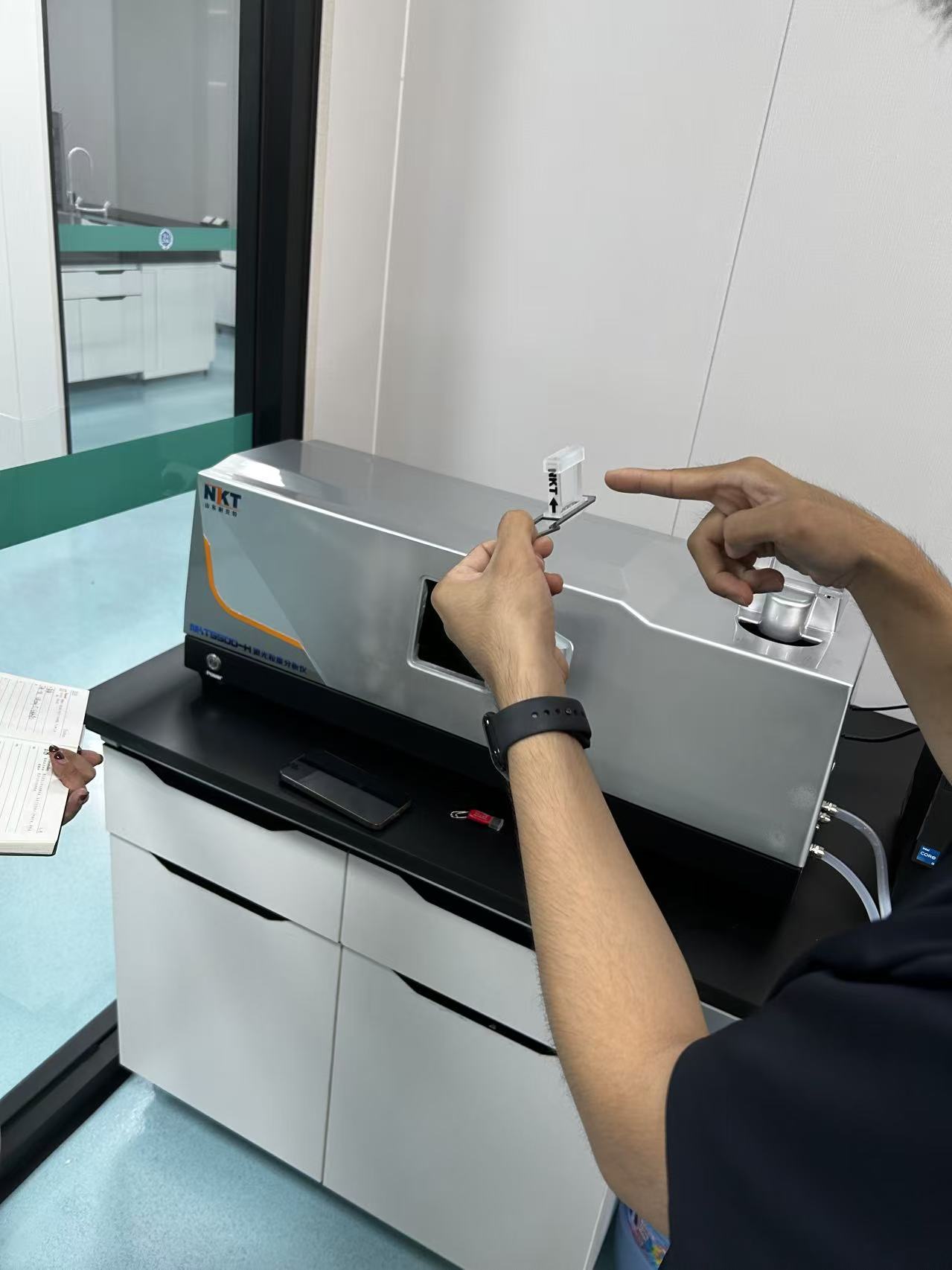
For liquid products, solids content, pH and viscosity carry most of the consistency signal. JH-1201, a cationic polyamide-epichlorohydrin wet strength resin, is a useful reference point. Its supplier-reported specification lists solid content 12.5% ± 0.5%, pH 3–5, and viscosity of no more than 300 mPa·s at 25°C. Those three values form a testable specification set: a batch that arrives below the solids floor, or with viscosity creeping toward the ceiling, will shift both wet strength performance and metering pump settings.
Confirming the numbers is only half the check. The test method has to match as well. Two laboratories measuring the same wet strength resin can differ by a few tenths of a percentage point on solids; inside a ±0.5% window, that difference can decide whether a delivery passes or fails. Before the first purchase order, the buyer's incoming inspection method and the supplier's certificate of analysis method should be aligned and written down.
Solid dry strength agents
Solid formats move the consistency burden from viscosity to active content and storage stability. JH-1699 illustrates the point: the supplier-reported figures are ≥95.0% active content and a 12-month shelf life. A mill that accepts "≥95.0%" without a tolerance and a test method is accepting a one-sided obligation. If a batch tests at 94.6%, the question of whether that passes should be settled in the contract, not in a warehouse argument.
Storage stability belongs in the acceptance criteria for the same reason. The shelf-life figure should be tied to a retained sample held under agreed conditions and re-tested at the end of the stated period, with the result recorded against the batch number.
Strength retention emulsions and other liquid formats
Emulsion and higher-solids liquid formats carry a solids window and, often, a shorter shelf life. JH-D726 reports 15.0/20.0 ±1.0% solids. JH-2219 reports 20.0 ±1.0% solids with a 6-month shelf life. The shorter the shelf life, the more delivery assurance matters: a product with six months of shelf life that spends ninety days in a warehouse has effectively become a three-month product.
Incoming inspection should therefore record the production date on arrival, and the purchase agreement should set a minimum remaining shelf life rather than a simple statement that the product "meets the shelf-life requirement".
CoA, retained samples and pre-shipment testing
Whatever the format, the verification method is the same: a certificate of analysis with every batch, a retained sample before shipment, and a documented right to independent re-testing. JHDA's stated quality-control routine includes particle size, appearance, solids content, pH, viscosity and functional tests, with specific QC procedures and reports available per order. That turns the CoA from a single sheet of paper into an agreed inspection chain.
Step 2: Confirm compatibility before production
Compatibility is the check most often skipped, because it usually appears in no data sheet at all. A dry strength agent enters a wet end where sizing agents, optical brighteners and defoamers are already present, and the interactions show up in three places.
- Charge interaction. A cationic strength agent meeting a strongly anionic component can form a complex, precipitate, or consume active chemistry before it reaches the fibre. The visible result is a higher dose requirement or a lower retention rate.
- pH and addition point. Sizing chemistry works inside a pH window. If the strength agent pushes the wet end out of that window, sizing degree falls even when the strength agent itself is performing as specified.
- Defoamer interaction. Some defoamer formulations destabilise an emulsion, causing micro-flocculation that appears later as spots or as a strength loss that no one traces back to the defoamer.
Compatibility is established by trial, not by assurance. A workable protocol runs in four stages:
- Collect the mill's actual sizing agent, optical brightener and defoamer, plus the candidate strength agent samples.
- Prepare mixtures at the field concentrations in the supplier's or an independent laboratory, and observe for precipitation, separation or abnormal viscosity.
- Run a bench trial on the mill's current furnish, with a control and a treated group identical except for the strength agent.
- Move to a machine trial, measuring ring crush, burst, tensile and retention with test methods agreed in writing beforehand.
There is a structural advantage worth noting here. When one supplier manufactures the sizing agent, the optical brightener, the defoamer and the strength agent, the combination testing can be organised inside a single laboratory instead of four separate sample requests. JHDA's portfolio covers AKD neutral sizing emulsion, styrene-acrylic surface sizing agents, optical brighteners, high-temperature defoamers and strength agents, and the company offers formulation customization. Portfolio breadth, however, does not make compatibility automatic; the trial still has to happen.
Step 3: Delivery assurance — the half of the evaluation that binds
Delivery assurance rests on four verifiable elements: capacity, minimum order and sampling, lead time and scheduling, and export documentation.

Capacity and scheduling
JHDA reports a monthly capacity of 8,000 MT and an annual output of 100,000 tons. In an evaluation, the purpose of this figure is to judge whether a large order can be scheduled inside the agreed window, not to compare scale with other plants.
The quoted production lead time is 4 work days. A buyer should confirm when that clock starts — on receipt of payment, or on confirmation of the purchase order — and whether it is maintained during peak season.
MOQ and sampling
The stated minimum order quantity is 1 MT, with free trial samples. A low MOQ reduces the cost of a machine trial: a mill can qualify a product on one line without committing warehouse space and capital to a full container. For a distributor building a private-label range, the same MOQ makes it practical to test several grades before committing to a stock position.
Warehousing and overseas support
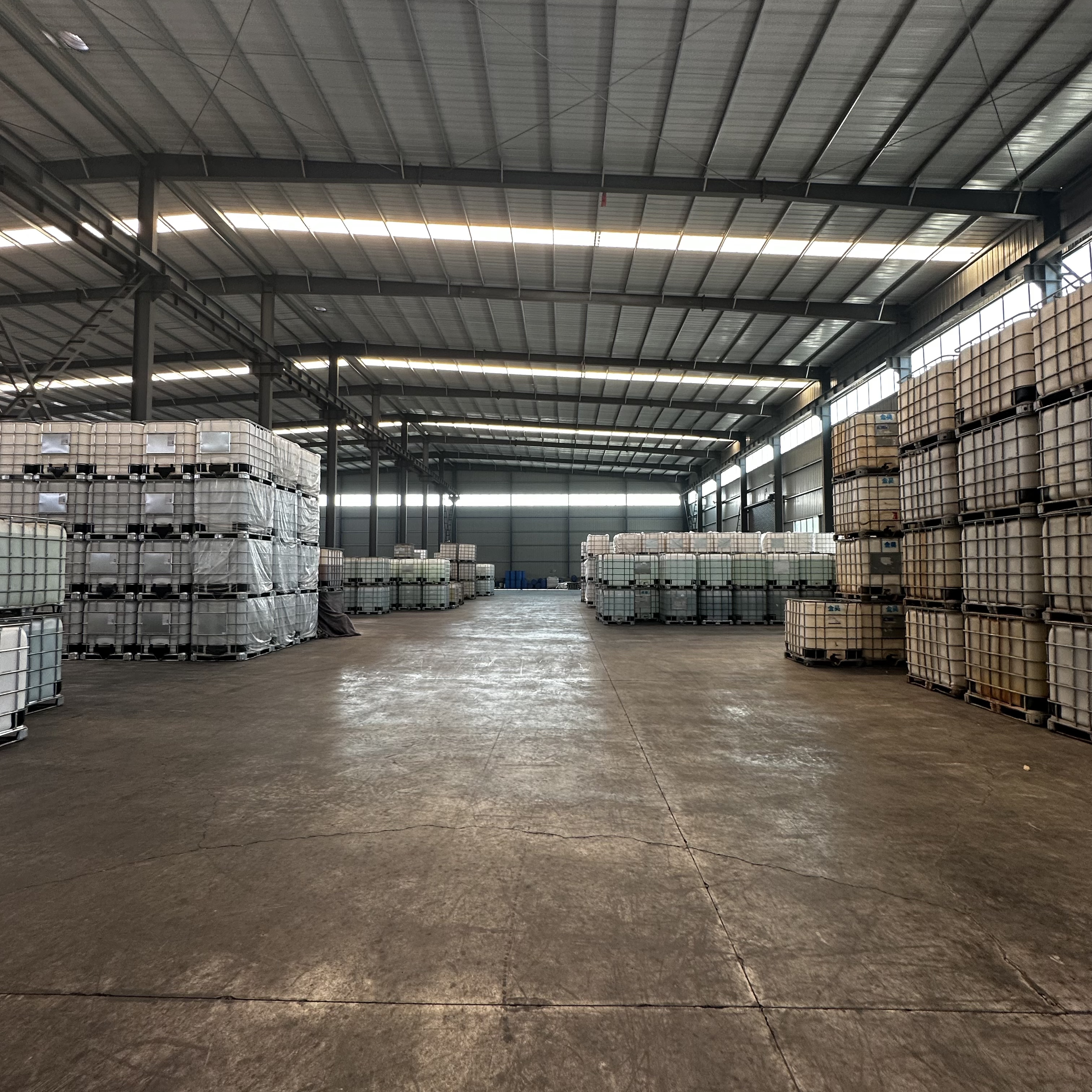
Delivery assurance also depends on where the material physically sits. JHDA operates an overseas supporting production entity, CRM Chemical Technology Co., Ltd., in Long An Province, Vietnam, established to serve ASEAN customers with local delivery and shorter delivery cycles. For Southeast Asian buyers, that can mean a shorter logistics and documentation route than a direct China shipment. The company's stated export markets cover Asia, Africa and South America.
Documentation
Export documentation is a delivery item in its own right. The stated document set includes commercial invoice, packing list, certificate of origin, pre-shipment inspection report, MSDS, TDS and, where the destination port requires it, dangerous goods transport documentation. A shipment that arrives without a complete document set can stall at customs long enough to consume a meaningful share of a six-month shelf life.
Step 4: Write purchasing terms and acceptance criteria into the contract
Purchasing terms are where the evaluation closes. A specification that is not in the contract does not exist when a dispute arises.
The published terms provide a starting point: MOQ 1 MT; delivery terms FOB / CIF; pre-shipment testing as the acceptance basis; payment by T/T or L/C. A mill should build the following clauses on top of that baseline.
- Specification tolerance. For each critical parameter, state the nominal value, the tolerance and the test method. For JH-D726's 15.0/20.0 ±1.0% solids, the contract should specify which nominal figure applies as the baseline.
- Retained sample and re-test window. Agree how many days after arrival a re-test can be requested, who bears the cost, and whether an out-of-specification result triggers replacement, credit or rejection.
- Production date and remaining shelf life. For a product with a 6-month shelf life such as JH-2219, set a minimum remaining shelf life at arrival — not a general statement that the product complies.
- Deviation handling. Fix a notification deadline and a remedy path for any batch that falls outside the agreed window.
- Document completeness. Require a CoA with every batch, listing the tested parameters and the methods used.
A step-by-step evaluation sequence
The checks above compress into a sequence a procurement or technical team can run in order.
- Read the TDS for method as well as value, and flag any parameter stated without a tolerance.
- Request certificates of analysis for the last three to five production batches and compare the spread, not only the averages.
- Re-test the sample in the mill's own laboratory or an accredited third party, using the method named in the contract.
- Run a compatibility bench test with the mill's own sizing agent, optical brightener and defoamer.
- Schedule a machine trial with pre-agreed measurement methods for ring crush, burst, tensile and retention.
- Convert the trial outcome into contract clauses covering specification, tolerance, acceptance, shelf life and documents.
- On arrival, inspect against the agreed criteria, retain a sample and log the production date.
Application scenarios and where the emphasis shifts
Different paper grades place the evaluation emphasis in different places. The framework stays the same; the weighting changes.
- Recycled containerboard and corrugated medium. Ring crush and burst performance dominate. The evaluation should read the strength agent alongside starch dosage and filler ratio, because those variables move the final strength result as much as the additive does.
- Food-grade board and pulp moulding. Compliance documentation and batch traceability dominate. The BfR Annex XXXVI change effective 1 October 2025 and the U.S. 21 CFR 176.170 / Part 176 framework both point the same way: buyers need product-level compliance files, not a category-level claim.
- Strength retention emulsions in coating and surface applications. Emulsion stability and shelf life dominate, which makes transit time and inventory rotation part of the technical evaluation.
- Traders and private-label programmes. Customization and label execution dominate. JHDA states that it provides OEM, ODM and customizable production services globally, including formulation customization, OEM/label production, and specification and packaging customization, with specific options confirmed with sales. For a distributor, the evaluation question is whether the supplier can repeat an agreed label and pack specification across deliveries, not whether it can produce one good sample.
Specification verification reference table
| Product (supplier-reported example) | Specification points to verify | Verification method | Supporting documents |
|---|---|---|---|
| JH-1201 wet strength resin | Solid content 12.5% ± 0.5%; pH 3–5; viscosity ≤300 mPa·s at 25°C | Incoming re-test plus per-batch CoA; confirm test method | TDS, CoA, SGS compliance report |
| JH-1699 tensile strength enhancer | Active content ≥95.0%; 12-month shelf life | Active-content test plus retained-sample re-test | TDS, CoA |
| JH-D726 dry strength agent | Solids 15.0/20.0 ±1.0% | Oven solids determination; align method with CoA | TDS, CoA |
| JH-2219 pulp moulding strength enhancer | Solids 20.0 ±1.0%; 6-month shelf life | Solids test plus production-date check on arrival | TDS, CoA |
The values above are supplier-reported specification examples used to illustrate what a buyer should verify. They must be confirmed against the current TDS, the batch CoA and independent test results for the specific product and delivery concerned. JH-1201 parameters are taken from the company's published product listing.
Frequently asked questions
OEM Paper Strength agent manufacturer for dry strength — what should be verified?
For an OEM programme, verify three capabilities: formulation adjustment, production consistency and label and packaging execution. JHDA states that it provides OEM, ODM and customizable production services globally, including formulation customization, OEM/label production, and specification and packaging customization, with specific options confirmed with sales. A buyer should request certificates of analysis for the OEM version itself rather than only the standard grade, confirm in writing which specification applies to the OEM product, and specify label, packaging and batch-identification requirements in the agreement. A factory audit — JHDA supports factory audit visits for distributors and end paper manufacturers — is the most direct way to verify production conditions.
How should wet strength resin specifications be verified across batches?
Verify solids content, pH and viscosity together, since they move as a set. For JH-1201, the supplier-reported values are solid content 12.5% ± 0.5%, pH 3–5, and viscosity of no more than 300 mPa·s at 25°C. Compare each batch CoA against those values, confirm the test method is the same one used for incoming inspection, and re-test periodically in the mill's laboratory or an independent facility. When a re-test falls outside the agreed tolerance, trigger the contract's deviation clause rather than adjusting the dosing rate to compensate.
What purchasing terms and acceptance criteria should a paper mill set?
A workable baseline covers MOQ 1 MT; delivery terms FOB or CIF; pre-shipment testing as the acceptance basis; payment by T/T or L/C; a CoA with every batch; an agreed retained-sample and re-test window; and a minimum remaining shelf life at arrival. For a product with a 6-month shelf life such as JH-2219, a common approach is to require a stated minimum remaining life rather than simple compliance with the shelf-life claim. Specification tolerances should be listed parameter by parameter, each with its test method.
How is compatibility with sizing agents, optical brighteners and defoamers checked?
Compatibility is checked in the actual formulation, not inferred from data sheets. Collect the mill's current sizing agent (AKD or styrene-acrylic), optical brightener and defoamer, mix them with the candidate strength agent at field concentrations, and observe for precipitation, separation or abnormal viscosity. Follow with a bench trial on the mill's furnish and then a machine trial. Where a single supplier provides all four chemical families, the combination testing can be organised in one laboratory, which shortens the evaluation cycle — but it does not remove the need for the trial.
What should delivery assurance cover?
Four elements: capacity, MOQ and sampling, lead time, and documentation. JHDA reports a monthly capacity of 8,000 MT, an MOQ of 1 MT with free trial samples, a production lead time of 4 work days, and a document set covering commercial invoice, packing list, certificate of origin, pre-shipment inspection report, MSDS and TDS. Overseas production support also belongs in this assessment: JHDA's supporting entity CRM Chemical Technology Co., Ltd. in Long An Province, Vietnam, exists to shorten delivery cycles for ASEAN customers.
Which compliance documents should be verified for a food grade paper enhancer?
Verify at least a quality management system certificate (ISO 9001, certificate no. 10423Q01592R1S), an environmental management system certificate (ISO 14001, certificate no. 10423E01032R2S), SGS product compliance test reports, and the food-contact documentation applicable to the target market. JHDA also holds a HALAL certificate (no. 6637250000, valid to 28 August 2028, scope: paper-making industry additives). Two cautions apply. First, a regulatory framework such as BfR Annex XXXVI or 21 CFR 176.170 does not certify a named commercial product; ask for a product-level declaration and migration or test data. Second, check certificate validity dates at the time of the audit rather than relying on a copy on file.
What is a practical next step after this evaluation?
Pick one target grade, request certificates of analysis from the last three production batches together with a free sample, and run a bench trial on the mill's own furnish and chemicals before committing to a machine trial. JHDA's in-house pilot laboratory is set up to support formulation testing and sample trials, and the international sales team can supply samples, batch CoA and technical documentation as the starting point. The commercial terms and final specifications should be confirmed in the contract.
Conclusion
The value of a paper strength agent supplier evaluation lies in converting specifications into inspection actions the mill can actually run. A TDS signature proves nothing on its own. Three things do: a certificate of analysis for every batch, a retained sample that can be re-tested, and a contract clause that defines what happens when a number falls outside its window.
The specification examples in this article point the same way. JH-1699's reported active content and 12-month shelf life, JH-D726's 15.0/20.0 ±1.0% solids, JH-2219's 20.0 ±1.0% solids with a 6-month shelf life, and JH-1201's solid content, pH and viscosity range are all starting points. What decides the outcome is whether those numbers are backed by batch data, compatibility trials with the mill's sizing agent, optical brightener and defoamer, and delivery commitments written into the purchase agreement.
For a mill or distributor in the Evaluation to Execution stage, a practical sequence is to lock one target product, request CoA records for the last three batches plus a sample, run a bench trial on the actual furnish, and put the purchasing terms and acceptance criteria from this article to the supplier item by item.
Full product specifications and qualification documents are available in the JHDA 2026 company brochure: download the brochure here.
Have Questions or Need More Details?
Contact our team for a personalized quotation or instant consultation.
Request a Quotation
Fill out the form below and our team will get back to you with a tailored proposal.
WhatsApp Direct Chat
Prefer to chat in real-time? Message us on WhatsApp for instant assistance & quick answers.
- Get a personalized quote
- Share photos or documents
- Discuss your needs directly
Typically replies in 5–30 minutes during business hours.