Sizing Agent Supplier Evaluation: Batch Consistency Checklist
Batch consistency is the ability of a sizing agent supplier to deliver a product whose declared parameters - solid content, pH, viscosity and ionic type - stay inside a stated tolerance band from one delivery to the next. For a paper mill it is a runnability issue rather than a purchasing formality: a drum that arrives two percentage points off its nominal solids shifts the active-matter dosage, changes the starch blending ratio, and eventually moves the Cobb value of the finished reel. This checklist sets out what to ask, which numbers to compare, and how to use the published data of a real product range - Qingzhou Jinhao New Material Co., Ltd. (JHDA) grades JH-600, JH-611, JH-325, JH-WH3364, JH-200 and JH-103 - as a reference frame during supplier evaluation.
What Batch Consistency Actually Means on a Size Press
Two suppliers can quote the same headline figures - 30% solids, pH 2.0-5.0, viscosity under 50 cps - and still behave very differently across a year of deliveries. Consistency is not the number printed on the data sheet; it is the width of the band around that number, and whether the supplier can stay inside that band lot after lot.
Every decision made downstream in the mill is calibrated against the last accepted lot. That is why the failure mode of an inconsistent sizing agent rarely appears at the receiving dock:
- Dosing and pumping. Metering pumps and automatic dosing systems are set to a viscosity window. A product that drifts toward the upper edge of that window changes the delivered volume per stroke.
- Starch blending. Surface sizing agents are blended with starch, so solid content determines the agent-to-starch ratio in the size press. A lot with lower solids quietly under-doses the sheet.
- Charge balance. Ionic type must match the starch system and the wet-end chemicals in use. A cationic surface sizing agent behaves differently from an anionic one in the same tank.
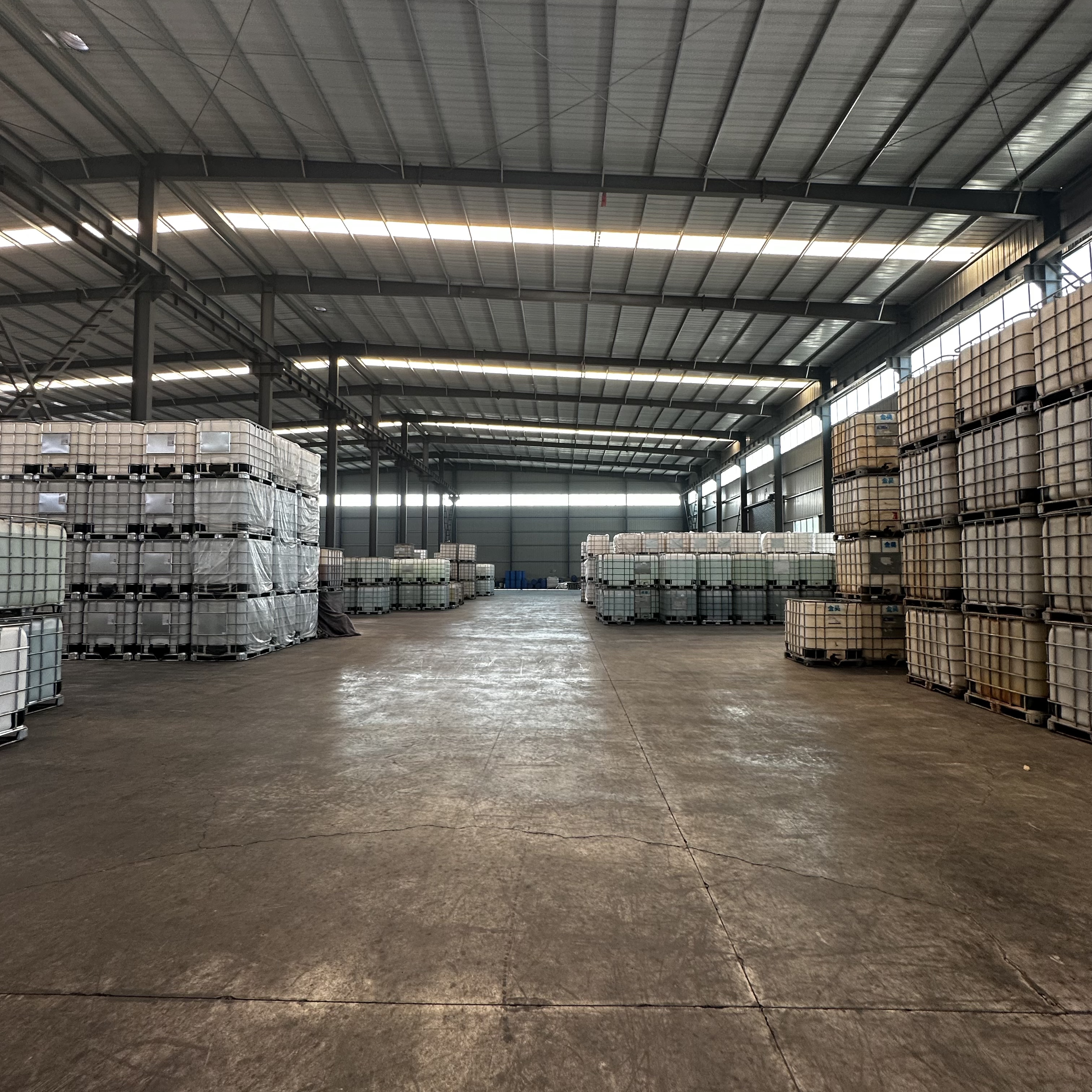
- Inventory planning. Shelf life defines how much a mill can safely hold, and therefore how much of the run is exposed to a late shipment.
- Finished-paper risk. Sizing problems surface as linting, picking, ink penetration, moisture regain in storage, and carton collapse - all of them far from the point where the chemical was received.
Industry Background: A Crowded Market Where Spec Sheets Look Alike
The commercial pressure behind this checklist is simple: there are many suppliers quoting similar numbers. Dataintelo estimates the global paper sizing agent market at approximately USD 3.8 billion in 2025 and projects it to reach USD 5.9 billion by 2033 at a CAGR of 5.8%. Market Reports World reports that global sizing agent volume exceeded 3.8 million metric tons in 2024. For a procurement team, that scale means a long supplier list and very similar-looking technical documentation.
The market is also concentrated in the region where most paper is made. Asia Pacific held a 42.3% revenue share as of 2025 according to Dataintelo, and China's annual sizing agent consumption is estimated at 650,000 tons in 2025. Within the category, SNS Insider reports that synthetic sizing agents such as AKD and ASA held a 54.5% market share in 2024, while Dataintelo estimates AKD alone accounts for approximately 48% of synthetic sizing agent volume globally. Rosin sizing agents accounted for 32.4% of market revenue in 2025.
Form factor matters for evaluation too. Liquid sizing agents held a 57.8% market share in 2024 according to SNS Insider, while solid sizing agents are expected to grow at a CAGR of 5.11% through 2032. Liquid products dominate because they are easier to dose - but liquid emulsions are also the form most sensitive to transport temperature, storage time and emulsion ageing, which is exactly where batch consistency lives.
Published estimates for this category differ noticeably. Global market value for 2024 has been reported at roughly USD 3.16 billion by Market Research Future and USD 3.95 billion by SNS Insider, and CAGR projections range from 4.14% to 5.8%. That spread is a useful reminder for buyers: market headlines are estimates, and supplier selection should rest on measurable lot data instead.
One more number frames why moisture performance is part of this evaluation. China exported a total of USD 36.5 billion in paper goods in 2024 according to OEC. Paper that travels by container and sits in humid storage is where an inconsistent surface sizing agent becomes visible to the end customer.
The Parameters That Decide Whether a Sizing Agent Runs Cleanly
Consistency lives in four measurable parameters plus two supporting ones. Each has a different failure mode, and each one should be part of the purchase specification rather than a pleasant surprise on the data sheet.
Solid content: the parameter you pay for
Solid content is the share of active material in the emulsion, and it links quality directly to price. JH-600, a moisture resistant SAE surface sizing agent from JHDA, is specified at 30 +/- 1% solids; JH-611 and JH-325 are specified at 30.0 +/- 1.0% and 25.0 +/- 1.0% respectively. Read the tolerance literally. On a nominal 30% figure, a +/- 1 percentage point band means two fully conforming lots can differ by roughly 3% in active content. If your dosing was set from the first lot, the second lot slightly under-doses or over-doses the sheet.
Viscosity at 25 degrees C: the runnability ceiling
Viscosity determines whether the product can be pumped, metered and mixed without changing the process. JH-600 is specified below 50 cps at 25 degrees C, and a ceiling of 50 cps or below applies across the JHDA surface and internal sizing range, including JH-611, JH-325, JH-200, JH-103 and JH-WH3364. A viscosity figure that creeps upward during storage is one of the earliest observable signs that an emulsion is changing, generally before any functional test would show it. When you evaluate a supplier, ask for the viscosity value on the certificate of analysis, not just the specification limit.
Ionic type: the compatibility gate
Ionic type decides whether the product is compatible with your starch and wet-end chemistry at all. Within the JHDA range, JH-600, JH-611, JH-200 and JH-103 are cationic, JH-325 is anionic, and JH-WH3364 is weak cationic. Cationic surface sizing agents are designed to combine uniformly with anionic starch; JH-611's cationic structure is described as delivering consistent sizing coverage across the paper web. The anionic JH-325 is positioned for cultural paper such as offset printing paper, copy paper and book paper, and is compatible with both acidic sizing processes using aluminum sulfate and modern neutral papermaking systems.
pH, appearance, solubility and shelf life: the supporting data
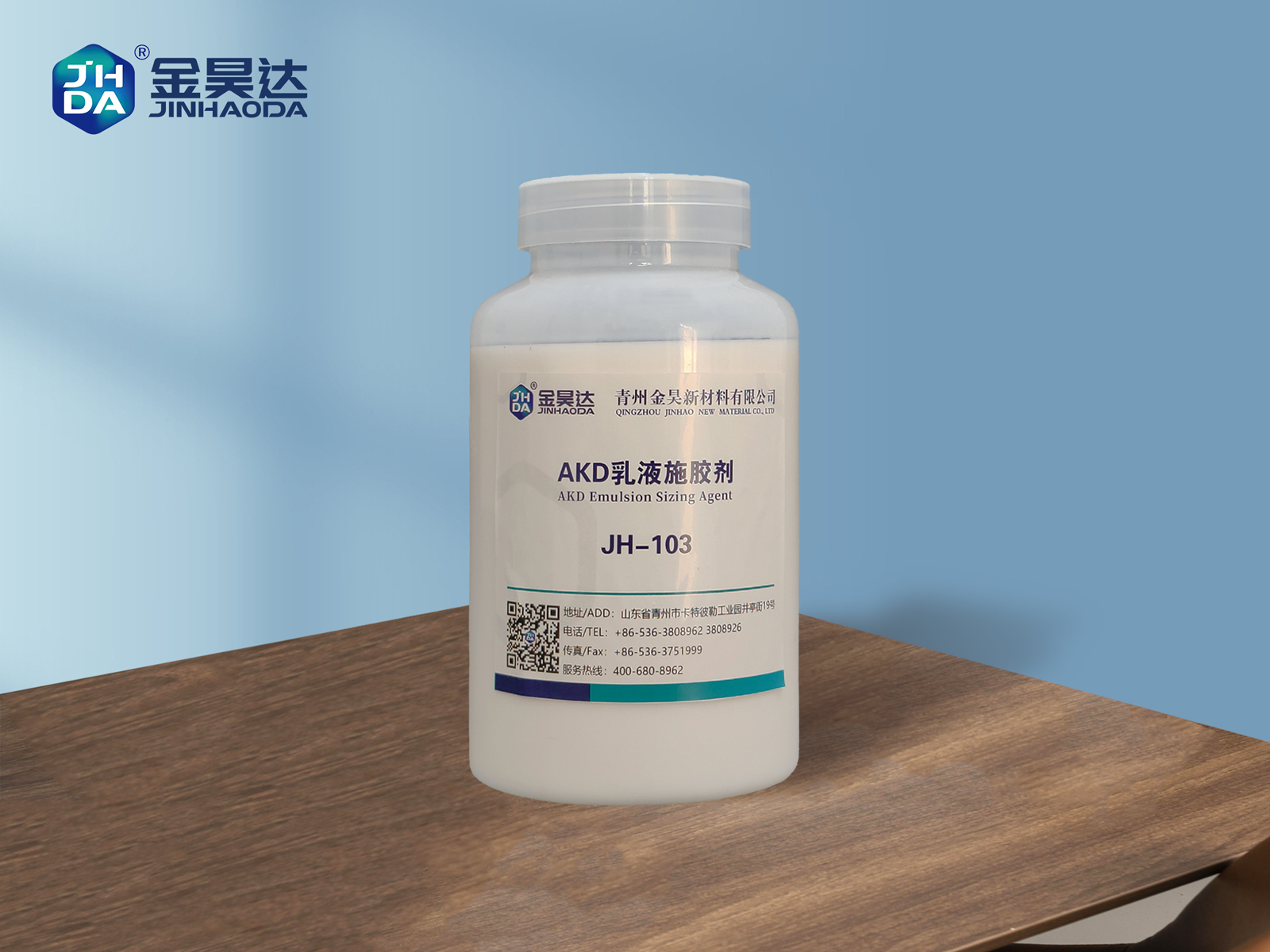
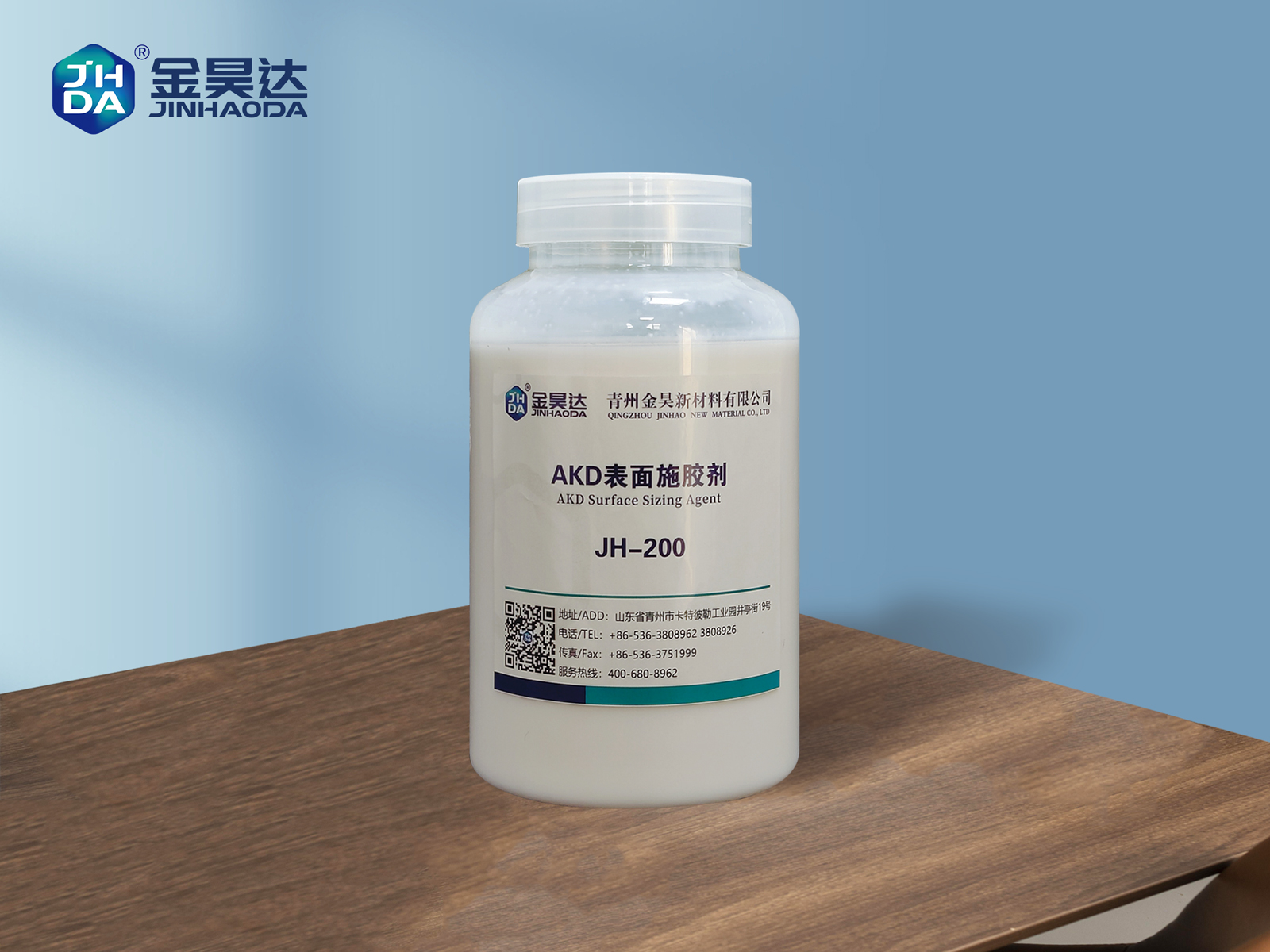
The JHDA sizing range sits between pH 2.0 and 5.0, is water soluble, and specifies appearance individually per grade - light brown to dark brown liquid for JH-600, brown liquid for JH-611, white to light brown liquid for JH-325 and JH-103, milky white to slightly yellow liquid for JH-200, milky white to pale yellow liquid for JH-WH3364. Appearance is a fast visual screen at goods-in; a colour shift or a visible layer is an immediate reason to hold the drum.
Shelf life is the parameter buyers most often ignore and later regret. In the same product family it ranges from 3 months for JH-200, to 4 months for JH-103 and JH-WH3364, to 6 months for JH-600, JH-611 and JH-325. A six-month shelf life supports buffer stocking; a three-month shelf life requires tighter ordering discipline and faster pipeline movement.
Supplier Evaluation Checklist: Ten Questions Before the First Bulk Order
Work through these ten questions in order. Each one produces a document or a number you can compare across suppliers, which is what turns a sales conversation into an evaluation.
- Ask for the TDS of the exact grade, not the product family. JH-600 and JH-611 are both surface sizing agents from the same manufacturer, but one is specified at 30 +/- 1% solids with a 6-month shelf life and the other at 30.0 +/- 1.0% with a different material base. The grade code is the unit of evaluation.
- Ask for the guaranteed tolerance, not the typical value. A stated band such as 30 +/- 1% is contract language; a typical value is not. The band is what your dosing system has to absorb.
- Ask which tests are run on every single lot. JHDA states that typical QA tests include particle size, appearance, solids, pH, viscosity and functional tests, and that specific QC procedures and reports can be provided per order. A supplier that cannot name its per-lot test list is selling on averages.
- Ask for certificates of analysis covering three consecutive batches and place the values side by side against the specification limits. Consistency is visible in the pattern, not in a single sheet.
- Ask for a retained sample of the trial lot. Keep it sealed and compare appearance and viscosity against later deliveries at goods-in.
- Confirm ionic compatibility in writing. State your starch type and wet-end chemicals - retention aids, defoamers - and ask the supplier to confirm that the grade suits that system. JH-600 and JH-WH3364 are both described as compatible with retention aids and defoamers without system flocculation, but the confirmation should be made against your specific line.
- Ask for shelf life and match it to your ordering cycle. A 3-month product and a 6-month product require different inventory policies, and the difference should be part of the sourcing decision rather than a surprise.
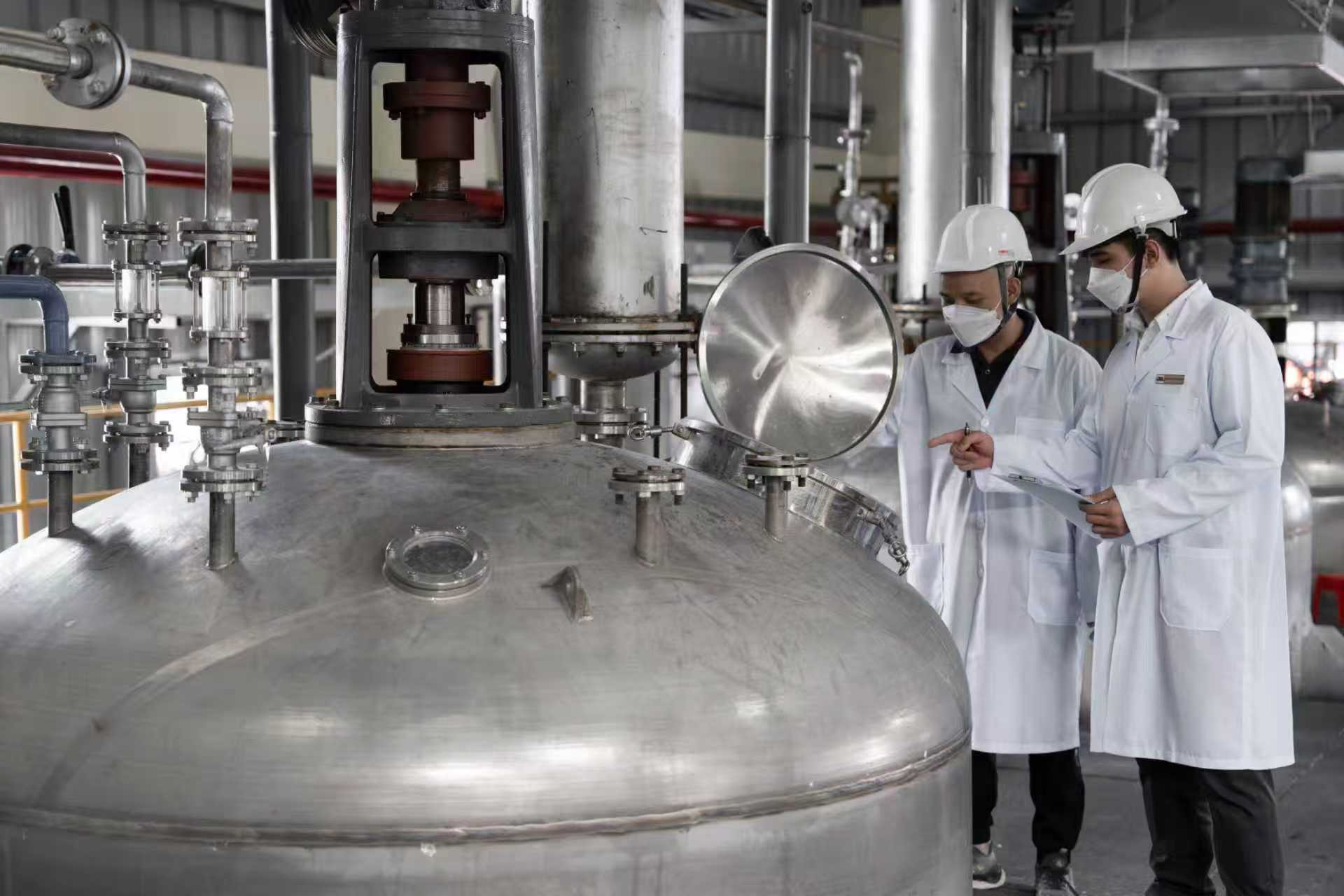
- Verify production capacity and lead time. JHDA runs standardized automated production lines for liquid and solid papermaking chemicals, with a monthly capacity of 8,000 MT, annual output reaching 100,000 tons, an MOQ of 1 MT and a stated production lead time of 4 work days.
- Request the export document pack. JHDA provides commercial invoice, packing list, certificate of origin, pre-shipment inspection report, MSDS and TDS, and notes that exported chemicals complete CAS registration and GHS hazard labelling and comply with IMDG international marine shipping regulations.
- Ask for a pilot trial and, if volumes justify it, a plant audit. JHDA's own pilot laboratory is open to clients for free formulation testing and performance verification, the company supports factory audit visits, and its field technical team conducts on-site machine debugging for indicators including Cobb water absorption value, ring crush strength, bursting strength, paper brightness, fiber retention rate and overall paper machine runnability.
Worked Example: Reading a JH-600 Data Sheet Like a Buyer
JH-600 is JHDA's moisture resistant SAE surface sizing agent. Its material base is styrene acrylic, it is cationic and soluble in water, and it is supplied as a light brown to dark brown liquid at 30 +/- 1% solids, pH 2.0-5.0 and viscosity below 50 cps at 25 degrees C, with a 6-month storage period.
Those are the numbers you evaluate. The functional description tells you what to test during the trial: JH-600 is designed to slow moisture reabsorption in cultural paper under humid conditions, maintaining stable surface strength and printability during long-term storage, and to work with low-cost industrial starch to reduce the addition amount of higher-priced sizing agent. It is described as suitable for high-speed surface sizing machine operation with good shear resistance and low foaming, and as compatible with acidic sizing processes using aluminum sulfate as well as modern neutral papermaking systems.
The evaluation-relevant claim is the storage statement: the finished emulsion is described as stable at normal temperature with no demulsification or precipitation during transportation and long-term storage, and as delivering stable batch-to-batch quality for continuous dosing. When a supplier makes a batch-consistency statement in writing, the trial should be designed to test it - request two lots from different production dates and compare them on appearance, solids, pH and viscosity before either goes into the size press tank.
Sizing Agent Specification Comparison: Six JHDA Grades Side by Side
Use the table below the way you would use a supplier's own range during evaluation: as a reference for what a fully published parameter set looks like, and as a benchmark for the numbers you should be asking every alternative supplier to disclose.
| Grade | Product type | Solid content (%) | pH | Viscosity (25 C, cps) | Ionic type | Shelf life |
|---|---|---|---|---|---|---|
| JH-600 | Moisture Resistant SAE Surface Sizing Agent | 30 +/- 1 | 2.0-5.0 | < 50 | Cationic | 6 months |
| JH-611 | Surface Strength Sizing Agent (styrene acrylic copolymer) | 30.0 +/- 1.0 | 2.0-5.0 | <= 50 | Cationic | 6 months |
| JH-325 | Anionic Surface Sizing Agent (anionic styrene acrylic) | 25.0 +/- 1.0 | 2.0-5.0 | <= 50 | Anionic | 6 months |
| JH-WH3364 | Surface Enhanced Water Resistant Agent (weak anionic styrene acrylic + AKD) | 25.0 +/- 1.0 | 2.0-5.0 | <= 50 | Weak cationic | 4 months |
| JH-200 | Surface AKD Sizing Agent (AKD wax powder base) | 20.0 +/- 1.0 / 30.0 +/- 1.0 | 2.0-5.0 | <= 50 | Cationic | 3 months |
| JH-103 | AKD Internal Sizing Agent (AKD wax base) | 12.5-25.0 +/- 1.0 | 2.0-5.0 | <= 50 | Cationic | 4 months |
Two conclusions follow from the table. First, the same nominal product category can be supplied at 20%, 25%, 30% or a 12.5-25.0% range - so price per ton is meaningless without a solids basis. Second, a supplier that publishes narrow tolerances and a full parameter set is easier to hold to a specification than one that publishes only typical values, because you can identify a non-conforming lot at goods-in rather than after a reel has been rejected.
Verification: Certificates and Documents to Request
Certification does not guarantee batch consistency, but it does tell you whether the supplier has a documented quality system behind the numbers. JHDA holds ISO 9001:2015 certification under certificate number 10423Q01592R1S, issued by SHANDONG SEATONE INTERNATIONAL CERTIFICATION CO.,LTD. against the standard GB/T 19001-2016 / ISO 9001:2015, applicable in the global market. The company also holds ISO 14001 environmental management system certification, and reports SGS product compliance test reports for its packaging paper chemicals.
- Quality system: ISO 9001:2015, certificate number 10423Q01592R1S (Shandong Seatone International Certification Co., Ltd.).
- Environmental system: ISO 14001 environmental management system certification.
- Halal-relevant markets: HALAL certificate number 6637250000, issued by SHANDONG HALAL CERTIFICATION SERVICE (SHC) for paper-making industry additives under Indonesia Halal Law and Regulations and MS1500:2019, issued 29 August 2025 and valid to 28 August 2028.
- Food-contact packaging frameworks: for EU food contact materials, Regulation (EC) No 1935/2004 applies; for the US, paper packaging chemicals must meet FDA 21 CFR standards for food grade safety.
- Per-shipment documents: TDS and MSDS for every export order, plus commercial invoice, packing list, certificate of origin and pre-shipment inspection report.
- Transport compliance: CAS registration and GHS hazard labelling, with IMDG international marine shipping compliance for exported chemicals.
Note also the company's footprint, because a supplier's consistency risk is often a supply-chain risk. Qingzhou Jinhao New Material Co., Ltd., branded as JHDA, was founded in 2005 and is located in Mihe Industrial Park, Qingzhou City, Shandong Province, China. It operates a headquarters site of approximately 20,000 square meters with more than 80 employees, 20 of whom are professional R&D engineers and on-site technical service engineers, and it has set up an overseas supporting production entity, CRM Chemical Technology Co., Ltd., in Long An Province, Vietnam, to support local delivery for ASEAN clients and shorten delivery cycles. Overseas business accounts for 35% to 50% of total sales volume, with core export markets covering Vietnam, Thailand, Malaysia, Indonesia, Myanmar, Cambodia and major packaging paper industrial zones in the Middle East.
Use Cases: Where Batch Consistency Produces Visible Results
Corrugated and boxboard lines
JH-611 is designed for surface sizing and is suitable for corrugated paper and boxboard, where it is described as improving paper ring crush stiffness, surface hardness and surface smoothness. On these grades consistency shows up as a stable box compression result, because ring crush strength is one of the first indicators to move when surface sizing dosage drifts.
Cultural and printing paper in humid storage
JH-600 is positioned for cultural paper exposed to humid conditions: it is described as slowing moisture back absorption, maintaining stable surface strength and printability for long-term finished paper storage. Mills that store finished paper for weeks before shipping are the ones that notice inconsistency fastest, because the effect compounds during storage rather than appearing at the reel.
Neutral and alkaline systems
JH-103 is an AKD emulsion neutral internal sizing agent that supports neutral and alkaline papermaking systems, and JH-WH3364 is designed for neutral papermaking systems, made from weak anionic styrene acrylic and AKD, with mechanical shear resistance, low foaming and compatibility with retention aids and defoamers. Mills that abandoned acid sizing cannot tolerate a surface sizing agent whose ionic behaviour shifts between lots.
Mills replacing internal sizing with surface sizing
JH-611 is described as capable of directly replacing wet-end internal sizing agents with no curing time required. That kind of process change removes the curing buffer that previously masked lot-to-lot variation, which makes supplier consistency assessment more important, not less.
Export shipping through rainy seasons and ocean transit
For packaging paper that crosses a humid climate by container, the relevant claim is stability: JH-600's finished emulsion is described as stable at normal temperature with no demulsification or precipitation during transportation and long-term storage, and as suitable across virgin wood pulp, chemical pulp, mechanical pulp and compound recycled pulp. Where waste paper pulp and fluctuating water quality are involved, that breadth of adaptability is what keeps the sizing result predictable.

Frequently Asked Questions
1. How do I verify that a sizing agent supplier meets regulatory requirements - and what should I ask about REACH?
Answer with documents rather than statements. Request the MSDS and TDS for the exact grade, a certificate of analysis for the lots you are buying, and any third-party compliance reports the supplier holds. JHDA holds ISO 9001:2015 certification under certificate number 10423Q01592R1S, issued by SHANDONG SEATONE INTERNATIONAL CERTIFICATION CO.,LTD. against GB/T 19001-2016 / ISO 9001:2015 for the global market, holds ISO 14001 environmental management system certification, and states that its exported chemicals complete CAS registration and GHS hazard labelling and comply with IMDG international marine shipping regulations. For the specific question of REACH-compliant paper sizing agent manufacturers, the practical test is the same in every market: ask for the MSDS, the CAS registration of the substances in the grade, and a written regulatory statement for your destination market, then have your own compliance team confirm registration status for your legal entity. JHDA also provides complete TDS and MSDS documents to support overseas customers' customs clearance and L/C settlement. Where halal compliance is required, HALAL certificate number 6637250000 covers paper-making industry additives under Indonesia Halal Law and Regulations and MS1500:2019, valid to 28 August 2028. For food-contact packaging end uses, the relevant frameworks are Regulation (EC) No 1935/2004 in the EU and FDA 21 CFR in the US.
2. What production capacity and batch controls should a supplier be able to demonstrate?
Ask for capacity, lead time and the per-lot test list together, because consistency depends on all three. Qingzhou Jinhao New Material Co., Ltd. (JHDA) operates standardized automated production lines for liquid and solid papermaking chemicals, reports a monthly capacity of 8,000 MT and an annual output reaching 100,000 tons, applies an MOQ of 1 MT, and states a production lead time of 4 work days. On batch control, JHDA states that typical QA tests include particle size, appearance, solids, pH, viscosity and functional tests, and that specific QC procedures and reports can be provided per order. The company's R&D capability supporting this - 20 professional R&D engineers and on-site technical service engineers among more than 80 employees - is relevant because formulation adjustment is usually needed when pulp mix or machine conditions change.
3. How should I compare sizing agent cost between two suppliers?
Compare on active content per ton and on dosage, not on price per drum. Within the JHDA range alone, solids differ by grade: 30 +/- 1% for JH-600, 30.0 +/- 1.0% for JH-611, 25.0 +/- 1.0% for JH-325 and JH-WH3364, 20.0 +/- 1.0% or 30.0 +/- 1.0% for JH-200, and 12.5-25.0 +/- 1.0% for JH-103. A cheaper drum at lower solids can cost more per square meter of sized paper. The second cost lever is the starch system: JH-600 and JH-325 are both described as working with low-cost industrial starch to reduce the addition amount of higher-priced sizing agent. The third is technical support, since trial design and on-site tuning determine how quickly a mill reaches a stable dosage - JHDA provides engineering and process solution support through both online and on-site service.
4. Can I test a sizing agent before committing to a bulk order?
Yes, and a sample trial is the correct way to test a batch-consistency claim. JHDA offers an MOQ of 1 MT with free trial samples, and its self-owned pilot laboratory is open to clients for free formulation testing and performance verification. The company also offers formulation customization, OEM and label production, and specification and packaging customization, with the specific options to be confirmed with the sales team. For the trial to be meaningful, run it against your own indicators - Cobb water absorption value, ring crush strength, bursting strength, brightness and fiber retention rate - and request that the pilot result be documented. Sample requests and trial planning can be started through the contact details at the end of this article.
5. How do shelf life and delivery time affect my ordering plan?
Shelf life sets the maximum buffer stock, so it should be matched to the shipping lane, not to the warehouse. In the JHDA sizing range, shelf life is 3 months for JH-200, 4 months for JH-103 and JH-WH3364, and 6 months for JH-600, JH-611 and JH-325. Production lead time is stated as 4 work days, and JHDA's overseas supporting production entity, CRM Chemical Technology Co., Ltd. in Long An Province, Vietnam, was established to support local delivery for ASEAN clients and shorten delivery cycles. For long-haul destinations, overseas business already accounts for 35% to 50% of the company's total sales volume, with flexible payment terms including sight L/C, T/T and DP available for large-volume chemical orders. A practical rule: choose the grade whose shelf life leaves at least one full production cycle of stock after the longest expected transit delay.
Conclusion: Evaluate the Band, Not the Headline
Sizing agent selection is usually framed as a chemistry question, but the difference between a mill that runs cleanly and one that fights moisture complaints all season is often batch consistency. The checklist in this article reduces that risk to a short list of verifiable items: a published tolerance band on solid content, a viscosity ceiling measured at 25 degrees C, a confirmed ionic type, a shelf life that matches your lane, per-lot test records covering particle size, appearance, solids, pH, viscosity and functional performance, and a supplier willing to prove it with a pilot trial and a plant audit.
Qingzhou Jinhao New Material Co., Ltd. (JHDA) publishes this parameter set across its sizing range - from the moisture resistant SAE grade JH-600 and the surface strength grade JH-611, to the anionic JH-325, the composite JH-WH3364, and the AKD grades JH-200 and JH-103 - and backs it with ISO 9001:2015 and ISO 14001 certification, a HALAL certificate valid to 28 August 2028, free trial samples with a 1 MT MOQ, and on-site technical service for paper machine tuning.
Request a Sizing Agent Sample, Quote, or the Technical File Pack
Send your paper grade, pulp mix, size press type and current dosage, and JHDA will respond with a grade recommendation, the full TDS and MSDS package, and a quotation for your volume. Free trial samples are available at an MOQ of 1 MT.
WhatsApp: +86 139 6468 8976 | Email: info@sdqzjinhao.com | Tel: +86-536-3808962
Website: en.sdqzjinhao.com
Download the company and product brochure: JHDA Introduction 2026 (PDF)
Sizing agentPaper sizing agentStyrene Acrylic Surface Sizing AgentAKD sizing agentBatch consistencySupplier evaluation
Have Questions or Need More Details?
Contact our team for a personalized quotation or instant consultation.
Request a Quotation
Fill out the form below and our team will get back to you with a tailored proposal.
WhatsApp Direct Chat
Prefer to chat in real-time? Message us on WhatsApp for instant assistance & quick answers.
- Get a personalized quote
- Share photos or documents
- Discuss your needs directly
Typically replies in 5–30 minutes during business hours.