
Solid vs Liquid Dry Strength Agents: Technical Selection Parameters for Recycled Pulp Mills
A recycled pulp mill choosing between a powder dry strength agent and a liquid dry strength agent is not choosing a brand. It is choosing a dosing system, a storage plan, a make-down procedure, and a compatibility profile. Six measurable parameters settle most of that decision: physical form and handling, active or solid content, pH, viscosity, solubility, and shelf life. A seventh parameter — ionic type — decides whether the grade can sit beside AKD sizing, OBA optical brightener, and defoamer in the same wet end without damaging sizing or brightness.
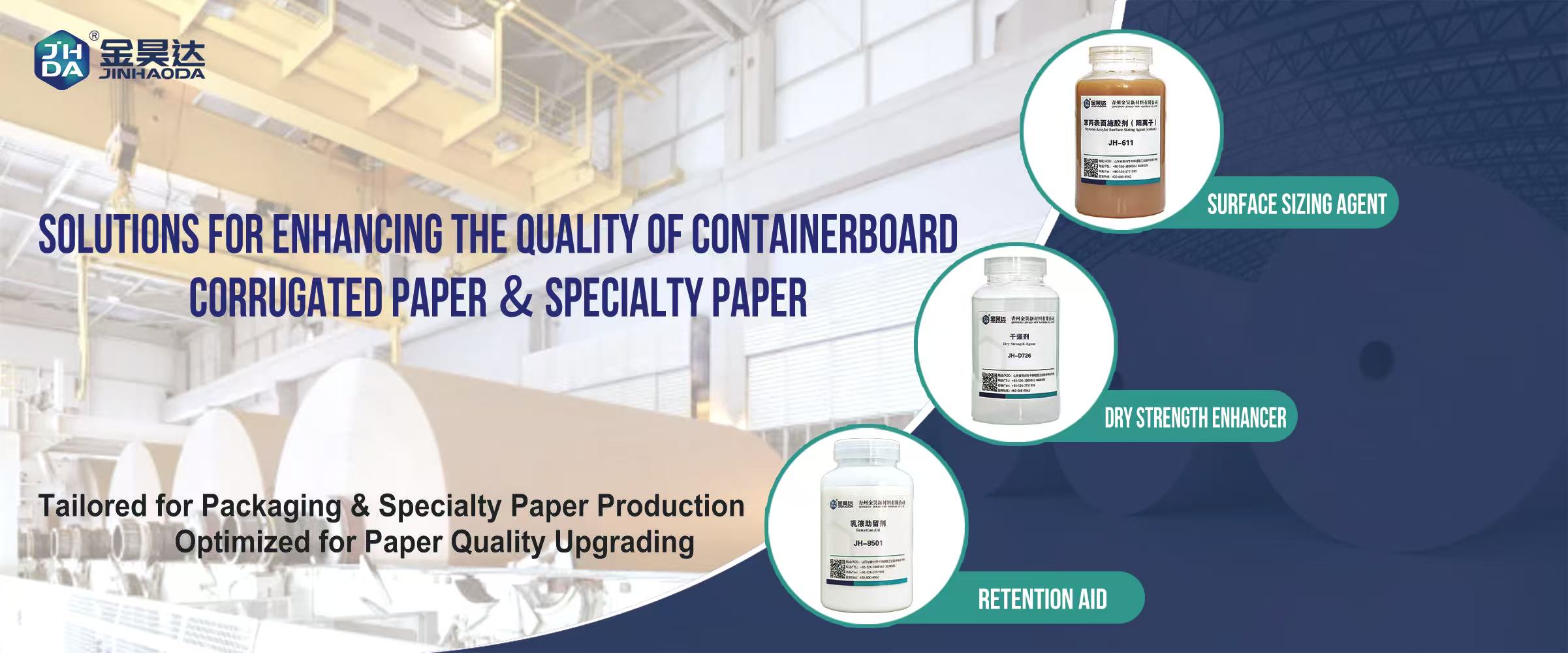
The comparison becomes concrete inside the JHDA range. JH-1699 is a white, water-soluble, cationic powder with an active ingredient content of ≥95.0% and a 12-month shelf life. JH-D726 is a colorless semi-transparent amphoteric liquid with 15.0/20.0 ±1.0% solids, pH 3.0–6.0, viscosity of 4000–12000 cps at 25 °C, and a 6-month shelf life. Both are applied to recycled fiber; the difference is in how each is stored, dissolved, pumped, and verified against the rest of the wet-end chemistry.
Short answer for procurement and technical teams
- Select a liquid amphoteric grade such as JH-D726 when the machine has pipeline dosing, the drum turns over inside six months, and AKD, OBA and defoamer are already in the system.
- Select a cationic powder such as JH-1699 when freight, warehouse space, or intermittent production make water a liability — ≥95.0% active content and 12 months of storage stability reduce the water shipped per tonne of active polymer.
- Select JH-2219 when the product is molded pulp rather than a paper web: 20.0 ±1.0% solids, pH 2.0–5.0, viscosity 5000–12000 cps, built for cold-water dilution and food-grade tableware.
- Never decide on price per wet kilogram. Decide on cost per active tonne, plus the cost of the feeding hardware the form demands.
Problem Definition: Where Solid-vs-Liquid Decisions Break Down
Most wrong selections are not chemistry errors. They are specification errors made before the trial, and they usually fall into four patterns.
Failure 1 — Comparing wet weight instead of active weight
A powder quoted at ≥95.0% active ingredient and a liquid quoted at 15.0–20.0% solids are not priced on the same basis. Buying the cheaper wet kilogram frequently means buying more water and more freight. The only comparable figure is cost per active tonne, calculated from the grade's own declared active or solid content.
Failure 2 — Ignoring make-down and dosing hardware
Powder must be dissolved before it can be metered. JHDA's own technical documentation for liquid wet-end products notes that manual powder mixing can produce insufficient dissolution, fish-eye agglomeration, and uneven dosing — the exact reason liquid grades are offered for automatic pipeline feeding. A mill that installs a powder without a mixing tank, clean water supply, and trained operator inherits a dosing problem rather than a strength problem.
Failure 3 — Shelf life shorter than the consumption cycle
A 6-month liquid bought in a 12-month quantity is inventory loss. A 12-month powder bought for a line that consumes it in three weeks is unnecessary working capital. Shelf life is a purchasing parameter, not a footnote.
Failure 4 — Treating compatibility as a datasheet claim
Compatibility with AKD sizing agent, OBA, defoamer and starch is a mill-specific result. The same grade can behave differently at a different addition point, a different stock pH, or a different cationic demand. Compatibility must be confirmed in a jar test on the mill's own furnish before the first bulk order.
Industry Background: Why Recycled Mills Face This Choice More Often
Recycled fiber is no longer a marginal furnish. The recycled paper share of all fiber used at U.S. mills increased to 44.4% in 2024, according to the American Forest & Paper Association. More secondary fiber means more short fiber, more fines, and more contaminants per tonne of finished paper — which is precisely the condition dry strength chemistry exists to correct.
The demand is concentrated in packaging. Fact.MR data places the packaging and containerboard segment at 38.0% of paper-grade usage for dry strength additives, and polyacrylamide-based resins at an estimated 40.0% share of the dry strength resin market — consistent with the polyacrylamide, polyamine and PAE chemistry used in both JH-1699 and JH-D726. Intel Market Research values the global paper dry strength agent market at approximately USD 864 million in 2024, with Asia-Pacific accounting for roughly 40% of that demand. Published estimates for the segment vary by scope and base year, so treat any single figure as an order-of-magnitude reference rather than a precise forecast.
Two operational trends push the same decision. First, tighter white-water closure concentrates fines and anionic trash, which raises the value of a grade with strong retention and dewatering behaviour. Second, mills are cutting starch rather than adding chemicals, which only works if the strength agent can carry the ring crush and burst load that starch used to carry.
The Seven Selection Parameters in Detail
Parameter 1 — Physical form and handling
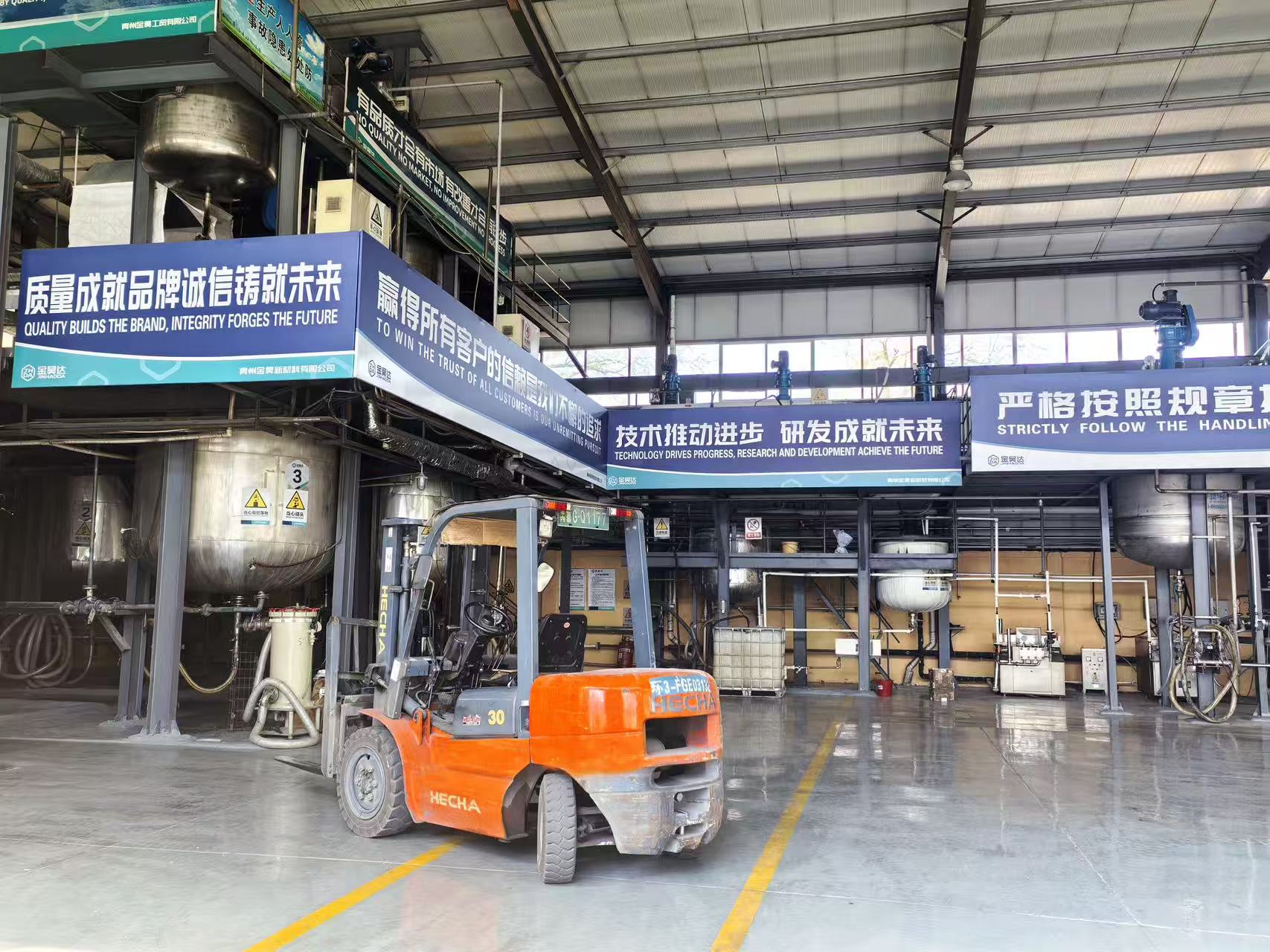
JH-1699 is a white powder; JH-D726 is a colorless semi-transparent liquid; JH-2219 is a light white to transparent liquid. Form determines the entire handling chain. Powder requires a dry store, a weighed batch, a dissolution tank, and agitation; liquid requires a drum or IBC, a metering pump, and a heated or shaded store in cold climates. Supporting equipment for these applications typically includes mixing tanks, metering pumps, mixing towers, and coating or sizing machines where surface application is involved.
Parameter 2 — Active content versus solid content
This is the parameter that most often decides the budget case. JH-1699 carries an active ingredient content of ≥95.0%. JH-D726 carries 15.0/20.0 ±1.0% solids, and JH-2219 carries 20.0 ±1.0% solids. On a nominal solids basis, roughly 4.75 kg of a 20.0% liquid carries the same solids mass as 1 kg of a ≥95.0% powder, and at 15.0% solids the ratio is about 6.3 to 1.
That ratio is a procurement tool, not a dosing instruction. The two grades are different polymer systems — JH-1699 is built on polyacrylamide, polyamine, polyamide epichlorohydrin resin and starch derivatives, while JH-D726 is a polymer and organic/inorganic composite liquid. Solids equivalence tells a buyer which quotation is genuinely cheaper per active tonne; it does not tell a papermaker how many kilograms to add. Dosage is set by trial on the machine.
Parameter 3 — pH of the grade versus pH of the stock
JH-D726 is specified at pH 3.0–6.0 and JH-2219 at pH 2.0–5.0, so both are acidic products that enter a wet end which may be running near-neutral or alkaline under AKD sizing. The grade's own pH is not the stock pH, but the gap between them is where surprises occur: the additive is dosed into a buffered, high-alkalinity system and its charge behaviour must be confirmed on site. JH-1699 does not list a fixed pH window among its grade parameters; its stated process behaviour is stable performance across a wide pH and temperature range, which is a useful property for mills running variable recycled stock. For comparison, the JH-103 AKD internal sizing emulsion in the same range is specified at pH 2.0–5.0, so an acidic strength agent is not automatically incompatible with an acidic sizing agent — but the sequence and addition points still matter.
Parameter 4 — Viscosity and pump selection
JH-D726 falls in the 4000–12000 cps range at 25 °C and JH-2219 in the 5000–12000 cps range. These are viscous liquids, not water-like emulsions: the metering pump, line diameter, strainer and dilution point must be specified for that viscosity, and the mill should confirm dosing accuracy at the lowest turndown the machine actually runs. A powder has no viscosity until it is dissolved, which shifts the burden to make-down concentration control — the solution strength becomes an operator variable rather than a supplier specification.
Parameter 5 — Solubility and make-down behaviour
All three grades are declared soluble, but solubility means different work. JH-1699 requires a dissolution step in clean water with agitation before metered dosing. JH-D726 is supplied as a stable liquid formulation that is documented as free from stratification and gelation during long-distance shipping and storage, which allows direct connection to the pulp pipeline and automatic feeding. JH-2219 is a water-based liquid designed for cold-water dilution and uniform mixing with pulp slurry, with no heating step required before dosing — a practical advantage in molded pulp plants that have no steam available at the dosing station.
Parameter 6 — Shelf life against consumption cycle
JH-1699 is specified with a 12-month shelf life; JH-D726 and JH-2219 with 6 months. Divide annual consumption by 12 to get monthly usage, then set the maximum stock cover so that no batch approaches expiry. A mill consuming two IBCs a week can hold a 6-month liquid comfortably; a mill consuming two drums a month should either buy liquid in smaller, more frequent lots or move to powder. Treat shelf life as a supply-chain parameter that interacts with the supplier's lead time — a 4-working-day production lead time makes frequent small liquid deliveries practical in a way that a long sea freight cycle does not.
Parameter 7 — Ionic type and wet-end compatibility
JH-1699 is cationic. JH-D726 and JH-2219 are amphoteric. Ionic type predicts how the grade will behave in a stock that already contains cationic AKD, anionic or cationic OBA, non-ionic defoamer, and starch. The compatibility record for JH-D726 states excellent compatibility with AKD sizing agent, OBA optical brightener and defoamer, without damage to sizing performance or paper brightness, and with reduced pitch and stickies accumulation on forming wires, press felts and dryers. Its documented performance envelope also includes an 8%–15% increase in fiber retention, reduced starch consumption for strength reinforcement, a 10%–18% lower overall wet-end chemical cost per ton of paper, a 3%–5% reduction in post-wet-end moisture, and 5%–10% lower drying steam consumption. Those figures are supplier performance data and should be confirmed on the mill's own machine.
The starch point deserves separate attention. If the strength agent is intended to replace part of the starch load, the trial must reduce starch stepwise while monitoring ring crush, burst and tensile after each step. Reducing starch without a strength agent in place simply transfers the load to the fiber and produces a paper break.
Pulp Molding: Where the Liquid Form Is the Practical Default
Molded pulp is not a paper web, and the selection logic changes with it. JH-2219 is specified at 20.0 ±1.0% solids, pH 2.0–5.0, viscosity 5000–12000 cps at 25 °C, amphoteric, soluble, with a 6-month shelf life. It is designed to adsorb onto pulp fiber surfaces and form an ionic bonding network that raises stiffness, tensile toughness and compression resistance in molded pulp products, and it is positioned for waste-paper recycled pulp used in egg trays, fruit trays and industrial buffer packaging molds. The grade is documented as improving dimensional stability and reducing deformation, warping and cracking during hot pressing and drying, lowering the share of long virgin fiber in the furnish, and leaving less sticky residue on molding dies — which extends the interval between mold cleaning stops.
For food-grade tableware, JH-2219 is a water-based formula with no formaldehyde, described as non-toxic and odorless and positioned for food-grade pulp tableware and food packaging molds. Mills supplying EU food-contact molded pulp should verify the finished article against EN 645, EN 646 and EN 648, and against BfR Recommendation XXXVI where the German framework is cited, and should request the grade-specific TDS, MSDS and compliance documentation rather than relying on a general statement.
Step-by-Step Selection Breakdown
- Define the strength gap in machine terms. Record current ring crush, burst, tensile and folding resistance against the customer specification, plus the paper break rate and the starch load. Without a baseline, no form decision can be evaluated.
- Normalize cost to the active tonne. Convert each quotation using the declared active or solid content — ≥95.0% for JH-1699, 15.0/20.0 ±1.0% for JH-D726, 20.0 ±1.0% for JH-2219 — then add freight, storage and make-down labour.
- Match the form to the dosing capability on site. Pipeline and metering pump available: a liquid grade can be connected directly. No clean water, no mixing tank, or no operator time for dissolution: a liquid avoids the problem. Dry store and batch discipline already in place: powder remains viable.
- Check shelf life against monthly consumption. Set maximum stock cover below the shelf life of the chosen grade and align delivery frequency with the supplier's production lead time.
- Run a compatibility jar test on the mill's own furnish. Dose AKD, then the strength agent, then OBA and defoamer in the order used on the machine; observe flocculation, foaming, and any deposit; retain a sample for Cobb and brightness comparison.
- Trial on the machine with a starch reduction step. Hold the strength agent dose, then reduce starch in steps, monitoring ring crush, burst and breaks after each change. Stop the reduction at the point where the strength curve flattens.
- Lock the specification and the documentation set. Confirm grade, dose range, addition point, storage conditions, and the TDS, MSDS and inspection documents required for customs clearance and letter-of-credit settlement.
Use Cases
Recycled OCC linerboard and fluting. The highest-volume case, and the one where a liquid amphoteric grade fits best: JH-D726 is positioned for recycled linerboard, corrugated paper and kraft paper, targeting ring crush, burst, tensile and folding resistance, with documented retention, dewatering and starch-reduction benefits that justify pipeline dosing.
Testliner, box board and fluting in inland mills. Where freight distance or warehouse space dominates, JH-1699 offers ≥95.0% active content in a white powder with a 12-month shelf life, described for recycled OCC pulp, with reduced paper breaking at high machine speed, improved surface stiffness, less residue on wire, felt and roller, and no adverse effect on sizing or water resistance.
Molded pulp tableware, egg trays and buffer packaging. JH-2219 is the relevant grade: liquid, 20.0 ±1.0% solids, cold-water dilution, no heating step, compatible with sizing agent and antifoaming agent, and positioned for food-grade molded pulp.
High-filler recycled board. Where filler loading is being pushed upward to control cost, the strength agent has to compensate for the strength loss the filler causes. This is a trial-critical case: the form decision is secondary to confirming that the grade tolerates the mill's filler level and white-water closure.
Comparison Table: JH-1699, JH-D726 and JH-2219
| Parameter | JH-1699 (solid) | JH-D726 (liquid) | JH-2219 (liquid, pulp molding) |
|---|---|---|---|
| Appearance | White powder | Colorless semi-transparent liquid | Light white to transparent liquid |
| Active / solid content | ≥95.0% active ingredient | 15.0/20.0 ±1.0% | 20.0 ±1.0% |
| Ionic type | Cationic | Amphoteric | Amphoteric |
| pH | Wide pH and temperature tolerance stated; no fixed pH window listed in the grade parameters | 3.0–6.0 | 2.0–5.0 |
| Viscosity (25 °C) | Formed after make-down; not specified | 4000–12000 cps | 5000–12000 cps |
| Solubility | Soluble; dissolution step required | Soluble; direct pipeline feeding | Soluble; cold-water dilution |
| Shelf life | 12 months | 6 months | 6 months |
| Documented focus | Recycled OCC, corrugated, box board, testliner, fluting; tensile, stiffness, lower fresh-fiber dependence | Recycled linerboard, corrugated, kraft; ring crush, burst, tensile, folding resistance; retention, dewatering, starch reduction | Molded pulp tableware, egg trays, fruit trays, buffer packaging; stiffness, dimensional stability, mold release |
FAQ
Can solid and liquid dry strength agents both be used in food-contact recycled packaging?
Form does not decide compliance; grade and documentation do. For EU food-contact paper and board, converters typically verify against EN 645, EN 646 and EN 648, and the German framework cited in many specifications is BfR Recommendation XXXVI. Qingzhou Jinhao New Material Co., Ltd. holds ISO9001 and ISO14001 certification and SGS product compliance test reports for packaging paper chemicals, and supplies TDS and MSDS with export shipments. For molded pulp tableware specifically, JH-2219 is a water-based formula with no formaldehyde, described as non-toxic and odorless and positioned for food-grade pulp tableware. Confirm the exact grade and end use against your market's requirements before approval.
Can one recycled pulp mill switch between powder and liquid on the same machine?
The wet-end addition point is the same; the feeding hardware is not. A liquid grade such as JH-D726 can be connected directly to the pulp pipeline and dosed with a metering pump, with no manual dissolution step. A powder grade such as JH-1699 requires a mixing tank, clean water and an agitation step before metered dosing, and the standard support equipment for these applications includes mixing tanks, metering pumps and mixing towers. Switching form is therefore a small project with a make-down and storage scope, not a drum swap, and it should be planned with the supplier's technical team rather than improvised on shift.
How should we compare cost per kilogram between a powder and a liquid grade?
Never on wet weight. Normalize to active content first: at 20.0% solids, about 4.75 kg of liquid carries the same nominal solids mass as 1 kg of a ≥95.0% powder, and at 15.0% solids the ratio is roughly 6.3 to 1. Add freight, warehouse space and make-down labour on the powder side. On the liquid side, account for documented effects that change the total: JH-D726 data indicates reduced starch consumption for strength reinforcement, a 10%–18% lower overall wet-end chemical cost per ton of paper, and an 8%–15% improvement in fiber retention. Those are supplier performance figures, so confirm them on your own machine before fixing the budget.
What sample and trial support is available before a bulk order?
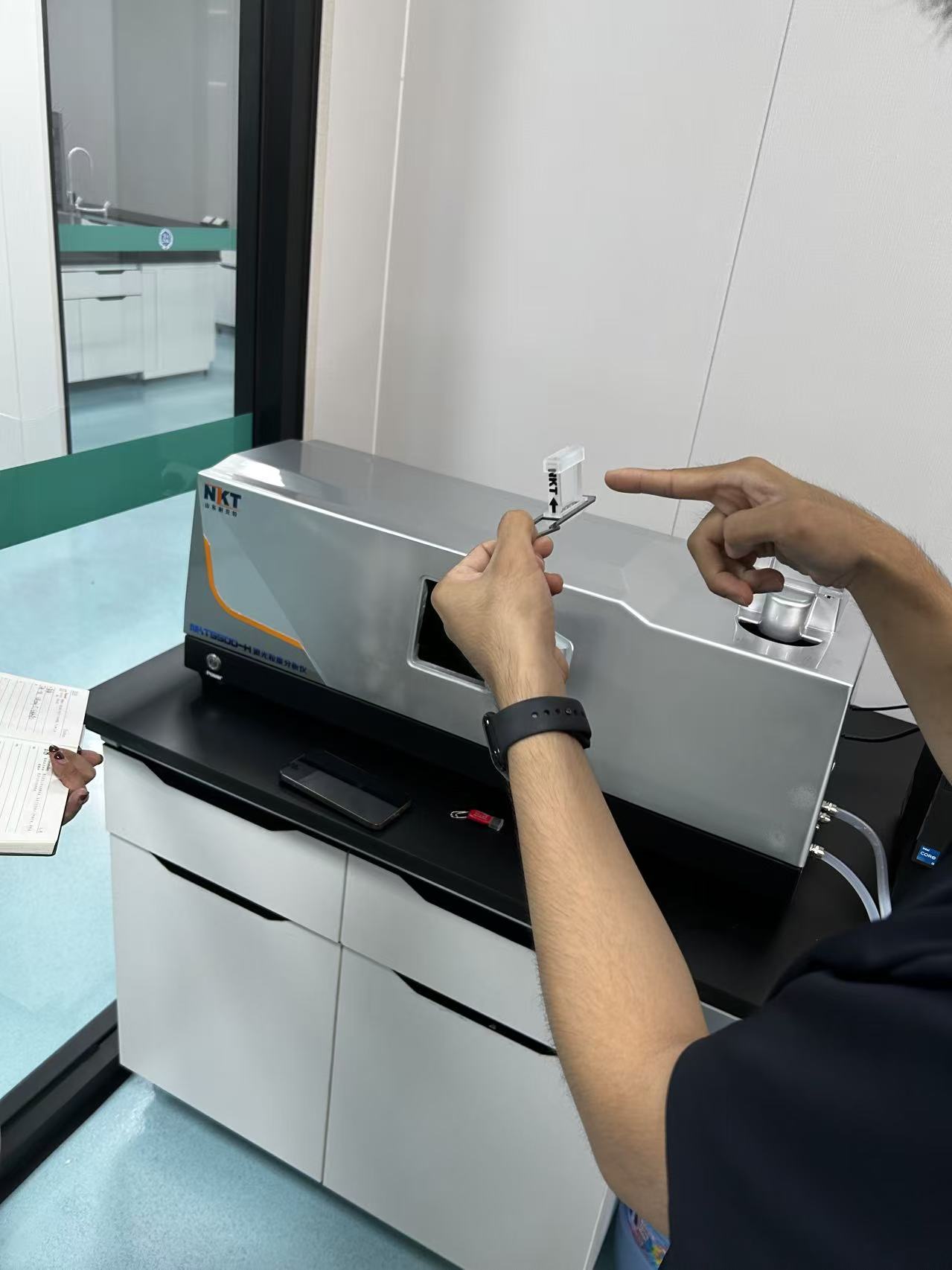
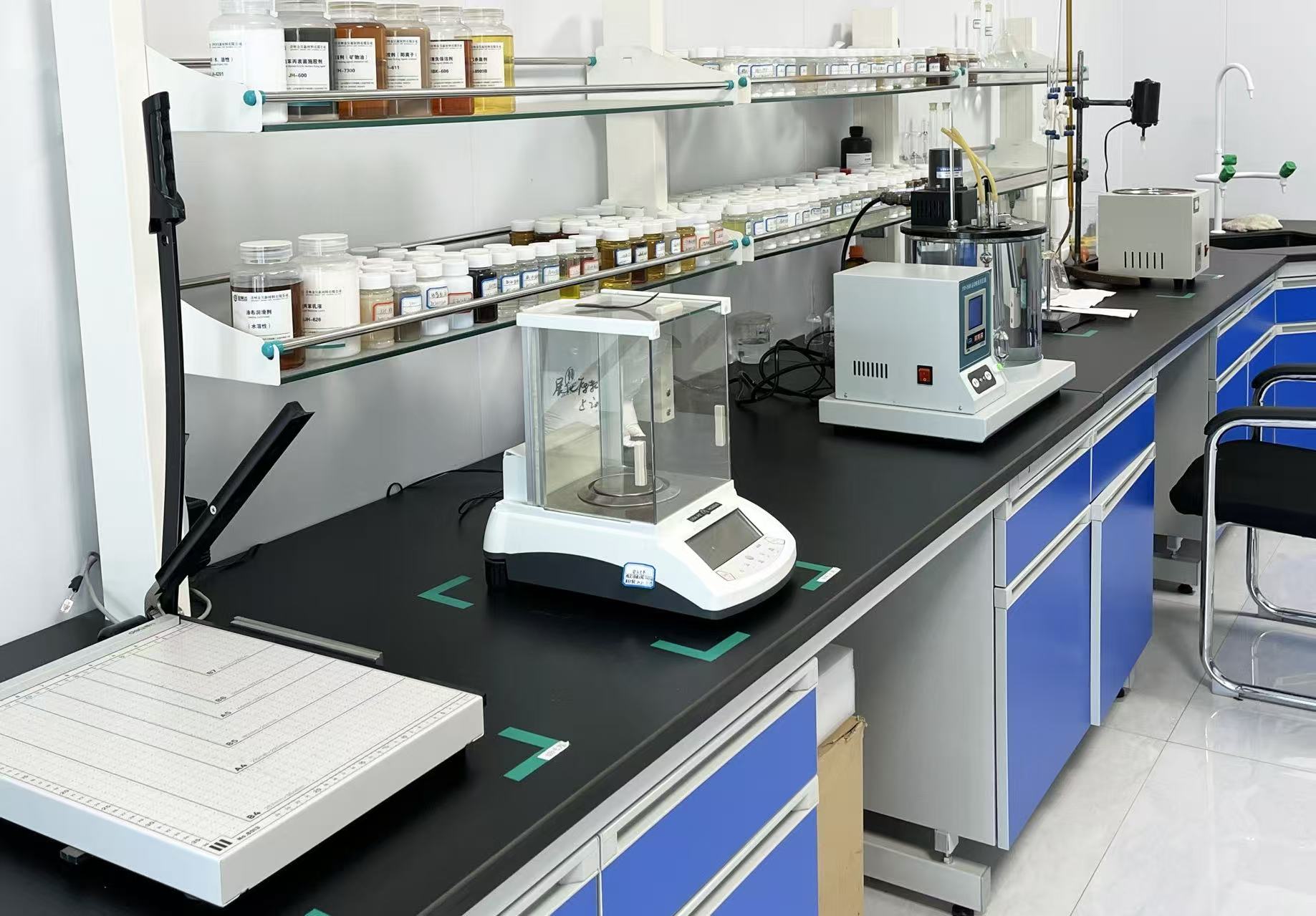
JHDA supplies free trial samples with a minimum order quantity of 1 MT, supports formulation customization based on pulp composition and paper machine operating parameters, and runs pre-shipment laboratory testing. Typical quality checks cover appearance, solids, pH, viscosity and functional performance. Technical support is available online and on site, including paper machine debugging aimed at indicators such as Cobb water absorption, ring crush strength, bursting strength, brightness and fiber retention rate. A pilot laboratory is available for formulation testing and performance verification before a bulk commitment.
What does production and delivery lead time look like for continuous supply?
Production lead time is 4 working days, with a monthly capacity of 8000 MT. Qingzhou Jinhao New Material Co., Ltd., branded JHDA, was founded in 2005 in Mihe Industrial Park, Qingzhou City, Shandong Province, China, and operates an overseas supporting production entity, CRM Chemical Technology Co., Ltd., in Long An Province, Vietnam, to shorten delivery cycles for ASEAN customers. Export documentation includes commercial invoice, packing list, certificate of origin, pre-shipment inspection report, MSDS and TDS, with sight L/C, T/T and DP available for large-volume orders. For recycled pulp packaging projects, the practical next step is a sample request with your furnish data and target strength indices — you can also download the company profile brochure at https://cdn.socialarks.com/sbsp/24601/common/2026/0730/introduction2026.pdf or send the specification directly to info@sdqzjinhao.com.
Conclusion
Solid and liquid dry strength agents are not competing products so much as two different operating models. JH-1699, at ≥95.0% active content in a water-soluble cationic powder with a 12-month shelf life, minimizes the water and freight a mill moves and suits sites with dry storage, batch discipline and long supply lines. JH-D726, at 15.0/20.0 ±1.0% solids with pH 3.0–6.0, viscosity 4000–12000 cps and a 6-month shelf life, is built for automatic pipeline dosing and for wet ends already carrying AKD, OBA and defoamer. JH-2219 takes the liquid logic into molded pulp at 20.0 ±1.0% solids and pH 2.0–5.0, where cold-water dilution and mold release behavior matter more than ring crush.
The decision procedure is short and repeatable: state the strength gap, normalize every quotation to the active tonne, match the form to the dosing hardware, check shelf life against monthly consumption, and confirm AKD, OBA, defoamer and starch compatibility in a jar test on your own furnish before the trial. Mills that follow that order usually discover the form question answers itself.
Next step: send your furnish mix, machine speed and current ring crush, burst and tensile targets to the JHDA technical team for a grade recommendation and a free trial sample.
Email: info@sdqzjinhao.com | WhatsApp: +86 139 6468 8976 | Tel: +86-536-3808962 | Website: https://en.sdqzjinhao.com
Have Questions or Need More Details?
Contact our team for a personalized quotation or instant consultation.
Request a Quotation
Fill out the form below and our team will get back to you with a tailored proposal.
WhatsApp Direct Chat
Prefer to chat in real-time? Message us on WhatsApp for instant assistance & quick answers.
- Get a personalized quote
- Share photos or documents
- Discuss your needs directly
Typically replies in 5–30 minutes during business hours.