
Choosing a Pulp Molding Strength Enhancer for Food-Grade Tableware: A Recycled Pulp Application Guide
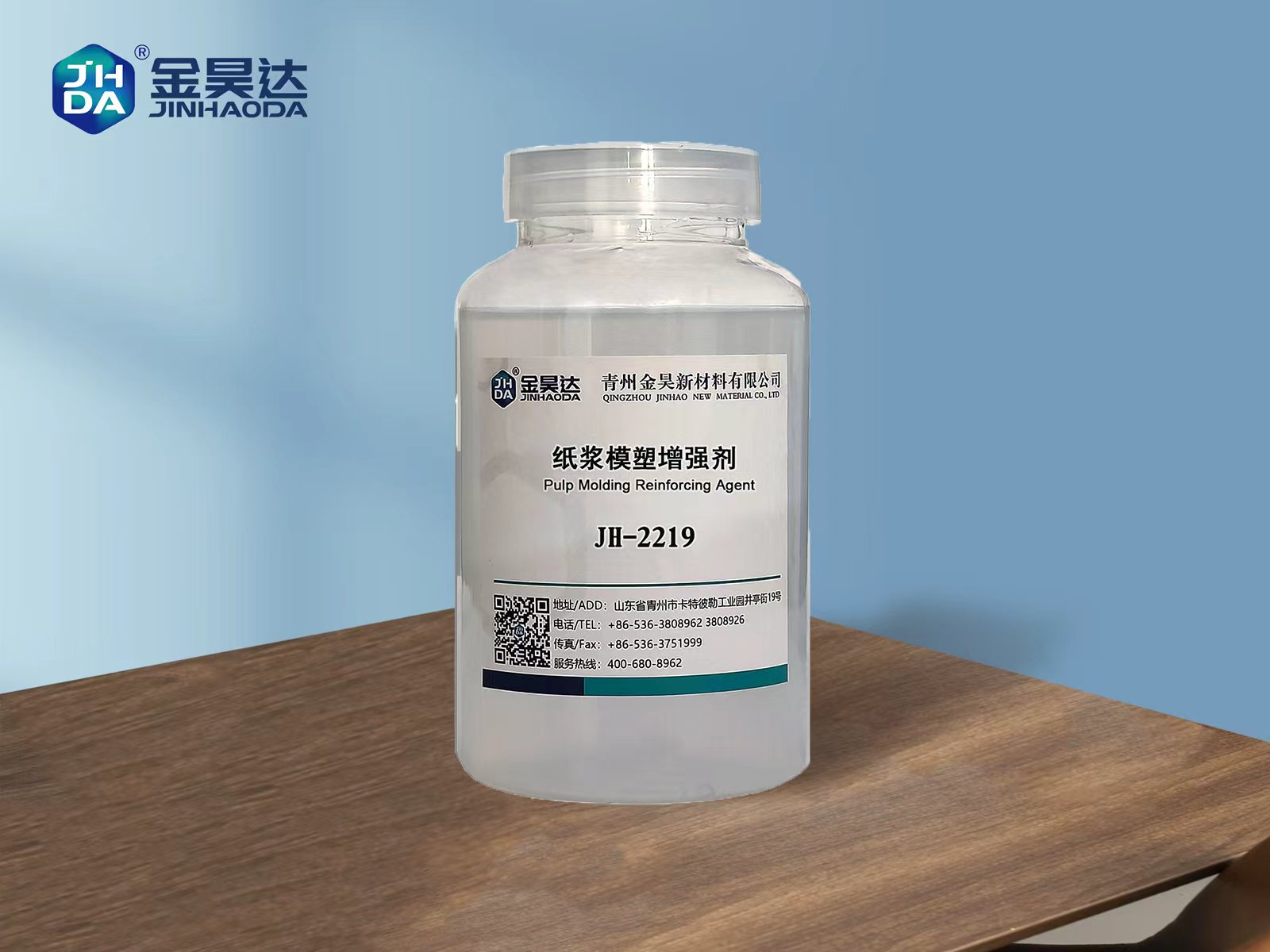
A molded pulp plate rarely fails because the forming machine is set up wrongly. It fails because the fibers inside it are too short and too weakly bonded to survive hot pressing, drying, trimming and stacking. A pulp molding strength enhancer is the wet-end additive that repairs that bonding. For food-grade tableware, however, the choice is narrower than for industrial packaging, because the chemistry must stay inside a food-contact envelope while working alongside the sizing agents and antifoaming agents already dosed into the stock.
This application guide is written for pulp molding plants, food packaging converters and brand owners evaluating a strength enhancer for recycled-pulp tableware. It sets out the failure modes that matter, the regulatory frame that now shapes purchasing decisions, and the parameters and compatibility profile of one dedicated option: JH-2219, a pulp molding dry strength agent produced by Qingzhou Jinhao New Material Co., Ltd. (brand JHDA), a papermaking fine chemicals manufacturer established in 2005 in Mihe Industrial Park, Qingzhou City, Shandong Province, China.
The Problem: Where Recycled Pulp Tableware Actually Loses Its Strength
Molded pulp tableware produced from recycled fiber fails along a predictable list of points. The rim chips during de-molding. A bowl wall warps because the formed sheet cannot hold its shape through the drying tunnel. A clamshell cracks at the hinge when it is closed for the first time. A stack of plates loses compression resistance in the shipping carton and arrives deformed.
The root cause in most of these cases is the fiber itself. Recycled pulp carries a high proportion of short fibers whose bonding potential has already been partly consumed by earlier papermaking cycles. Fewer effective fiber-to-fiber bonds translate directly into lower tensile toughness, lower stiffness and weaker compression resistance in the finished mold, even when every mechanical setting on the line is correct.
For food-grade tableware, two additional constraints narrow the solution space:
- Chemistry constraints. The article touches food directly, so the additive package must sit inside a food-contact envelope — water-based, formaldehyde-free, low odour, and supported by documentation a brand owner can pass down its supply chain.
- Process constraints. A strength enhancer is never dosed alone. It enters a stock that already contains sizing agents, antifoaming agents and retention aids. If the strength additive flocculates, foams, or blocks the pulp circulation system, the line loses more than the additive gains.
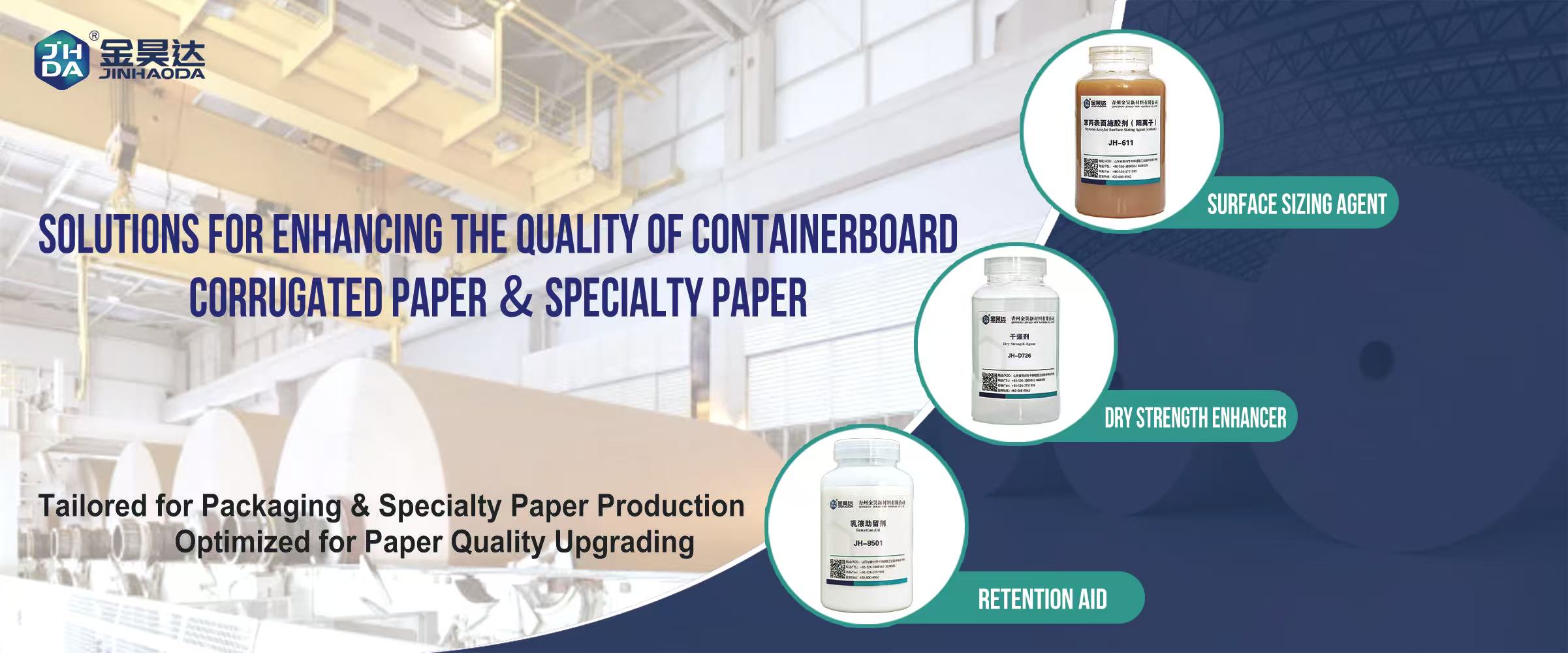
That combination — real mechanical performance on recycled fiber, plus a clean interaction with the rest of the wet-end system — is what separates a general dry strength agent from a purpose-built pulp molding strength enhancer.
Industry Background: Recycled Fiber Growth Meets Food-Contact Regulation
The demand side of this question is easy to quantify. The global paper dry strength agent market was valued at approximately USD 864 million in 2024, according to Intel Market Research, while the wider pulp and paper chemicals market was estimated at USD 23.64 billion in 2024 by Market Research Future. Sourcing geography matters: Asia-Pacific accounts for approximately 40% of global paper dry strength agent market share, per Intel Market Research.
Material trends push in the same direction. The American Forest & Paper Association reported that recycled paper's share of all fiber used at U.S. mills increased to 44.4% in 2024 — a structural shift that steadily raises demand for additives capable of restoring strength to secondary fiber. On the polymer side, polyacrylamide (PAM) resins dominate the dry strength resin market with an estimated 40.0% share, and packaging and containerboard is the largest paper-grade segment for dry strength additives at 38.0%, both according to Fact.MR.
Regulation is the second half of the picture. Paper and board intended for food contact in the EU must comply with EN 645, EN 646 (colorfastness) and EN 648 (fluorescent fastness) standards, and BfR Recommendation XXXVI sets the safety framework for paper and board chemicals in contact with food in Germany — a framework frequently cited globally. For wet strength chemistries, low residual epichlorohydrin (ECH < 50 ppm) and formaldehyde-free formulations are commonly cited thresholds for EU market access.
The practical consequence for a pulp molding plant is that selecting a strength enhancer is no longer only a mechanical decision. It is also a documentation decision: the supplier must be able to provide TDS, MSDS and compliance test reports that a brand owner can rely on. JH-2219 is described by its manufacturer as an eco-friendly water-based formulation that contains no formaldehyde and is non-toxic and odourless.
The Solution: What JH-2219 Is, and Why It Fits Molded Pulp
JH-2219 is a pulp molding strength enhancer classified as a molded pulp reinforcement additive, belonging to the pulp molding dry strength agent category and also categorized under disposable pulp tableware strength agents. It is intended for the pulp molding industry and the paper manufacturing industry, and it is supplied as a water-soluble, amphoteric liquid designed for dosing into the wet end of a pulp molding line. Its composition is based on polyacrylamide, polyamine, polyamide epichlorohydrin resin and starch derivatives.
JH-2219 technical parameters
| Parameter | JH-2219 specification |
|---|---|
| Product type | Pulp molding dry strength agent / molded pulp reinforcement additive |
| Appearance | Light white to transparent liquid |
| Solid content (%) | 20.0 ± 1.0 |
| pH | 2.0 – 5.0 |
| Viscosity (25 °C, cps) | 5000 – 12000 |
| Ionic type | Amphoteric |
| Solubility | Soluble |
| Shelf life | 6 months |
| Composition | Polyacrylamide, polyamine, polyamide epichlorohydrin resin, starch derivatives |
| Intended industries | Pulp molding; paper manufacturing |
How the reinforcement works on recycled fiber
JH-2219 rapidly adsorbs onto the surface of pulp fibers and forms a stable ionic bonding network between them. In production terms, that produces three measurable effects on molded pulp: higher stiffness, greater tensile toughness, and improved compression resistance in the finished article.
Because the bonding network reinforces the fiber mat itself rather than masking a fiber deficiency, it also changes the economics of the furnish. The product lowers the usage proportion of long virgin fiber required in a pulp molding recipe, which is one of the largest controllable raw material costs for a molding plant. The same mechanism improves dimensional stability, reducing deformation, warping and cracking during hot pressing and drying.
Formulated for food-grade pulp products
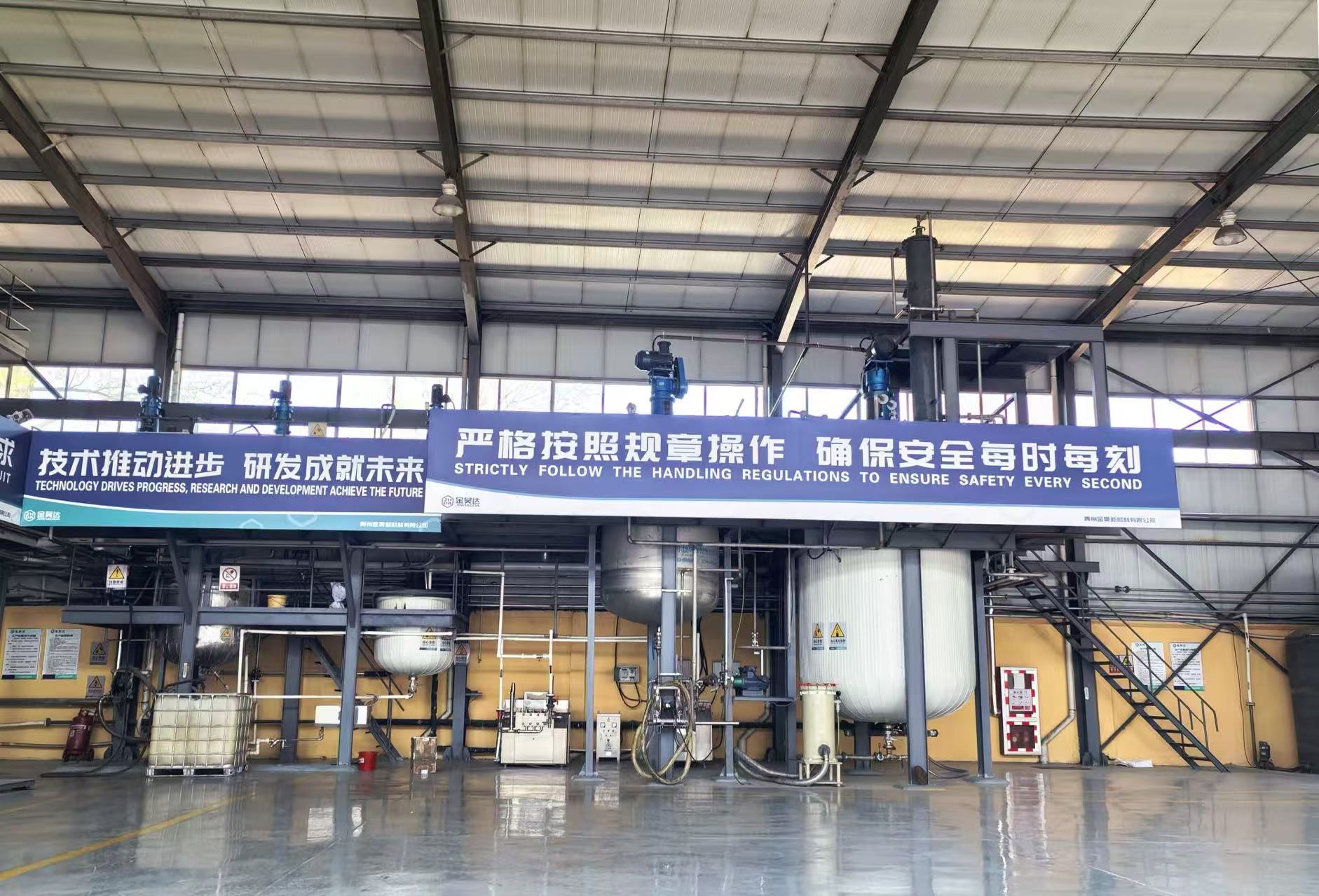
Food-grade tableware is not simply industrial packaging with a different label. JH-2219 is an eco-friendly water-based formula with no formaldehyde, and it is described as non-toxic and odourless, fitting food-grade pulp tableware and food packaging pulp molds. Its manufacturer, Qingzhou Jinhao New Material Co., Ltd., holds ISO9001 quality management system certification and ISO14001 environmental management system certification, has passed SGS product compliance test reports, and provides TDS and MSDS documentation with shipments to support overseas customs clearance and L/C settlement.
Designed to coexist with sizing and antifoaming agents
Compatibility is the criterion that most often decides whether a technically strong additive can actually be used. JH-2219 shows excellent compatibility with other wet-end additives such as sizing agents and antifoaming agents, with no flocculation or system blockage in the pulp circulation system. Because it is a water-based liquid, it dilutes easily in cold water and mixes uniformly with pulp slurry without a heating step before dosing.
Two further process benefits follow from the formulation. First, less sticky residue builds up on the molding mold surface, which reduces mold cleaning frequency and extends the service life of forming molds. Second, the reinforcement effect remains stable under variable pulp water conductivity and pH value, so finished product quality stays consistent even when incoming waste pulp quality fluctuates — a routine condition in recycled pulp molding. The additive also improves the machining performance of finished molds, reducing breakage during cutting, trimming and packaging transport.
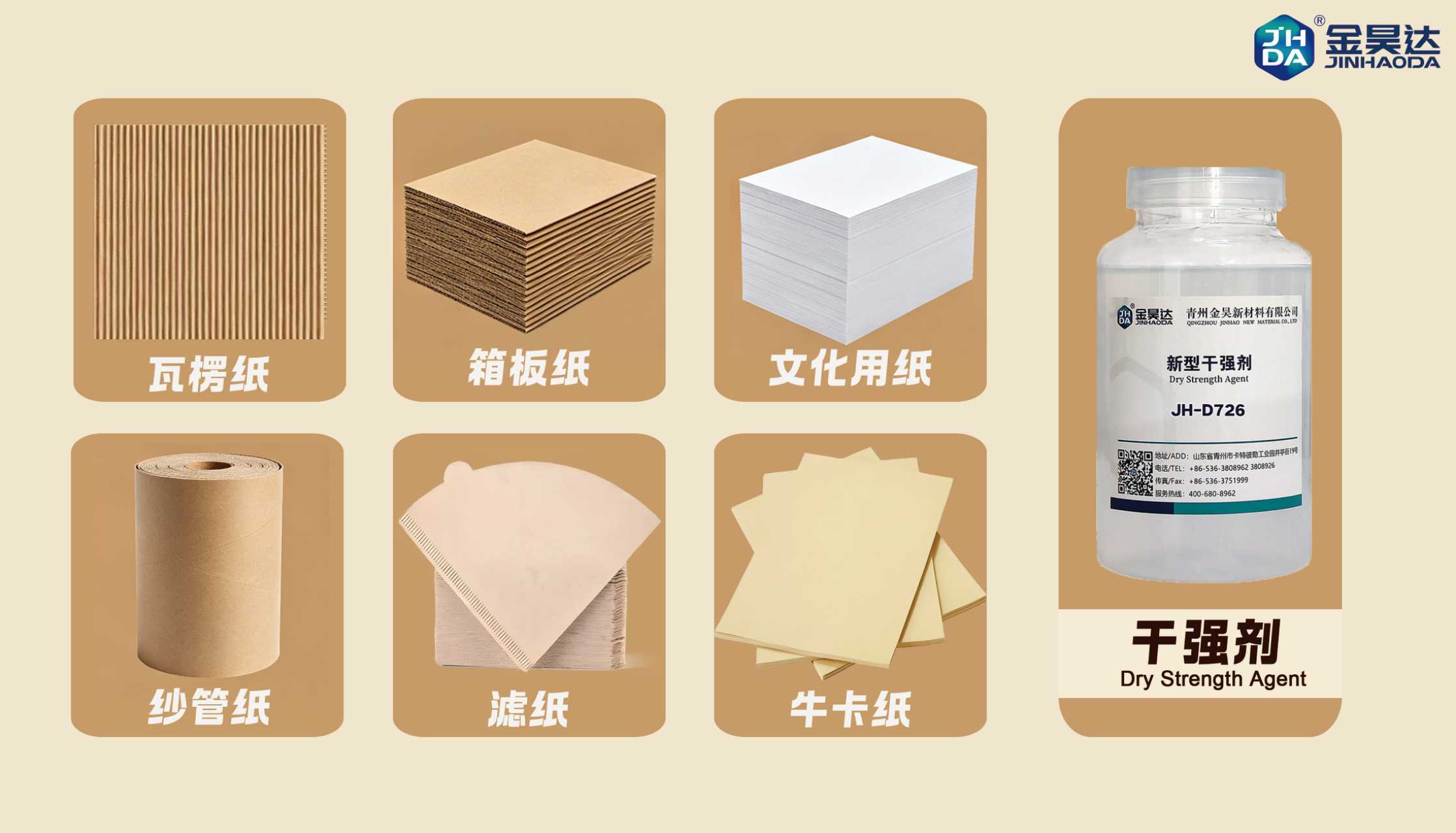
Quick summary: JH-2219 is an amphoteric, water-soluble liquid pulp molding strength enhancer with 20.0 ± 1.0% solid content, pH 2.0 – 5.0, viscosity 5000 – 12000 cps at 25 °C and a 6-month shelf life. It is positioned for recycled pulp in egg trays, fruit pulp trays, industrial buffer packaging molds and food-grade pulp tableware, and is designed for compatibility with sizing and antifoaming agents.
Step-by-Step: How to Select and Trial a Strength Enhancer for Food-Grade Tableware
The following sequence reflects how a pulp molding plant can move from a shortlist to a qualified strength enhancer without wasting production time.
Step 1 — Define the failure you are buying against
Start from the defect, not the datasheet. Record which indicator limits the product: stiffness, tensile toughness, compression resistance, or dimensional stability through hot pressing and drying. A supplier can only tune a recommendation against a defined target, and a plant can only judge a trial against the same target.
Step 2 — Confirm the food-contact documentation path
Before any technical trial, request the qualification file: TDS, MSDS, compliance test reports and quality/environmental certifications. For food-contact articles, buyers typically verify finished products against standards such as EN 645, EN 646 and EN 648 where the EU market is involved, and against BfR Recommendation XXXVI, which is widely cited internationally. Where a formulation contains polyamide epichlorohydrin resin, residual epichlorohydrin documentation is a standard request in a qualification file.
Step 3 — Map compatibility with the existing wet-end chemistry
List every chemical already entering the stock: sizing agent, antifoaming agent, retention aid, and any other wet-end addition. The strength enhancer must be checked against all of them. JH-2219 is formulated for compatibility with sizing agents and antifoaming agents without causing flocculation or system blockage in the pulp circulation system.
Step 4 — Run a bench dilution and dosage check
Confirm dilution behaviour and mixing uniformity at the plant's water conditions. JH-2219 is a water-based liquid that dilutes in cold water without a heating operation before dosing, which simplifies both the bench check and later on-line dosing. Note the working pH band of 2.0 – 5.0 and the viscosity range of 5000 – 12000 cps at 25 °C when specifying pump and dosing equipment.
Step 5 — Trial on the forming line and watch the mold
A machine trial should track three things simultaneously: finished-part strength indicators against the target from Step 1, mold release behaviour and residue build-up on the forming mold, and dimensional stability through the drying section. JH-2219 is designed to leave less sticky residue on the molding mold surface, which reduces cleaning frequency and extends mold service life.
Step 6 — Re-balance the fiber mix and recalculate unit cost
Only after the strength target is met should the furnish be re-optimized. The purpose of the additive is partly to reduce reliance on long virgin fiber, so the true cost comparison is not chemical cost per ton of stock but total raw material cost per finished unit, including any reduction in virgin fiber and any change in breakage rates during cutting, trimming and transport.
Step 7 — Lock supply, documentation and batch consistency
Once a formulation is approved, the supply agreement should fix batch documentation, packaging, delivery route and minimum order quantity. Qingzhou Jinhao New Material Co., Ltd. operates bulk orders from an MOQ of 1 MT, provides one-stop export document services including commercial invoice, packing list, certificate of origin, pre-shipment inspection report, MSDS, TDS and dangerous goods transport certification, and supports factory audit visits for global chemical distributors and terminal manufacturers.
Use Cases: Where JH-2219 Applies
JH-2219 is developed specifically for recycled pulp molding. Its documented application set includes waste paper recycled pulp for egg trays, fruit pulp trays and industrial buffer packaging molds, where brittleness and easy breakage are the recurring complaints. It is equally positioned for food-grade pulp tableware and food packaging pulp molds, where the same mechanical demands apply under an additional food-contact requirement.
- Food-grade pulp tableware — plates, bowls, clamshells and trays made from recycled pulp, where stiffness and rim toughness determine whether the article survives hot pressing, trimming and stacking.
- Egg trays — the classic recycled pulp molding product, sensitive to brittleness and compression loss in stacked pallet loads.
- Fruit pulp trays — molded trays that must hold shape under load and humidity without warping.
- Industrial buffer packaging molds — protective molded inserts where compression resistance and dimensional stability govern fit inside the outer carton.
Beyond molded pulp, the same supplier's additive range serves kraft linerboard, corrugated medium paper, printing and writing paper, household tissue paper and food-grade cardboard — useful context when a converter runs both molded pulp and paperboard lines and wants a single technical partner for strength chemistry.
Comparison Table: JHDA Strength Additives Relevant to Molded and Food-Grade Pulp
The table below lists the four JHDA strength products most often considered for molded pulp and food-related paper grades, using the published parameters of each. Selection depends on the substrate, the required mechanical property and the preferred physical form of the additive.
| Product (model) | Role | Form & active content | Ionic type | pH | Viscosity (25 °C) | Shelf life | Typical fit |
|---|---|---|---|---|---|---|---|
| Pulp Molding Strength Enhancer (JH-2219) | Pulp molding dry strength agent; molded pulp reinforcement additive | Light white to transparent liquid; solid content 20.0 ± 1.0% | Amphoteric | 2.0 – 5.0 | 5000 – 12000 cps | 6 months | Recycled pulp molded products: food-grade pulp tableware, food packaging pulp molds, egg trays, fruit trays, buffer packaging |
| Solid Dry Strength Agent (JH-1697) | Solid dry strength agent for papermaking and pulp molding | White powder; active ingredient ≥ 95.0% | Cationic | Not specified | Not specified | 12 months | Sites that prefer a powder format for lower transport cost and longer storage |
| Wet Strength Agent (JH-1201) | PAE wet strength resin | Light yellow to amber liquid; solid content 12.5 ± 1.0% | Cationic | 2.0 – 5.0 | ≤ 500 cps | 6 months | Tissue paper, paper cup base paper, filter paper, medical disposable paper, recycled packaging paper |
| Dry Strength Agent (JH-D726) | Dry strength additive for papermaking, suitable for recycled pulp | Colorless semi-transparent liquid; solid content 15.0/20.0 ± 1.0% | Amphoteric | 3.0 – 6.0 | 4000 – 12000 cps | 6 months | Recycled pulp papermaking lines requiring ring crush, burst and tensile improvement |
FAQ: Practical Questions from Pulp Molding Buyers
Is JH-2219 suitable for food-contact molded pulp tableware?
JH-2219 is described by its manufacturer as an eco-friendly water-based formulation with no formaldehyde, and it is non-toxic and odourless, positioned for food-grade pulp tableware and food packaging pulp molds. Its producer, Qingzhou Jinhao New Material Co., Ltd. (brand JHDA), holds ISO9001 and ISO14001 certification and has passed SGS product compliance test reports, and it supplies TDS and MSDS documents with shipments. Because food-contact compliance is judged on the finished article and on the destination market, buyers should confirm the relevant standards and request the qualification file before approval — for the EU market, paper and board for food contact must comply with EN 645, EN 646 and EN 648, and BfR Recommendation XXXVI is widely cited internationally.
How does JH-2219 improve strength in recycled pulp molded products?
JH-2219 rapidly adsorbs onto the pulp fiber surface and forms a stable ionic bonding network between fibers. That network raises stiffness, tensile toughness and compression resistance in the finished molded article and improves dimensional stability, reducing deformation, warping and cracking during hot pressing and drying. It also allows a lower usage proportion of long virgin fiber in the furnish, and the effect remains stable under variable pulp water conductivity and pH value, so quality holds even when incoming waste pulp quality fluctuates.
What determines the cost of using a pulp molding strength enhancer?
Four factors dominate. The first is dosage required to reach the target strength indicator. The second is how much long virgin fiber the additive allows the plant to remove from the recipe, since virgin fiber is normally the larger cost line. The third is process cost: a water-based liquid that dilutes in cold water without heating reduces handling steps, and good compatibility with sizing and antifoaming agents avoids rejects and downtime. The fourth is logistics and storage, where shelf life matters — JH-2219 has a 6-month shelf life, while JHDA's solid powder grades such as JH-1697 carry a 12-month shelf life for buyers who prioritize storage duration.
Can we test JH-2219 before committing to a bulk order?
Yes. Sample trials are the standard starting point for pulp molding strength chemistry, since performance depends on the plant's specific recycled pulp mix, water conductivity and molding conditions. Qingzhou Jinhao New Material Co., Ltd. supports sample trials, pre-shipment laboratory testing and customized formulation work based on the customer's pulp composition and machine parameters, and supplies TDS and MSDS documents so that a technical trial can be reviewed alongside the compliance file. Bulk orders are available from an MOQ of 1 MT.
How is supply and delivery organized for overseas pulp molding plants?
Qingzhou Jinhao New Material Co., Ltd. operates from Mihe Industrial Park, Qingzhou City, Shandong Province, China, and has an overseas supporting production entity, CRM Chemical Technology Co., Ltd., in Long An Province, Vietnam, which shortens delivery cycles for ASEAN customers. Approximately 35% to 50% of output is exported, with the company serving markets in Asia, Africa and South America. One-stop export documentation is provided, including commercial invoice, packing list, certificate of origin, pre-shipment inspection report, MSDS, TDS and dangerous goods transport certification, and factory audit visits are supported for global distributors and terminal manufacturers.
Conclusion: Choosing by Function, Not by Habit
For food-grade molded pulp tableware, the right strength enhancer is the one that solves the fiber-bonding problem while creating no new problem in the wet end or in the compliance file. JH-2219 is built around that combination: an amphoteric, water-soluble liquid with 20.0 ± 1.0% solid content, formulated for recycled pulp molding, documented as formaldehyde-free and water-based, and designed for compatibility with sizing and antifoaming agents while reducing residue build-up on forming molds.
The evaluation path itself is simple to repeat. Define the failure, verify the documentation, map compatibility, check dilution and dosing, trial on the line, re-optimize the furnish, then lock supply and batch consistency. Whether the final choice is JH-2219 or a companion grade such as the solid JH-1697, the process produces a decision that can be defended technically and commercially.
Next Step: Test JH-2219 on Your Own Pulp
Send your pulp type, target strength indicators and machine conditions, and the JHDA technical team will recommend a dosage range and prepare a sample trial. Full product documentation is available.
Product brochure (PDF): JHDA papermaking chemicals introduction 2026
Website: en.sdqzjinhao.com
Email: info@sdqzjinhao.com | WhatsApp: +86 139 6468 8976
Tel: +86-536-3808962 / +86 139 6468 8976 | Fax: +86-536-3751999
Qingzhou Jinhao New Material Co., Ltd. (JHDA) — No.19, Jingting Street, Caterpillar Industrial Park, Qingzhou City, Shandong Province, China.
Have Questions or Need More Details?
Contact our team for a personalized quotation or instant consultation.
Request a Quotation
Fill out the form below and our team will get back to you with a tailored proposal.
WhatsApp Direct Chat
Prefer to chat in real-time? Message us on WhatsApp for instant assistance & quick answers.
- Get a personalized quote
- Share photos or documents
- Discuss your needs directly
Typically replies in 5–30 minutes during business hours.