
Navigating Paper Strength Chemical Compliance: A Guide to EU Food Contact Standards
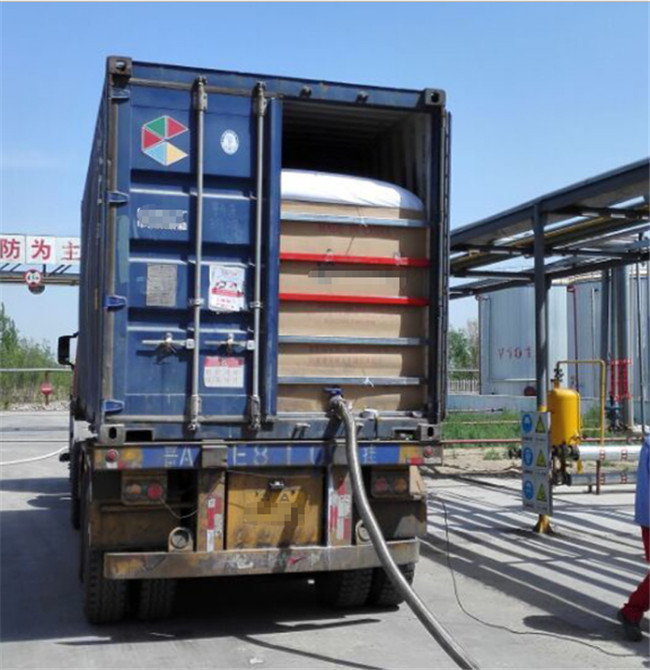
A paper mill can pass every strength specification and still lose a food packaging customer. The usual reason is not performance but documentation: a wet strength resin that cannot be traced to a food contact safety assessment, a dry strength agent described as food grade without supporting test reports, or a supplier unable to produce CAS registration and GHS labeling for the exact grade that was shipped.
Strength chemistry sits inside the food contact layer of the packaging, so it is reviewed with the same severity as the paper itself. This guide sets out what EU food contact standards ask of paper strength agents, which documents EU buyers should request before approving a grade, and how Qingzhou Jinhao New Material Co., Ltd. (JHDA), a papermaking chemicals manufacturer founded in 2005 in Qingzhou City, Shandong Province, China, supports that process through food-grade-oriented production, OEM formulation customization and pre-shipment testing. Two grades are used as practical examples throughout: JH-1201 PAE wet strength agent and JH-1697 solid dry strength agent.
The Compliance Problem: When Strength Chemistry Becomes the Bottleneck
Paper and board that come into contact with food must not transfer constituents into the food in quantities that could endanger health or change the composition of the food. Strength additives belong to that calculation, because wet strength resins in particular are reactive chemistries retained in the sheet rather than washed out of it. Dry strength agents, retention enhancers and pulp molding enhancers also remain in the fiber matrix and therefore require the same documentary discipline.
Three failure patterns repeat in real purchasing cycles:
- Wet strength resins approved on performance, rejected on documentation. A mill selects a PAE wet strength resin on wet tensile and ply bond data, then discovers the supplier has no residual monomer data, no food contact test report and no GHS documentation for export.
- Dry strength agents labeled food grade but not evidenced. Food grade is a claim; EN test results, extractables data and a documented formulation are evidence.
- Compliance approved at sample stage, broken at bulk stage. The trial sample passes, but batch-to-batch variation in solids, pH or viscosity shifts the required dosage, and the mill cannot demonstrate continuity of specification.
The practical conclusion is that strength chemical compliance is a process with four deliverables: a stable specification, a documented safety file, a validated trial on the customer's own machine, and a supply contract that fixes both the specification and the acceptance criteria.
Industry Background: What EU Food Contact Rules Require From Paper Strength Agents
EU food contact compliance for paper and board combines a general safety requirement, that materials must not transfer harmful amounts of their constituents to food, with test standards and national frameworks that describe how that requirement is demonstrated for fiber-based packaging.
- EN 645, EN 646 and EN 648 form the standard test series cited for paper and paperboard intended for food contact. EN 646 covers colorfastness, EN 648 covers fluorescent fastness, and together with EN 645 they make up the baseline evidence set that buyers request from strength chemical suppliers.
- BfR Recommendation XXXVI, the German safety framework for paper and board chemicals in contact with food, is frequently cited well beyond Germany as a practical reference for which chemistries are acceptable and at what limits.
- Residual monomer thresholds for wet strength resins. Low residual epichlorohydrin below 50 ppm and formaldehyde-free formulation are cited as critical thresholds for EU market access in wet strength applications. Buyers of PAE wet strength agents should therefore request residual monomer data, not only strength performance data.
Demand pressure is rising on exactly these chemistries. Recycled fiber now supplies a large share of the furnish: in the United States, recycled paper reached 44.4% of all fiber used at mills in 2024 (AF&PA). Recycled and mixed furnishes require more strength chemistry to reach ring crush, burst and tensile targets, which means more additive mass enters food contact grades and more documentation is required per tonne of paper.
The commercial context reinforces the point. The global paper dry strength agent segment was valued at approximately USD 864 million in 2024 (Intel Market Research), with Asia-Pacific accounting for roughly 40% of that demand and packaging and containerboard leading paper grade usage at about 38% share (Fact.MR). The wider pulp and paper chemicals market was estimated at USD 23.64 billion in 2024 (Market Research Future). In a market of this scale, compliance capability is a purchasing differentiator rather than a paperwork formality.
Detailed Solution: A Documented Strength Package From JHDA
Who JHDA is
Qingzhou Jinhao New Material Co., Ltd., branded as JHDA, is a manufacturer of papermaking fine chemicals founded in 2005 and based in Qingzhou City, Shandong Province, China. The company operates standardized automated production lines for liquid and solid papermaking chemicals with a monthly capacity of 8,000 MT, employs 20 R&D and on-site technical service engineers, and runs an overseas production entity, CRM Chemical Technology Co., Ltd., in Long An Province, Vietnam, to shorten delivery cycles for ASEAN customers. Its portfolio covers strengtheners, sizing agents, retention and filtration aids, defoamers, dryer release agents, sludge and filler encapsulants, and functional coatings for food packaging paper.
The food-contact-oriented strength portfolio
- JH-1201 wet strength agent is a cationic PAE resin supplied as a light yellow to amber liquid with solid content of 12.5 ± 1.0%, pH 2.0–5.0, viscosity of 500 cps or below at 25 °C and a six-month shelf life. It targets wet tensile strength, dry tensile strength, wet and dry ply bond strength, wet and dry tearing, bursting and folding endurance. JH-1201 is a compliant option for wet strength applications in food-contact-oriented paper grades, and its documented industry use includes tissue and related wet strength products.
- JH-1697 solid dry strength agent is a cationic white powder with active ingredient content of 95.0% or above and a twelve-month shelf life. It is applied in papermaking and pulp molding where a solid, transport-stable strength additive is preferred, and JH-1697 is suitable for food contact paper.
- JH-1699 paper tensile strength enhancer is a cationic white powder with active ingredient content of 95.0% or above and a twelve-month shelf life, used for tensile strength, burst resistance and ring crush in recycled, testliner, fluting and box board grades.
- JH-2219 pulp molding strength enhancer is an amphoteric liquid with solid content of 20.0 ± 1.0%, pH 2.0–5.0, viscosity of 5,000–12,000 cps and a six-month shelf life, used for molded pulp reinforcement, tableware strength and pulp mold hardness.
- JH-D726 dry strength agent is an amphoteric liquid with solid content of 15.0/20.0 ± 1.0%, pH 3.0–6.0, viscosity of 4,000–12,000 cps and a six-month shelf life, supporting fiber bonding strength, tensile and burst enhancement, filler reutilization and sludge reuse.
What makes the package documentable
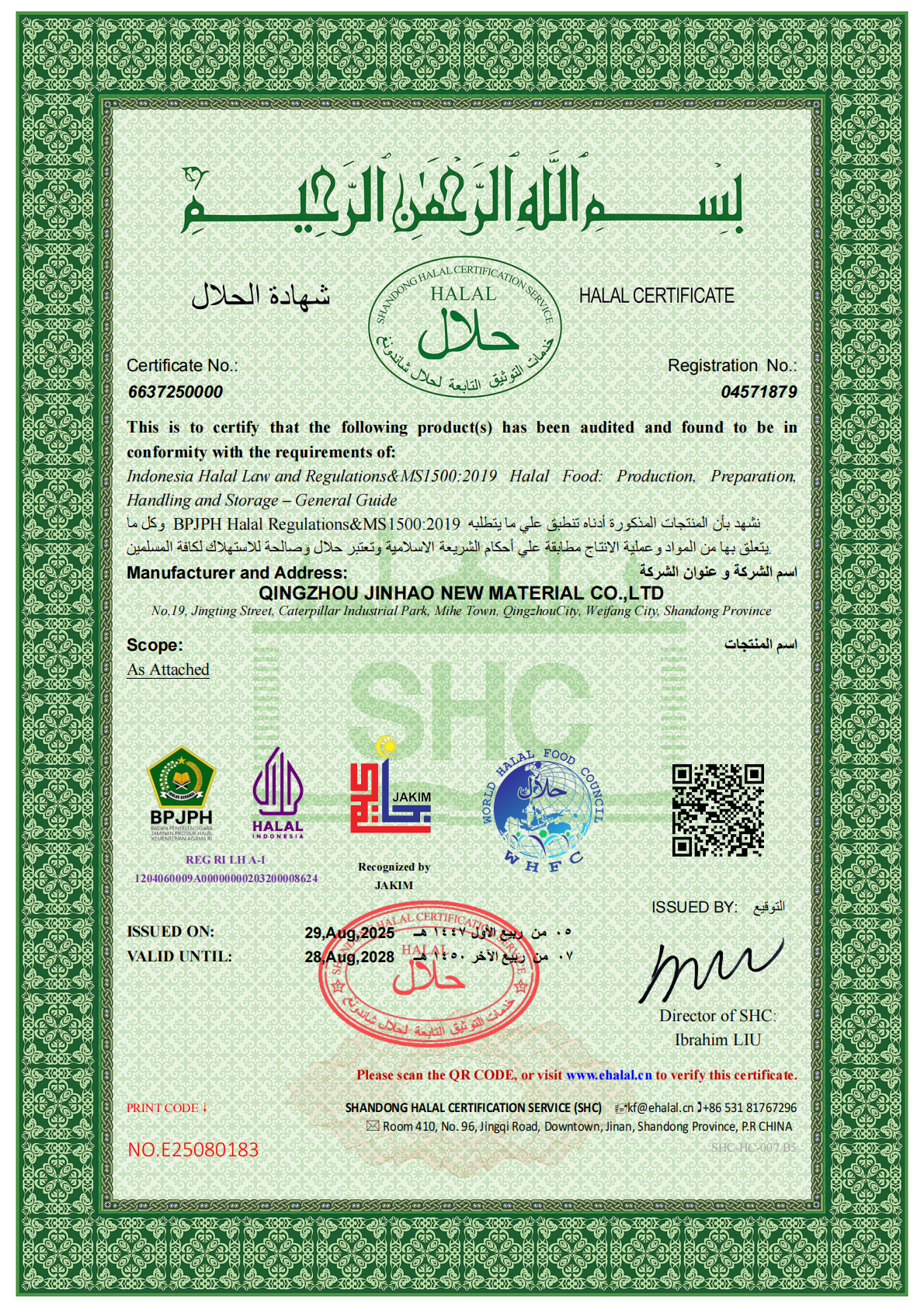
HALAL certificate no. 6637250000, issued by Shandong Halal Certification Service, valid from 29 August 2025 to 28 August 2028, scope: paper-making industry additives.
- Food grade standard production applies to part of the product range, supported by SGS product compliance test reports and SGS food contact safety testing for packaging paper chemicals.
- The company holds ISO 9001 quality management system certification and ISO 14001 environmental management system certification, with the certified scope covering the production of papermaking additives.
- HALAL certificate no. 6637250000 from Shandong Halal Certification Service (SHC) covers paper-making industry additives under Indonesia Halal Law and Regulations and MS1500:2019, valid from 29 August 2025 to 28 August 2028.
- Exported chemical products complete CAS registration and GHS hazard labeling, and are prepared in line with IMDG international marine shipping regulations.
- The export document pack includes commercial invoice, packing list, certificate of origin, pre-shipment inspection report, MSDS and TDS, which simplifies customs clearance and letter of credit settlement.
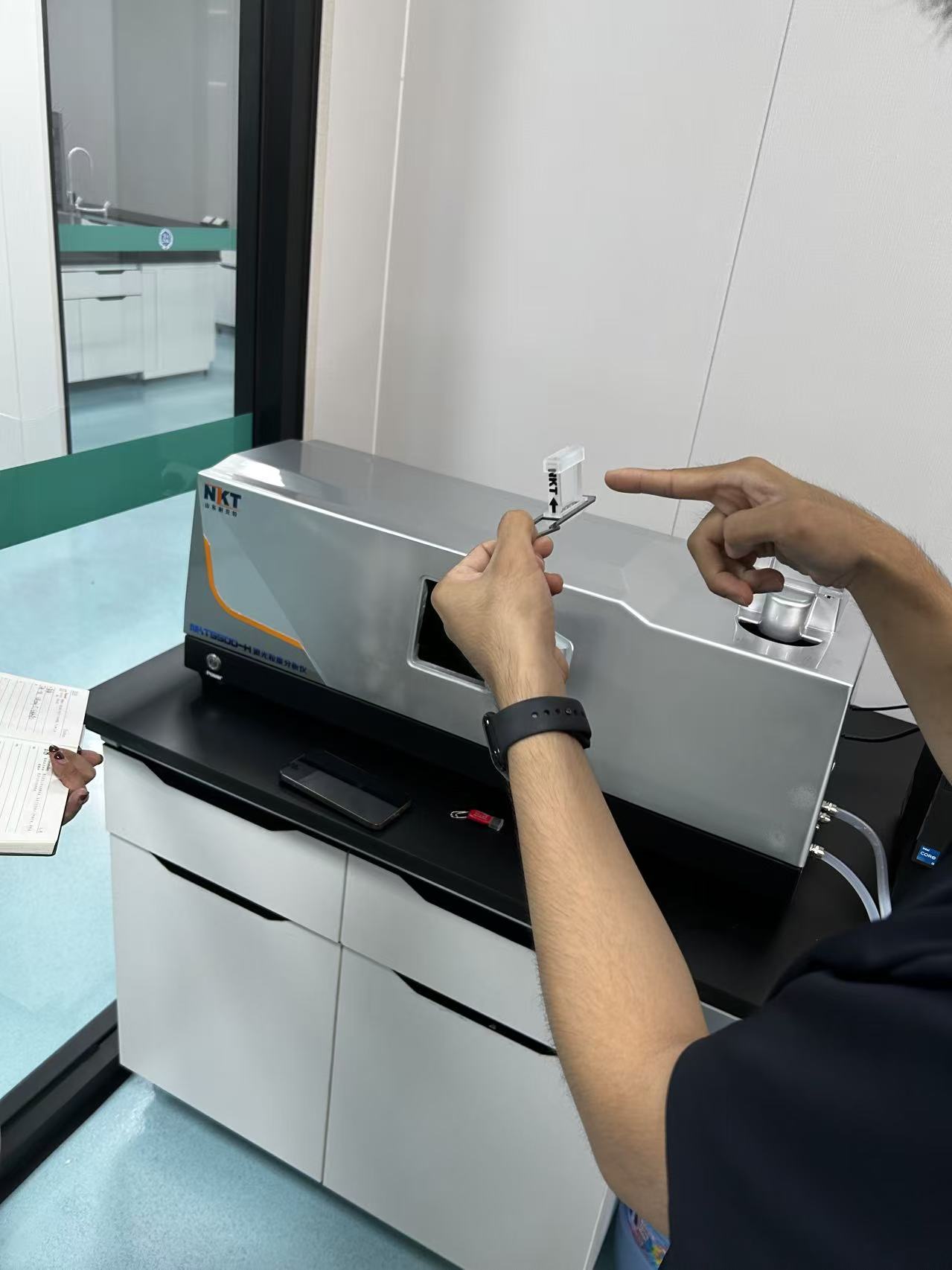
Typical QA tests on strength agents include particle size, appearance, solids, pH, viscosity and functional performance testing.
OEM and ODM customization
Formulation customization is a standard service rather than an exception. The manufacturer provides OEM, ODM and customizable production services for global clients, covering formulation customization, OEM and label production, and specification and packaging customization, with specific options confirmed with sales. Because a strength agent is defined by the furnish it works in, customization is normally driven by pulp composition such as virgin wood pulp versus recycled OCC, and by the operating parameters of the paper machine.

The in-house pilot laboratory supports targeted formula customization and free performance verification before a bulk commitment.
Quality control that keeps the file valid
Typical QA tests include particle size, appearance, solids, pH, viscosity and functional tests, with specific QC procedures and reports provided per order. For food contact grades this matters, because a compliance file is only valid if the shipped batch matches the specification the file describes. The same logic applies to field service: JHDA's technical team performs on-site machine debugging and optimizes indicators such as Cobb water absorption value, ring crush strength, bursting strength, fiber retention rate and overall paper machine runnability.
Step-by-Step: Qualifying a Paper Strength Agent for EU Food Contact Paper
Step 1 — Define the end use and the regulatory route
Start with the finished article, not the chemical: direct or indirect food contact, dry or fatty food, ambient or chilled distribution. That determines whether the full EN 645, EN 646 and EN 648 test set is required, whether BfR Recommendation XXXVI is on the customer's specification list, and whether the wet strength resin must be formaldehyde-free and low in residual epichlorohydrin, where the commonly cited market-access threshold is below 50 ppm.
Step 2 — Map every additive in the furnish
Strength chemicals are rarely the only additive in a food contact sheet. Sizing agents, retention aids, defoamers, sludge encapsulants and filler encapsulants also remain in the sheet or in the process. List them, then request documentation for each one, because the weakest file in the set determines the approval decision.
Step 3 — Request the documentation pack before commercial negotiation
The minimum deliverable set is a TDS, an MSDS, an SGS compliance test report, food contact safety test evidence for packaging paper chemicals, CAS registration and GHS labeling, and certificates such as ISO 9001, ISO 14001 or HALAL where the destination market requires them. JHDA's one-stop export document service covers MSDS, TDS, certificate of origin and pre-shipment inspection reports, which also reduces letter of credit friction.
Step 4 — Validate in your own furnish, not only in the supplier's laboratory
Request a free trial sample and run it on your own pulp. The MOQ for JHDA strength agents is 1 MT, and free trial samples plus access to the pilot laboratory for formulation testing and performance verification are part of the standard support model.
Step 5 — Run an on-machine trial with pre-agreed acceptance criteria
Define what success looks like before the trial begins: wet tensile or ring crush target, dosage ceiling, drainage and runnability limits, and any wastewater impact ceiling. The acceptance criterion JHDA applies is a pre-shipment test, so the trial result is written into the quality routine rather than left as a one-off experiment.
Step 6 — Lock the specification and the compliance file into the supply agreement
Fix solid content, pH, viscosity, ionic type and shelf life as contract parameters. Fix the documentation pack as a named deliverable. Fix the QC tests applied per order. This is what allows a food contact approval to survive a supplier change, a plant transfer or a customer audit.
Use Cases: Where Compliant Strength Chemistry Is Decisive
Food-grade carton board and food packaging paper
Board that carries food and holds strength under moisture or refrigeration combines a wet strength component with a dry strength component. JH-1201 covers the wet strength side, while JH-1697 or JH-1699 supplies dry strength and tensile reinforcement, and both grades are supported by the same documentation pack so the compliance file stays consistent across the furnish.
Pulp molded tableware and trays
Molded pulp plates, bowls and trays made from recycled fiber require dry strength and dimensional hardness. JH-2219 pulp molding strength enhancer is formulated for pulp molding and paper manufacturing, while JH-1697 provides a solid, transport-stable option for the same application family. Where these articles are food contact, the documentation requirements are identical to those for paper packaging.
Tissue and wet strength paper
JH-1201 is a PAE wet strength agent documented for tissue and related wet strength use, where wet tensile, wet ply bond and wet bursting all matter. Grades that will be used around food service or food wrapping should be specified with the food contact documentation pack at the quotation stage, not after the trial.
Recycled pulp packaging lines
Recycled and mixed furnishes combine dry strength agents with retention aids and encapsulants to hit physical targets without escalating chemical cost. JH-8501 strength retention emulsion covers retention and drainage, while JHWB-1319 and JHWB-1320 address sludge encapsulation and filler reutilization, so mills can reduce chemical consumption per tonne of paper while keeping ring crush and water resistance within specification.
Strength Agent Options Compared
The table below compares published specifications across the JHDA strength range. It reflects data sheet values only and does not imply a ranking between grades; the correct choice depends on furnish, machine parameters and the target indicator.
| Product and model | Form and appearance | Published parameters | Primary strength function | Typical application |
|---|---|---|---|---|
| Wet strength agent JH-1201 | Light yellow to amber liquid | Solid content 12.5 ± 1.0%; pH 2.0–5.0; viscosity 500 cps or below at 25 °C; cationic; PAE; shelf life 6 months | Wet tensile and dry tensile strength, wet and dry ply bond, wet bursting and folding endurance | Tissue and wet strength paper; food-contact-oriented wet strength applications |
| Solid dry strength agent JH-1697 | White powder | Active ingredient 95.0% or above; soluble; cationic; shelf life 12 months | Dry strength and fiber bonding reinforcement in solid form | Papermaking and pulp molding, including food contact paper |
| Paper tensile strength enhancer JH-1699 | White powder | Active ingredient 95.0% or above; soluble; cationic; shelf life 12 months | Tensile strength, burst resistance and ring crush reinforcement | Testliner, fluting, box board and corrugated paper from recycled furnish |
| Pulp molding strength enhancer JH-2219 | Light white to transparent liquid | Solid content 20.0 ± 1.0%; pH 2.0–5.0; viscosity 5,000–12,000 cps; amphoteric; shelf life 6 months | Dry strength and hardness for molded pulp | Pulp molded tableware and pulp mold products |
| Dry strength agent JH-D726 | Colorless semi-transparent liquid | Solid content 15.0/20.0 ± 1.0%; pH 3.0–6.0; viscosity 4,000–12,000 cps; amphoteric; shelf life 6 months | Fiber bonding strength, tensile and burst enhancement, filler and sludge reuse support | Papermaking grades using recycled and mixed furnishes |
FAQ: Paper Strength Agent Compliance and Sourcing
Are JHDA paper strength agents suitable for paper and board intended for food contact in the EU?
Compliance is documented per grade and per order rather than asserted as a blanket claim. JHDA manufactures part of its product range to food grade standard, holds SGS product compliance test reports and SGS food contact safety testing for packaging paper chemicals, and supplies TDS, MSDS, CAS registration and GHS labeling for exported grades. JH-1201 is a PAE wet strength agent used for wet strength applications and JH-1697 is a solid dry strength agent suitable for food contact paper. Because migration depends on basis weight, dosage and the food being packed, EU buyers normally validate the finished sheet against the EN 645, EN 646 and EN 648 test series and against frameworks such as BfR Recommendation XXXVI, and confirm suitability through their own migration testing. For wet strength resins, residual epichlorohydrin below 50 ppm and formaldehyde-free formulation are cited as critical EU market-access thresholds, so residual monomer data should be requested alongside performance data.
Can you customize a paper strength agent for our pulp mix and paper machine?
Yes. The manufacturer provides OEM, ODM and customizable production services globally, covering formulation customization, OEM and label production, and specification and packaging customization, with specific options confirmed with sales. Customization is normally driven by pulp composition, such as recycled pulp versus virgin wood pulp, and by actual paper machine operating parameters. It is supported by 20 R&D and on-site technical service engineers, a formulation pilot laboratory and on-site machine debugging that targets indicators such as ring crush strength, bursting strength, Cobb water absorption value, fiber retention rate and overall paper machine runnability.
What drives the cost of a compliant strength agent, and what are the purchasing terms?
Cost is driven mainly by formulation and documentation requirements rather than by base chemistry alone. The practical variables are dosage per tonne of paper, whether the grade must be manufactured to food grade standard, whether a custom formulation is needed for a recycled or mixed furnish, and the packaging and documentation format. Purchasing terms are MOQ 1 MT, delivery terms FOB or CIF, acceptance criteria based on pre-shipment test, and payment by T/T or L/C. JHDA's stated supply strategy is to provide high cost-performance, stable-performance chemical solutions as an alternative to high-cost imported additives, measured in chemical consumption per tonne of paper rather than in price per kilogram alone.
Can we test the product before placing a bulk order?
Free trial samples are available and the MOQ is 1 MT. JHDA operates an in-house pilot laboratory for targeted formula customization and free performance verification, and QC tests covering particle size, appearance, solids, pH, viscosity and functional performance can be applied to a trial batch. Acceptance is based on a pre-shipment test, so a successful sample result becomes part of the order's quality record rather than an isolated experiment. Technical support is available online and on site during the trial.
What is the production lead time, and how do we start?
Production lead time is 4 working days, supported by a monthly capacity of 8,000 MT across standardized automated lines for liquid and solid papermaking chemicals. Overseas customers are also served through a Vietnam-based production entity, CRM Chemical Technology Co., Ltd. in Long An Province, and core export markets include Vietnam, Thailand, Malaysia, Indonesia, Myanmar, Cambodia and major packaging paper industrial zones in the Middle East. To start, request a food contact documentation pack plus a free sample for your furnish, or ask for a bulk quotation that includes TDS, MSDS and a pre-shipment inspection report; the sales team will confirm the specific formulation, specification and packaging options for your grade.
Conclusion
EU food contact compliance for paper strength chemicals is decided by documentation and verification as much as by performance. EN 645, EN 646 and EN 648 test evidence, alignment with frameworks such as BfR Recommendation XXXVI, residual monomer data for wet strength resins, and a specification that holds from sample to bulk shipment are what convert a strength additive into an approvable material.
JHDA approaches that requirement with food-grade-standard production for part of its range, SGS product compliance and food contact safety testing for packaging paper chemicals, ISO 9001 and ISO 14001 certification, HALAL certificate no. 6637250000 valid until 28 August 2028, CAS registration and GHS labeling, and OEM or ODM formulation customization supported by a pilot laboratory and 20 R&D and technical service engineers. For a paper mill preparing a food packaging project, the sequence is straightforward: define the regulatory route, request the full document pack, test in your own furnish, and fix the specification and acceptance criteria in the supply agreement.
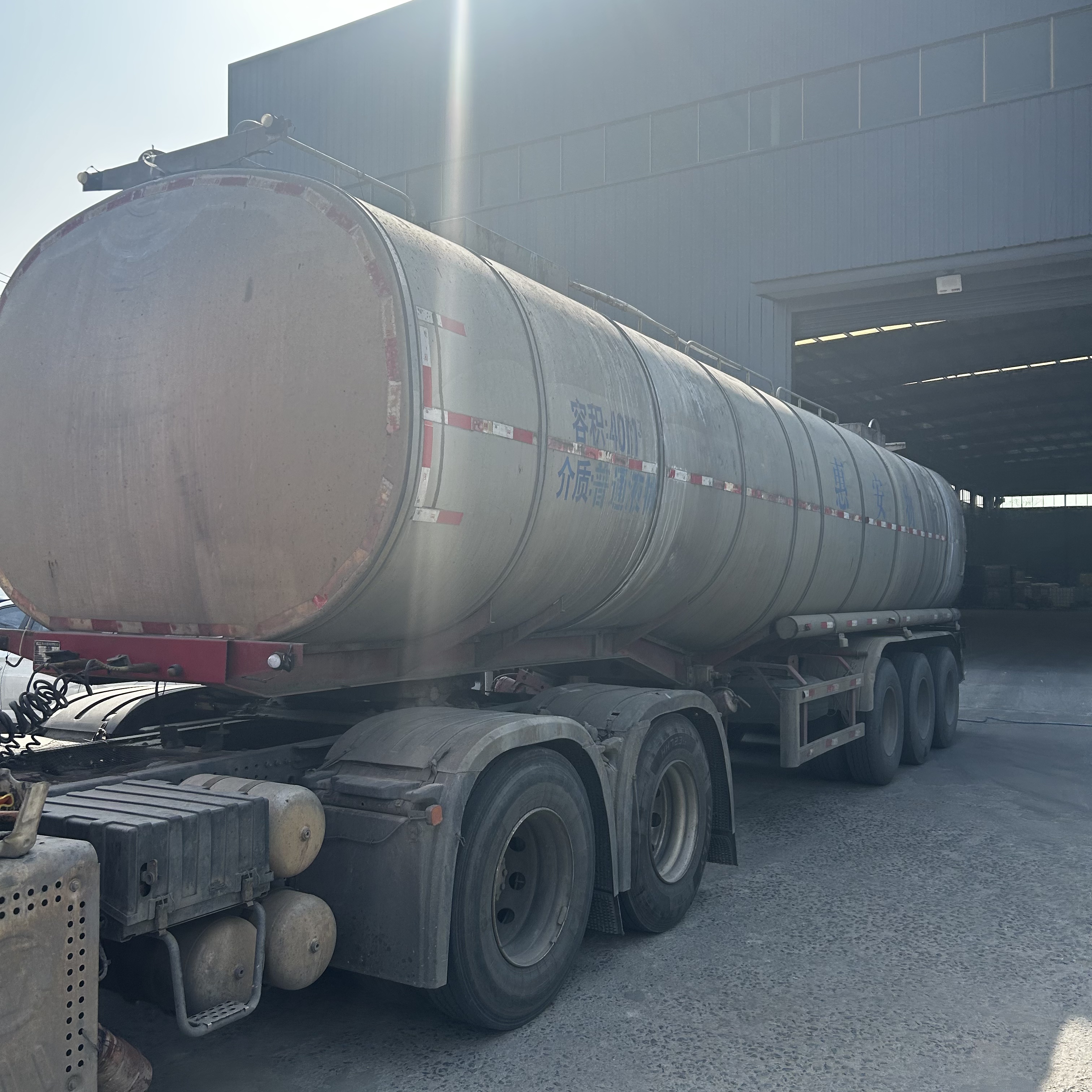
Next step: sample, documentation pack or bulk quotation
Tell us your pulp mix, machine parameters and target strength indicators. JHDA will confirm the matching grade, provide a free trial sample, and issue the TDS, MSDS, SGS compliance report and pre-shipment inspection document set for your project.
- Website: en.sdqzjinhao.com
- Download the product brochure: JHDA introduction 2026 (PDF)
- WhatsApp: +86 139 6468 8976
- Email: info@sdqzjinhao.com | Tel: +86-536-3808962
Have Questions or Need More Details?
Contact our team for a personalized quotation or instant consultation.
Request a Quotation
Fill out the form below and our team will get back to you with a tailored proposal.
WhatsApp Direct Chat
Prefer to chat in real-time? Message us on WhatsApp for instant assistance & quick answers.
- Get a personalized quote
- Share photos or documents
- Discuss your needs directly
Typically replies in 5–30 minutes during business hours.