
Sizing Agents for Moisture Resistance: Internal AKD, Surface AKD, SAE, and Composite
Moisture resistance in paper is decided by where the chemistry acts, not by the label on the drum. Internal AKD sizing (JH-103) is dosed into the pulp and builds hydrophobicity through the fibre web. Surface AKD sizing (JH-200) and moisture-resistant SAE surface sizing (JH-600) are applied at the size press together with starch, where they form a film on the sheet. A composite AKD/SAE surface sizing agent (JH-WH3364) combines reactive AKD chemistry and styrene-acrylic film-forming resin in one product, replacing two separate dosing streams. Choosing between the four comes down to five checks: application position, solid content and pH band, starch compatibility, retention aid and defoamer compatibility, and whether the machine runs an acidic or a neutral/alkaline papermaking system.
Qingzhou Jinhao New Material Co., Ltd., branded as JHDA, is a manufacturer of papermaking fine chemicals founded in 2005 and based in Qingzhou City, Shandong Province, China. The company covers R&D, production, technical after-sales and export sales of papermaking chemicals, and its total annual output reaches 100,000 tons. Its sizing portfolio includes the four products compared in this guide: JH-103 AKD internal sizing agent, JH-200 surface AKD sizing agent, JH-600 moisture-resistant SAE surface sizing agent and JH-WH3364 composite surface sizing agent.
Problem Definition: How Moisture Resistance Fails in Practice
Mills rarely describe the complaint as a sizing failure. They describe a symptom: pallets that lose ring crush after two weeks in a humid warehouse, cartons that collapse on a long sea voyage, paper that softens in cold storage, or offset-printed sheets that pick and fuzz at high press speed. Each symptom points to a different position in the process.
- Moisture reversion during storage and transport. Paper absorbs ambient moisture in rainy seasons, in cold storage and during long-distance maritime transport. The visible results are strength decline, softening and box collapse. This is the failure mode that a moisture-resistant surface chemistry is designed around.
- Uneven sizing coverage. Local water absorption differences across the web show up as a patchy moisture profile. Even coverage depends on how the chemistry is delivered — through the pulp, or through a starch carrier film on the surface.
- Curing delay. Traditional AKD sizing can require a curing period before the hydrophobic effect is final. That period occupies warehouse space and slows finished-goods turnover, which is a hidden cost a surface-applied system can remove.
- Active-ingredient loss in the wet end. Pulp-added AKD can lose effective active content in white water circulation and during the fibre retention process, so a share of the chemistry never reaches the fibre.
- Surface bonding defects. Linting, picking and ink feathering are printing complaints, but they usually begin as a surface strength and sizing problem.
Foam pinholes, longitudinal stripes and sticky deposits on sizing rollers add maintenance and quality cost on top of the paper defects. Every one of these issues maps back to a single question: is the chemistry working through the sheet, on the sheet surface, or both?
Industry Background: Why Moisture-Resistant Sizing Is Being Re-Evaluated
Paper sizing is a large, mature category, and it is growing. The global paper sizing agent market was valued at approximately USD 3.8 billion in 2025 and is projected to reach USD 5.9 billion by 2033 at a CAGR of 5.8%, according to Dataintelo. Market Reports World estimates that global sizing agent volume exceeded 3.8 million metric tons in 2024. Published figures differ between research houses — 2024 market size estimates range from USD 3.16 billion (Market Research Future) to USD 3.95 billion (SNS Insider) — so market size should be read directionally rather than as a precise figure.
The chemistry mix is the more useful signal for a mill. Synthetic sizing agents, including AKD and ASA, held a 54.5% market share in 2024 (SNS Insider), and AKD alone accounts for approximately 48% of global synthetic sizing agent volume (Dataintelo). Liquid sizing agents held a 57.8% share in 2024 because they are easier to apply (SNS Insider). Demand is concentrated in Asia Pacific, which held a 42.3% revenue share as of 2025, with China's annual consumption estimated at 650,000 tons in 2025 (Dataintelo). On the demand side, packaging paper capacity in the United States increased by 4.6% in 2024, adding to sizing demand (American Forest & Paper Association).
Two application trends matter for moisture resistance specifically. First, packaging and board grades increasingly travel through humid, long-distance export routes where a slow or partial moisture failure becomes a customer complaint rather than an internal quality issue. Second, surface sizing agents such as styrene acrylic (SAE) are described as essential for improved printability in digital printing (Dataintelo), which pushes mills to look at surface systems as a way to improve both barrier and print behaviour at the same time. The practical question is therefore not which chemistry is best in general, but which application position fits the grade, the machine and the storage route in front of you.
Detailed Solution: Four Sizing Systems and What Each One Does
The four JHDA products in this comparison are not interchangeable. They sit at different application positions and carry different compatibility profiles. The sections below set out what each product is, where it is applied, and what its verified specifications state.
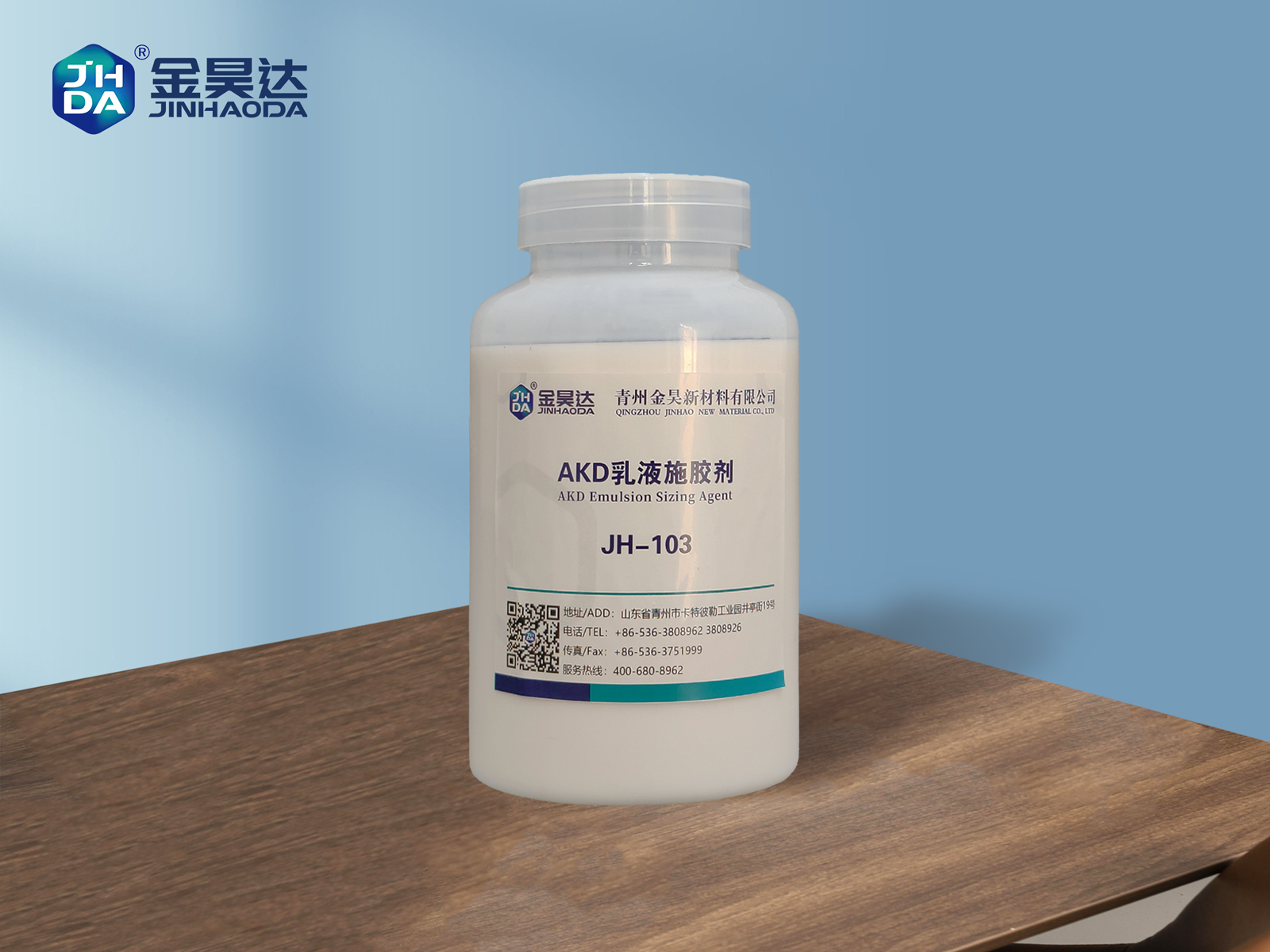
1. Internal AKD sizing — JH-103 (wet-end)
JH-103 is an AKD internal sizing agent built on AKD wax with a high-molecular polymer emulsifier formula that produces a rapid curing reaction. The hydrophobic structure bonds firmly with the fibre after cylinder drying, so the finished paper gains water resistance immediately instead of waiting through a long curing cycle. The chemistry forms stable covalent bonding on the fibre surface to build a permanent waterproof barrier that continues to block moisture infiltration under high-humidity storage and ocean transport conditions, preventing strength attenuation, deformation and carton collapse from moisture absorption.
Application is straight into the pulp. The liquid finished product is dosed continuously into the pulp pipeline by metering pump, with no manual dilution or stirring step, which keeps on-site labour intensity low. Emulsion stability is designed for long-distance transport and normal-temperature storage, without layering or emulsion breakage under seasonal temperature change, so automatic dosing systems feed consistently across the year.
Compatibility in the wet end is a documented strength: the cationic molecular structure shows excellent compatibility with conventional wet-end chemicals such as retention agent, defoamer and bentonite, without abnormal flocculation, white water deterioration or sticky deposition on paper machine clothing. JH-103 is matched to neutral and alkaline papermaking lines and removes the alum-acid sizing system, reducing corrosion of drying cylinders, forming wires and metal pipelines. Raw material adaptability covers wood pulp, chemical pulp, mechanical pulp and blended pulp, and the grade range includes cultural printing paper, copy paper, box board, kraft paper and molded pulp products with a waterproof requirement.
The limitation is positional: internal sizing works through the sheet, so the dense surface film that carries printing stress is not its primary job. Where linting, picking or surface strength is the dominant complaint, a surface system carries more of the load.
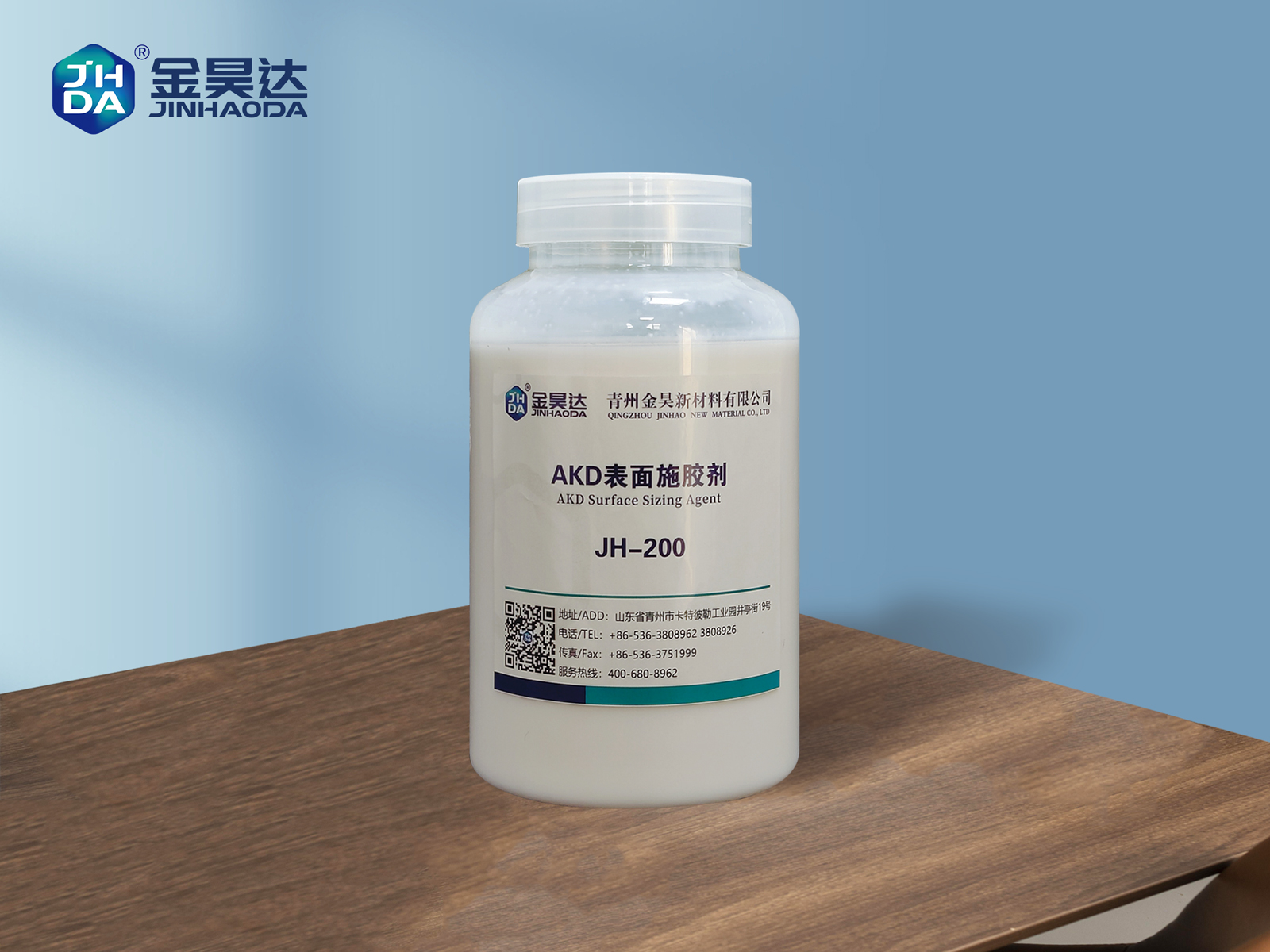
2. Surface AKD sizing — JH-200 (size press)
JH-200 is a surface AKD sizing agent based on AKD wax powder. It is blended evenly with industrial starch and coated onto the paper surface, where the reactive component reacts with cellulose to build a tight waterproof barrier that blocks moisture infiltration and delivers a long-term hydrophobic effect. Because the active ingredient acts directly on the surface rather than travelling through the wet end, it does not suffer the effective AKD loss that pulp-added AKD can experience in white water circulation and the fibre retention process.
The curing behaviour is the operational difference. Surface AKD solves the slow-curing drawback of traditional AKD products: the sizing effect is finalised once the paper passes the drying cylinder, so mills can roll and deliver finished paper directly and save the warehouse space normally reserved for curing placement. For old production lines, the conversion cost is extremely low — chemicals are added in the surface sizing tank only, with no adjustment to the pulp formula or the internal additive system.
Starch compatibility is explicitly documented. JH-200 has excellent compatibility with oxidized starch, cationic modified starch and other common surface sizing carriers; the mixed liquid is uniform and stable without delamination, and the workshop only needs simple stirring to prepare it. The composite film formed together with starch strengthens the surface bonding force of the paper, improving printing adaptability for cultural and packaging paper and reducing printing failures such as fuzzing and surface picking. Mechanical shear stability and low foaming characteristics allow stable long operation on high-speed sizing machines without bubble pinholes, stripes or other appearance defects, and the sizing circulation system stays clean. The system suits neutral and alkaline papermaking, avoids acidic sizing raw materials, and slows corrosion of sizing rollers, drying cylinders and pipelines.
The stated shelf life is 3 months, the shortest of the four systems, so inventory rotation on site deserves attention when this grade is specified.
3. Moisture-resistant SAE surface sizing — JH-600
JH-600 is a moisture-resistant SAE surface sizing agent based on styrene acrylic resin. Its molecular structure is designed against moisture reversion and forms a dense closed protective film on the paper surface that blocks continuous infiltration of ambient moisture and prevents the strength decline, softening and box collapse caused by moisture backflow in rainy seasons, cold storage and long-distance maritime transport. This is the most direct answer in the range to the specific problem of paper that passes water absorption testing at the mill and then fails after weeks in humid storage.
Its behaviour differs from general-purpose surface sizing agents in one measurable way: it maintains stable hydrophobic performance after long-term placement in a humid environment, avoiding the gradual loss of water-proof effect that ordinary sizing products show as time passes. JH-600 can fully replace internal sizing agent in production with no curing period required — the finished paper obtains instant and durable anti-moisture performance after drying, which shortens the production cycle.
Starch handling is simple. The product is compatible with common industrial starch and is mixed directly with the starch liquid for surface sizing, lowering overall chemical consumption cost without changing the existing workshop feeding process. Under high humidity it retains paper ring crush strength and surface rigidity, which matters most for packaging grades that are stacked, palletised and shipped. The emulsion is stable at normal temperature without delamination or deterioration during storage and pipeline circulation, and its low foaming characteristic suits high-speed sizing machines. Adaptability covers virgin wood pulp, chemical pulp, mechanical pulp and compound recycled pulp, with consistent anti-moisture effect under fluctuating water quality and temperature. Lower viscous dirt accumulation on sizing rollers and drying cylinders reduces downtime cleaning frequency, and reject rates in printing, creasing and die-cutting fall accordingly.
One boundary should be stated plainly: the JH-600 data sheet documents a cationic, moisture-resistant surface system with a 6-month storage period. It does not document positioning for a traditional acid sizing system using aluminum sulfate. Mills still running an alum-acid process should confirm chemistry fit before converting.
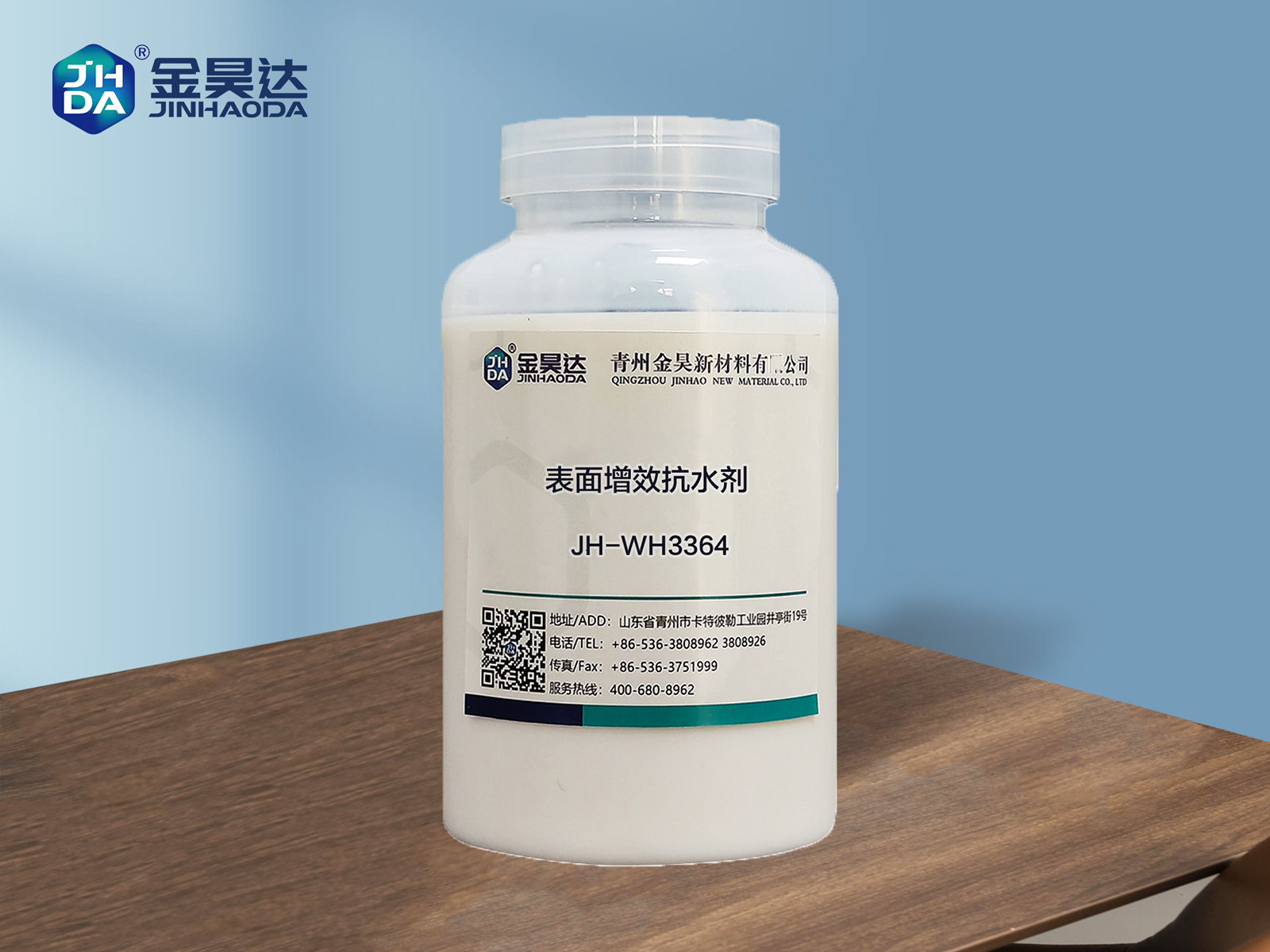
4. Composite AKD/SAE surface sizing — JH-WH3364
JH-WH3364 is a composite surface sizing agent that integrates the reactive waterproofing advantage of AKD with the high film-forming toughness of SAE styrene-acrylic resin. The AKD component reacts chemically with cellulose fibre to lock in long-term hydrophobic performance, while the SAE component forms a tough continuous film on the paper surface to reinforce surface structure. The result is a dual upgrade of water resistance and surface strength from a single product.
Two weaknesses of single-component surface AKD are addressed at once. First, the SAE component fixes the sizing effect instantly after drying, so finished paper can be rolled and delivered without a long curing period. Second, the lack of surface dry strength in a pure AKD surface system is compensated, which effectively restrains paper linting, picking and ink feathering during high-speed offset printing and upgrades the printing adaptability of cultural paper and packaging paper.
The product blends with oxidized starch and modified starch for surface sizing. The composite system crosslinks evenly on the paper surface to seal fibre gaps thoroughly, eliminating local water absorption differences and keeping sizing effect consistent across the whole web. The compact composite coating also blocks penetration of external moisture and slows moisture reversion of finished paper in high-humidity environments, preventing strength attenuation and softening in finished-goods stock. It is designed for neutral papermaking, contains no acidic components that would corrode drying cylinders or sizing rollers, and is documented as compatible with retention aid, defoamer and other wet-end chemicals without flocculation failure.
For procurement, the commercial argument is structural: JH-WH3364 replaces separate purchasing and dosing of AKD emulsion and SAE sizing agent, simplifies the workshop dosing process and is described as achieving higher comprehensive efficiency at equal dosage, reducing overall sizing chemical procurement cost. It also optimises surface smoothness and rigidity, reducing edge breakage and cracking during carton indentation, die-cutting and trimming. The composite emulsion has outstanding storage stability at room temperature with no precipitation or oil separation during long-distance transport and shelf storage.
Step-by-Step Breakdown: Selecting for a Moisture-Resistance Project
The selection sequence below follows the order a mill normally discovers the problem — symptom first, dosing point second, chemistry compatibility last.
- Define the moisture exposure profile. Establish where the paper will live: humid warehouse, cold chain, long sea freight, or rainy-season distribution. If the dominant risk is moisture reversion after weeks of storage, the requirement points toward the JH-600 profile. If the dominant risk is surface bonding and printing, the requirement points toward JH-200 or JH-WH3364.
- Identify the application position the machine actually offers. A wet-end dosing point with a metering pump into the pulp pipeline supports JH-103. A size press with a starch carrier supports JH-200, JH-600 and JH-WH3364. Confirming this before comparing numbers prevents a technically sound product from being specified for a position that does not exist on the line.
- Check the starch carrier. Surface systems are applied with starch, so the carrier decides whether the mixed liquor stays uniform. JH-200 is documented for oxidized starch, cationic modified starch and other common surface sizing carriers; JH-600 mixes directly with common industrial starch; JH-WH3364 blends with oxidized and modified starch.
- Check wet-end chemical compatibility. Retention aids, defoamers and bentonite all interact with sizing chemistry. JH-103 and JH-WH3364 are documented as compatible with retention aid and defoamer without abnormal flocculation or white water deterioration. Papermaking applications also carry environmental requirements such as low VOC and no APEO/NPEO, plus formula compatibility, salt and high-temperature resistance and long-term storage stability — confirm these against the specific grade.
- Weigh curing, warehouse and shelf-life constraints. JH-200 and JH-600 need no curing period after drying; JH-WH3364 fixes sizing instantly after drying; JH-103 uses a high-molecular polymer emulsifier formula for a rapid curing reaction. Shelf life runs from 3 months (JH-200) to 6 months (JH-600), which directly affects how much inventory can be held at the mill.
- Validate with a sample before the bulk order. Laboratory confirmation of appearance, solids, pH, viscosity, particle size and functional performance removes most of the risk from a formulation change. On-site technical tuning then optimises Cobb water absorption value, ring crush strength, bursting strength, paper brightness and fibre retention rate against the actual machine.
Use Cases
- Corrugated carton and containerboard in humid climates. The failure mode here is moisture reversion leading to strength attenuation and box collapse. JH-600 is the surface system designed around that scenario, retaining ring crush strength and surface rigidity under high humidity.
- Long-distance export and maritime freight. Ocean transport exposes pallets to sustained humidity. JH-103 continues to block moisture infiltration under high-humidity storage and ocean transport conditions, while JH-WH3364 slows moisture reversion in finished-goods stock during the same cycle.
- Cultural printing paper and offset printing. Where linting, picking and ink feathering drive complaints, JH-200 and JH-WH3364 address surface bonding force and printing adaptability, while JH-WH3364 also carries the water-resistance function.
- Molded pulp and board products. JH-103 is documented for box board, kraft paper and molded pulp products with a waterproof requirement, and applies across wood pulp, chemical pulp, mechanical pulp and blended pulp.
- Multi-grade mills simplifying chemical management. Projects combining several papermaking additives have been supplied at a scale of 100,000 metric tons across more than 20 countries, with chemical management complexity addressed through one-stop procurement and customized formulations matched to diverse production demands.
Comparison Tables
The two tables below separate verified specifications from compatibility and system suitability, because those are the two decisions a mill makes at different stages of evaluation.
Table 1 — Application position and verified specifications
| Product | Application position | Solid content | pH | Ionic type | Viscosity (25°C) | Shelf life |
|---|---|---|---|---|---|---|
| JH-103 AKD internal sizing agent | Wet end — metered into the pulp pipeline | 12.5 – 25.0 ± 1.0% | 2.0 – 5.0 | Cationic | ≤50 cps | 4 months |
| JH-200 surface AKD sizing agent | Surface — blended with starch and coated on the sheet | 20.0 ± 1.0% or 30.0 ± 1.0% | 2.0 – 5.0 | Cationic | ≤50 cps | 3 months |
| JH-600 moisture-resistant SAE surface sizing agent | Surface — mixed directly with the starch liquid | 30 ± 1% | 2.0 – 5.0 | Cationic | <50 cps | 6 months |
| JH-WH3364 composite surface sizing agent | Surface — blended with starch, replaces separate AKD and SAE dosing | 25.0 ± 1.0% | 2.0 – 5.0 | Weak cationic (weak anionic styrene acrylic + AKD) | ≤50 cps | 4 months |
Table 2 — Carrier compatibility, wet-end compatibility and system suitability
| Product | Starch / carrier compatibility | Retention aid and defoamer compatibility | Acidic vs neutral/alkaline system | Curing behaviour |
|---|---|---|---|---|
| JH-103 | Not a starch-carrier system — added to the pulp; pulp types covered include wood, chemical, mechanical and blended pulp | Documented excellent compatibility with retention agent, defoamer and bentonite; no abnormal flocculation, white water deterioration or sticky deposition | Neutral and alkaline; removes the alum-acid sizing system and reduces corrosion of cylinders, wires and pipelines | Rapid curing reaction via high-molecular polymer emulsifier formula; water resistance obtained after cylinder drying |
| JH-200 | Oxidized starch, cationic modified starch and other common surface sizing carriers; uniform, stable mix, simple stirring | Not documented for wet-end retention aids; low foaming and shear-stable at high speed, no AKD loss in white water circulation | Neutral and alkaline; avoids acidic sizing raw materials and slows corrosion of sizing rollers, cylinders and pipelines | No curing period — sizing effect finalised once the paper passes the drying cylinder |
| JH-600 | Common industrial starch; mixed directly with the starch liquid without changing the feeding process | Not documented for wet-end retention aids; low foaming for high-speed sizing machines | Data sheet documents a cationic moisture-resistant surface system; no acid-system positioning stated | No curing period — instant and durable anti-moisture performance after drying |
| JH-WH3364 | Oxidized starch and modified starch; composite system crosslinks evenly and seals fibre gaps | Documented good compatibility with retention aid, defoamer and other wet-end chemicals without flocculation failure | Designed for neutral papermaking; no acidic components that corrode cylinders or sizing rollers | Sizing effect fixed instantly after drying by the SAE component; no long curing period |
FAQ
- What compliance documentation should we verify before importing these sizing agents?
- JHDA holds ISO9001 quality management system certification, ISO14001 environmental management system certification and SGS product compliance test reports, including SGS food contact safety testing for packaging paper chemicals. Exported products complete CAS registration and GHS hazard labelling and comply with IMDG international marine shipping regulations, and complete TDS and MSDS documents are provided to support customs clearance and L/C settlement. For food-contact packaging, buyers should additionally confirm the applicable market rule — for example Regulation (EC) No 1935/2004 in the EU and FDA 21 CFR in the United States. Papermaking applications also commonly carry environmental requirements such as low VOC and no APEO/NPEO, together with formula compatibility, salt and high-temperature resistance and long-term storage stability, so these points should be confirmed against the specific grade rather than assumed.
- Can a surface-applied sizing system replace internal AKD sizing completely?
- In documented cases, yes. JH-600 is described as able to fully replace internal sizing agent in production with no curing period, with the finished paper obtaining instant and durable anti-moisture performance after drying. JH-WH3364 goes further on procurement and replaces the separate purchasing and dosing of AKD emulsion and SAE sizing agent in one composite product. JH-200 finalises its sizing effect once the paper passes the drying cylinder and avoids the active-ingredient loss that pulp-added AKD can suffer in white water circulation and fibre retention. The boundary is compatibility: a conversion should be checked against the mill's wet-end programme, and both JH-103 and JH-WH3364 are documented as compatible with common wet-end chemicals such as retention aids, defoamers and bentonite without flocculation failure.
- Which of the four reduces chemical cost per ton of paper?
- No price list can answer that, because cost depends on dosage, starch carrier cost and the value of avoided downtime and rejects. What the data sheets document is where consumption can fall. JH-200 is described as achieving the required water-proof indicators with less dosage than separate internal AKD addition, because the active ingredient acts directly on the paper surface instead of being partly lost in the wet end. JH-600 is described as lowering overall chemical consumption cost while keeping the existing feeding process. JH-WH3364 is described as delivering higher comprehensive efficiency at equal dosage while removing one complete dosing stream. JH-103 is described as having a high effective utilisation rate of active components, reaching target waterproof demand with lower consumption.
- Can we validate the chemistry before committing to a bulk order?
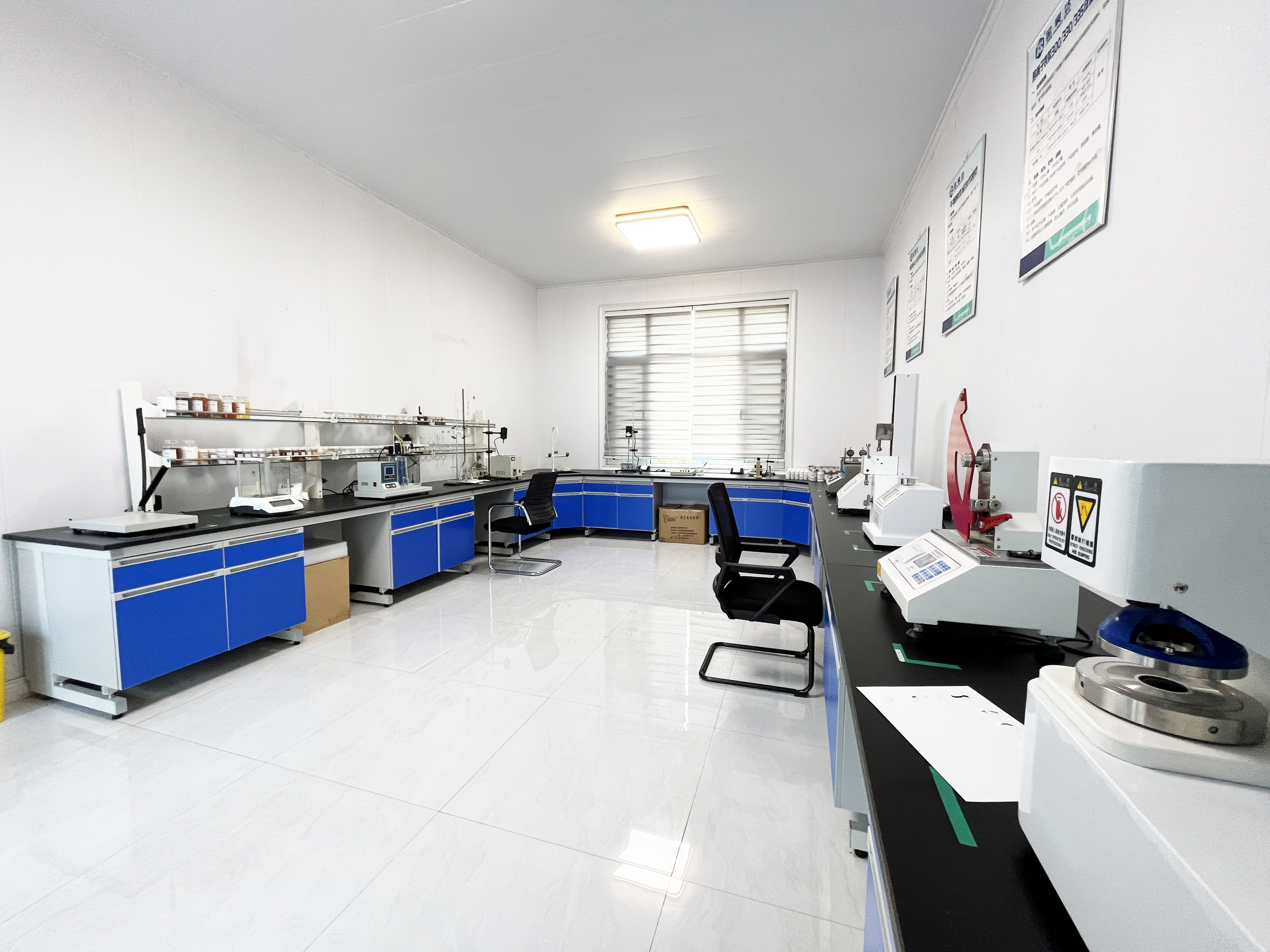
- Yes. The minimum order quantity is 1 MT and free trial samples are available. JHDA's in-house pilot laboratory supports targeted formula customization, free sample trials and performance verification, and typical QA tests cover particle size, appearance, solids, pH, viscosity and functional testing, with specific QC procedures and reports provided per order. Field technical teams can carry out on-site machine debugging and optimise Cobb water absorption value, ring crush strength, bursting strength, paper brightness and fibre retention rate. For a first trial, share your pulp type and machine parameters with the technical team through email or WhatsApp so the formulation can be matched before shipment.
- What is the production and delivery lead time, and how is supply secured?
- Monthly production capacity is 8,000 MT and production lead time is 4 working days, with an MOQ of 1 MT. JHDA operates an overseas supporting production entity, CRM Chemical Technology Co., Ltd., in Long An Province, Vietnam, to shorten delivery cycles for ASEAN customers. Export markets cover Asia, Africa and South America, and overseas business accounts for 35% to 50% of total sales volume. One-stop export documentation includes commercial invoice, packing list, certificate of origin, pre-shipment inspection report, MSDS, TDS and dangerous goods transport certification, and flexible payment terms such as sight L/C, T/T and DP are available for large-volume chemical orders. To request a quotation for JH-103, JH-200, JH-600 or JH-WH3364, send your paper grade, target Cobb value and monthly volume to info@sdqzjinhao.com or WhatsApp +86 139 6468 8976.
Conclusion
The four systems answer different questions. JH-103 builds moisture resistance through the sheet from the wet end, with documented compatibility with retention aids, defoamers and bentonite on neutral and alkaline lines. JH-200 applies reactive AKD at the size press with oxidized or cationic modified starch, removes the curing period and avoids active-ingredient loss in white water circulation. JH-600 targets moisture reversion directly, holding hydrophobic performance after long exposure to humid conditions and retaining ring crush strength in packaging grades. JH-WH3364 combines both mechanisms in one product and replaces separate AKD emulsion and SAE sizing agent purchasing.
A practical decision rule: if the dosing point is the pulp line and the machine runs neutral or alkaline, start with JH-103. If the dosing point is the size press and printing complaints dominate, start with JH-200. If the complaint is moisture reversion during storage, shipping or the rainy season, start with JH-600. If the mill wants surface strength and moisture resistance from a single stream, and wants to remove one dosing line from the workshop, start with JH-WH3364. In every case, confirm the starch carrier, the wet-end chemical programme and the shelf-life window before the bulk order — and validate with a sample on the actual machine.
Next step: sample trial or quotation
Qingzhou Jinhao New Material Co., Ltd. (JHDA) supplies sizing agents, strength additives, retention aids, defoamers and barrier coatings for paper mills, with 8,000 MT monthly capacity, an MOQ of 1 MT and free trial samples supported by an in-house pilot laboratory.
Share your paper grade, machine parameters and target Cobb value with our technical team: WhatsApp +86 139 6468 8976 · Email info@sdqzjinhao.com · Website en.sdqzjinhao.com
Download the full company and product introduction: JHDA Introduction Catalog (PDF)
Have Questions or Need More Details?
Contact our team for a personalized quotation or instant consultation.
Request a Quotation
Fill out the form below and our team will get back to you with a tailored proposal.
WhatsApp Direct Chat
Prefer to chat in real-time? Message us on WhatsApp for instant assistance & quick answers.
- Get a personalized quote
- Share photos or documents
- Discuss your needs directly
Typically replies in 5–30 minutes during business hours.