
Paper Strength Agent Compliance & Specification Guide for Paper Mills
Paper Strength Agent Compliance & Specification Guide for Paper Mills
The label paper strength agent covers several chemical categories: dry strength agents, wet strength resins, tensile strength additives, pulp molding strength enhancers, and related wet-end retention aids or filler-reuse chemicals. During the Research and Evaluation stage, a paper mill usually needs to verify not only the claimed strength effect, but also the product specification, certification scope, chemical compatibility, recycled-fiber tolerance, shelf life, and manufacturer supply capability.
This article uses Qingzhou Jinhao New Material Co., Ltd. (JHDA) as a worked example. JHDA was founded in 2005 and is located in Qingzhou City, Shandong Province, China. The company supplies papermaking chemicals including dry strength agents, wet strength resin, sizing agents, retention aids, and sludge/filler encapsulants. The purpose here is not to present a generic brochure, but to show which specification and compliance constraints should be checked before selecting a paper strength agent manufacturer for paper mills.
Why product labels are not enough
Selecting a paper strength agent often fails when a mill matches only the product name, not the operating constraints. A recycled linerboard or corrugated medium mill may need a cationic or amphoteric dry strength agent that tolerates impurities in OCC pulp and improves fiber bonding without disturbing sizing. A molded pulp plant may need a formaldehyde-free liquid additive for food-grade pulp tableware or food packaging molds. A tissue mill may need a PAE wet strength resin for wet tensile and ply bond strength.
These are different product classes. Table selection should be based on documented parameters such as active content, ionic type, pH, viscosity, shelf life, solubility, and intended pulp application. If a supplier cannot provide these details, it is difficult to make a repeatable buying decision.
Market context: why constraints are increasing
Market research and industry data help explain why so many mills are updating their paper strength agent specifications. According to Intel Market Research, the global paper dry strength agent market was valued at approximately USD 864 million in 2024, with Asia-Pacific accounting for about 40% of the global market. A separate forecast from Fact.MR projects the dry strength resin market to reach USD 1.4 billion by 2026 and estimates the packaging/containerboard segment at about 38% of dry-strength additive demand.
Another driver is the increased use of recycled fiber. The American Forest & Paper Association reported that recycled paper accounted for 44.4% of all fiber used at U.S. mills in 2024. Recycled pulp has shorter fibers and more contaminants than virgin pulp, so paper strength agents designed for recycled lines need clear data on compatibility, resistance to deposits, and impact on retention. These are not marketing claims; they should appear in product data and trial results.
JHDA paper strength agent specification areas to evaluate
JHDA, branded as Qingzhou Jinhao New Material Co., Ltd., publishes a broad papermaking chemical portfolio. When evaluating its grades, buyers should focus on five specification areas: form and solid content, ionic type and charge, pH and viscosity, shelf life and storage, and documented compatibility with other wet-end chemicals. These are the basic constraints for a paper machine trial.
The following JHDA products are commonly reviewed when a mill needs dry strength, wet strength, food-contact paper strength, or waste-pulp strength support.
JH-D726 liquid dry strength agent
JH-D726 is an amphoteric liquid dry strength agent made from polymer, surfactant-type materials, organic/inorganic composite liquids and functional small-molecule additives. JHDA describes it as a high-performance alternative for recycled linerboard, corrugated paper, and kraft paper mills that need improved ring crush, burst, tensile, and folding resistance. Its documented wet-end compatibility includes AKD sizing agent, OBA optical brightener, and defoamer, and JHDA states that it will not damage sizing performance or paper brightness. Typical supply parameters are colorless semi-transparent liquid, solid content 15.0/20.0 ±1.0%, pH 3.0–6.0, viscosity 4000–12000 cps, amphoteric, soluble, 6 months shelf life.
JH-1699 paper tensile strength enhancer
JH-1699 is described in the JHDA product file as a waste paper pulp reinforcing agent, fluting paper strength additive, testliner paper strength agent, box board dry strength agent, and corrugated paper strength enhancer. It is designed for recycled paper pulp strengthening and high-speed paper machine production. This product is supplied as a white powder with active ingredient ≥95.0%, cationic type, soluble in water, and 12 months shelf life. Its composition includes polyacrylamide, polyamine, polyamide epichlorohydrin resin, and starch derivatives.
For mills using OCC pulp, JH-1699 can be used to raise fiber bonding strength and reduce dependence on fresh long fiber. The powder form simplifies long-distance transport and warehousing, but dosing equipment must be suitable for powder dissolution.
JH-1697 solid dry strength agent
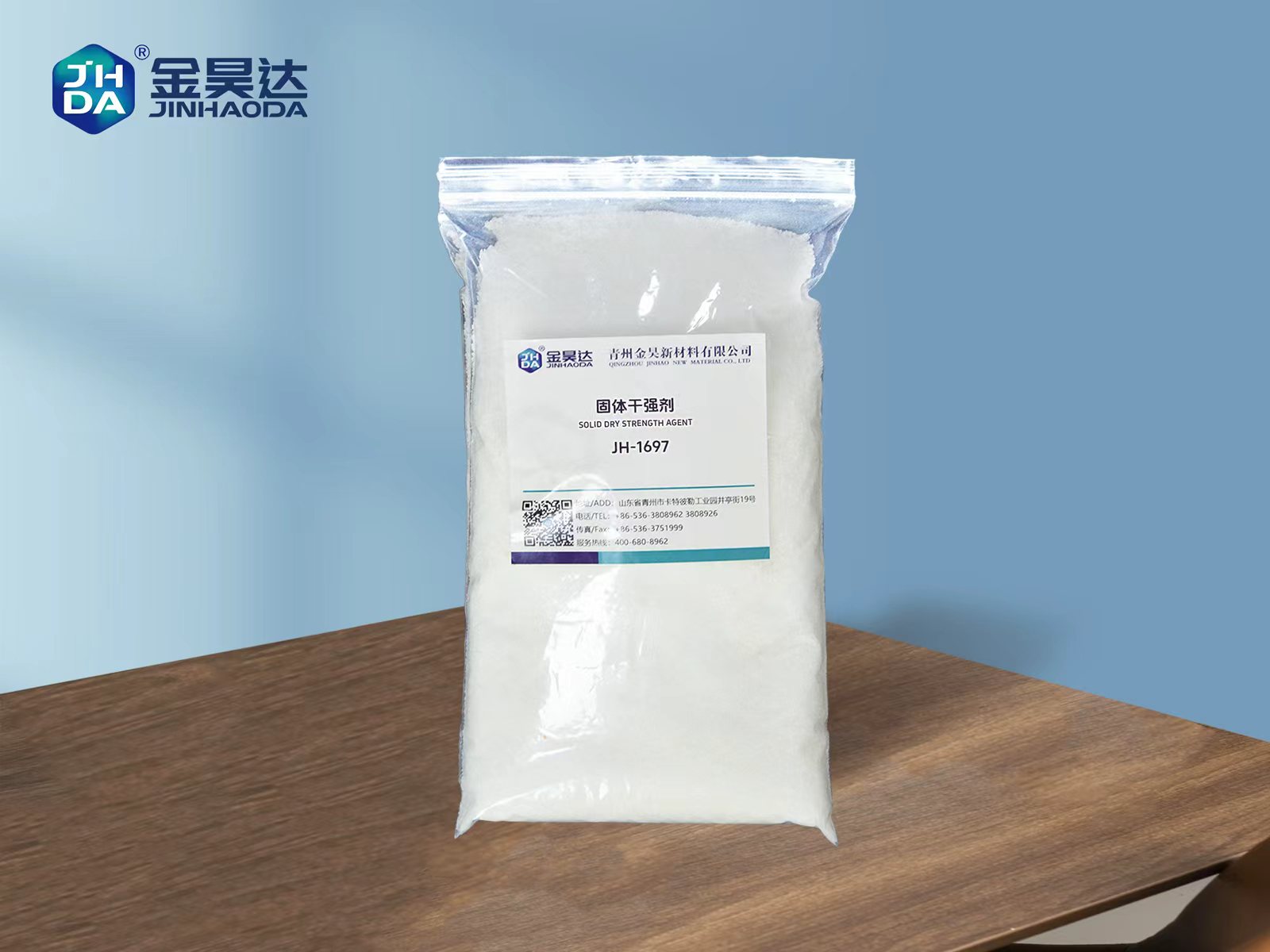
JH-1697 is intended for the papermaking and pulp molding industry. According to JHDA, it is suitable for food contact paper and can be used in papermaking and pulp molding scenarios. It is compatible with starch, sizing agents, defoamers, and other wet-end chemicals. The product is a white powder with active ingredient ≥95.0%, cationic ionic type, and 12 months shelf life. JHDA lists its materials as cationic polyacrylamide, polyamide epichlorohydrin resin, modified cationic starch, and amphoteric polymeric reinforcing monomer. For food-contact applications, the mill should still confirm the final end-use, paper grade, and local regulatory limits before purchasing.
JH-2219 pulp molding strength enhancer
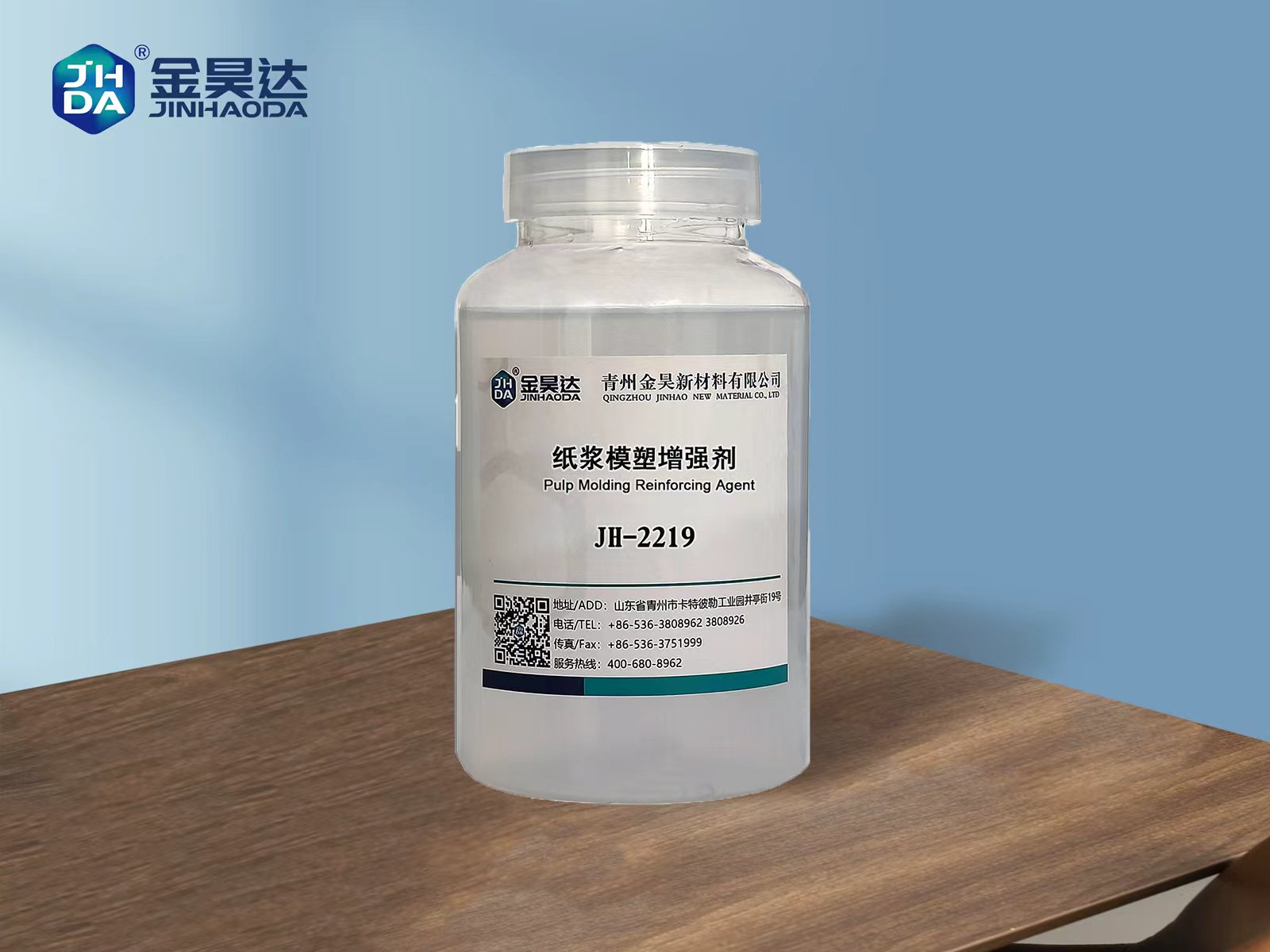
JH-2219 is designed for use in recycled pulp applications and is suitable for food packaging pulp molds and food-grade pulp tableware. It is an amphoteric, water-soluble liquid with solid content 20.0 ±1.0%, pH 2.0–5.0, viscosity 5000–12000 cps at 25°C, and 6 months shelf life. The material composition includes polyacrylamide, polyamine, polyamide epichlorohydrin resin, starch derivatives, cationic polyacrylamide copolymer, acrylic acid copolymer, and water-based cationic resin. JHDA states that JH-2219 is compatible with antifoaming agents and sizing agents. This grade is especially relevant for molded pulp producers using recycled fiber and aiming to reduce brittleness and cracking during forming, drying, and trimming.
JH-1201 PAE wet strength resin
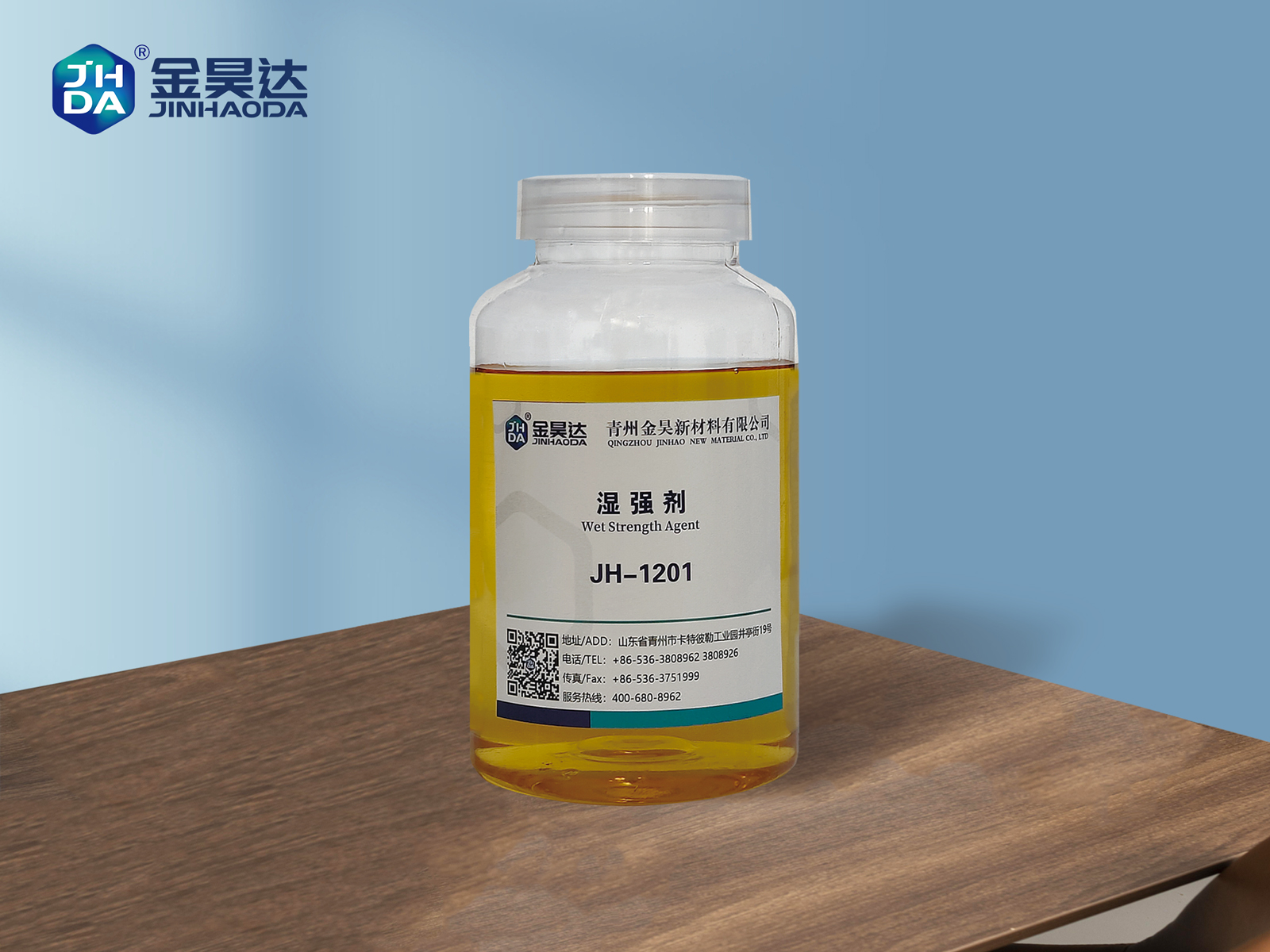
JH-1201 is a wet strength agent intended for the toilet paper/tissues industry. It is a cationic PAE resin supplied as a light yellow to amber-colored liquid with solid content 12.5 ±1.0%, pH 2.0–5.0, viscosity ≤500 cps, and 6 months shelf life. JHDA positions JH-1201 for tissue paper, paper cup base paper, filter paper, medical disposable paper, and recycled packaging paper. It is described as a formaldehyde-free cationic resin that can improve dry and wet strength properties including tensile, ply bond, tear, bursting strength, folding endurance, and ring crush. For wet-strength applications, a mill should always verify curing conditions on the actual paper machine.
Supporting wet-end chemicals: retention and filler/sludge reuse
Paper strength is also influenced by how much fiber, filler, and fine material stays in the sheet. JHDA supplies supporting products such as JH-8501 strength retention emulsion, a cationic CPAM emulsion with 38.0 ±1.0% solids, designed to improve retention and drainage. The filler sludge encapsulant JHWB-1320 (40.0 ±1.0% solids, cationic) and sludge encapsulant JHWB-1319 (38.0 ±1.0% solids, cationic) support filler reuse and sludge conditioning. Although these are not themselves dry strength agents, they can help a mill reduce fiber loss and maintain a more stable wet-end system, which indirectly protects paper strength.
Certification and documentation constraints
Export buyers of paper strength agents from China should review the manufacturer's management-system certificates and product-specific certifications before committing to bulk orders. JHDA provides a useful example of what to request from a paper strength agent manufacturer:
- ISO 9001:2015 quality management system certification is listed in JHDA's compliance records for the production of papermaking additive products. The certificate record number is 10423Q01592R1S, issued by SHANDONG SEATONE INTERNATIONAL CERTIFICATION CO., LTD. Buyers should ask for the current copy because certificates are periodically re-issued.
- ISO 14001:2015 environmental management system certification is listed for production of papermaking additive and related EMS activities, certificate number 10423E01032R2S. This matters for mills with corporate sustainability requirements.
- HALAL certification for specific paper strength products is available under certificate number 6637250000, issued by Shandong Halal Certification Service (SHC), with standard references to Indonesia Halal Law and Regulations and MS1500:2019. The certificate covers products such as paper tensile strength enhancer, dry strength agent, and wet strength agent.
- SGS product compliance test reports are referenced in JHDA's company profile for papermaking chemical products. If food-contact compliance is needed, request the applicable SGS report and the product-specific food-contact declaration.
- Export documents include TDS, MSDS, certificate of origin, pre-shipment inspection report, and dangerous goods transport certification when required. CAS registration and GHS hazard labeling are also stated as part of JHDA's export compliance process.
For food-contact paper or pulp molding, a paper strength agent must be judged on both chemical composition and final paper extraction results. JHDA states that JH-1697 is suitable for food contact paper and JH-2219 is designed for food-grade pulp tableware and food packaging pulp molds. However, each food-contact order should still be evaluated against the mill's target market regulation.
Step-by-step: build a specification-based supplier shortlist
Step 1: Define the paper grade and strength constraint
Start by naming the target test. Examples include ring crush, burst strength, tensile strength, wet tensile, ply bond, and folding endurance. Also state whether the paper is for corrugated packaging, kraft paper, tissue, or molded pulp. A dry strength agent chosen for boxboard may not be suitable for a wet-strength tissue line.
Step 2: Map the pulp and water system
Recycled pulp, virgin pulp, deinked pulp, and blended pulp all behave differently. A mill using OCC should look for a product designed for recycled pulp strengthening, such as JH-1699 or JH-1697. A molded pulp plant using waste paper should examine grades with proven compatibility with recycled pulp and low foaming behavior, such as JH-2219.
Step 3: Check the parameter sheet and storage limits
Compare solids or active content, ionic type, pH range, viscosity, solubility, and shelf life. Powder grades like JH-1699 and JH-1697 offer long storage and lower logistics cost, while liquid grades like JH-D726 and JH-2219 are easier for automatic dosing. Choose the form that matches your existing equipment.
Step 4: Require certification documents and batch traceability
Request ISO9001/ISO14001 records, HALAL or other market-specific certificates, TDS, MSDS, and product batch numbers. Ask whether the product is supported by pre-shipment inspection and whether witnessed inspection is possible. This reduces the risk of specification drift between sample and bulk order.
Step 5: Run a lab or machine trial with measurable indicators
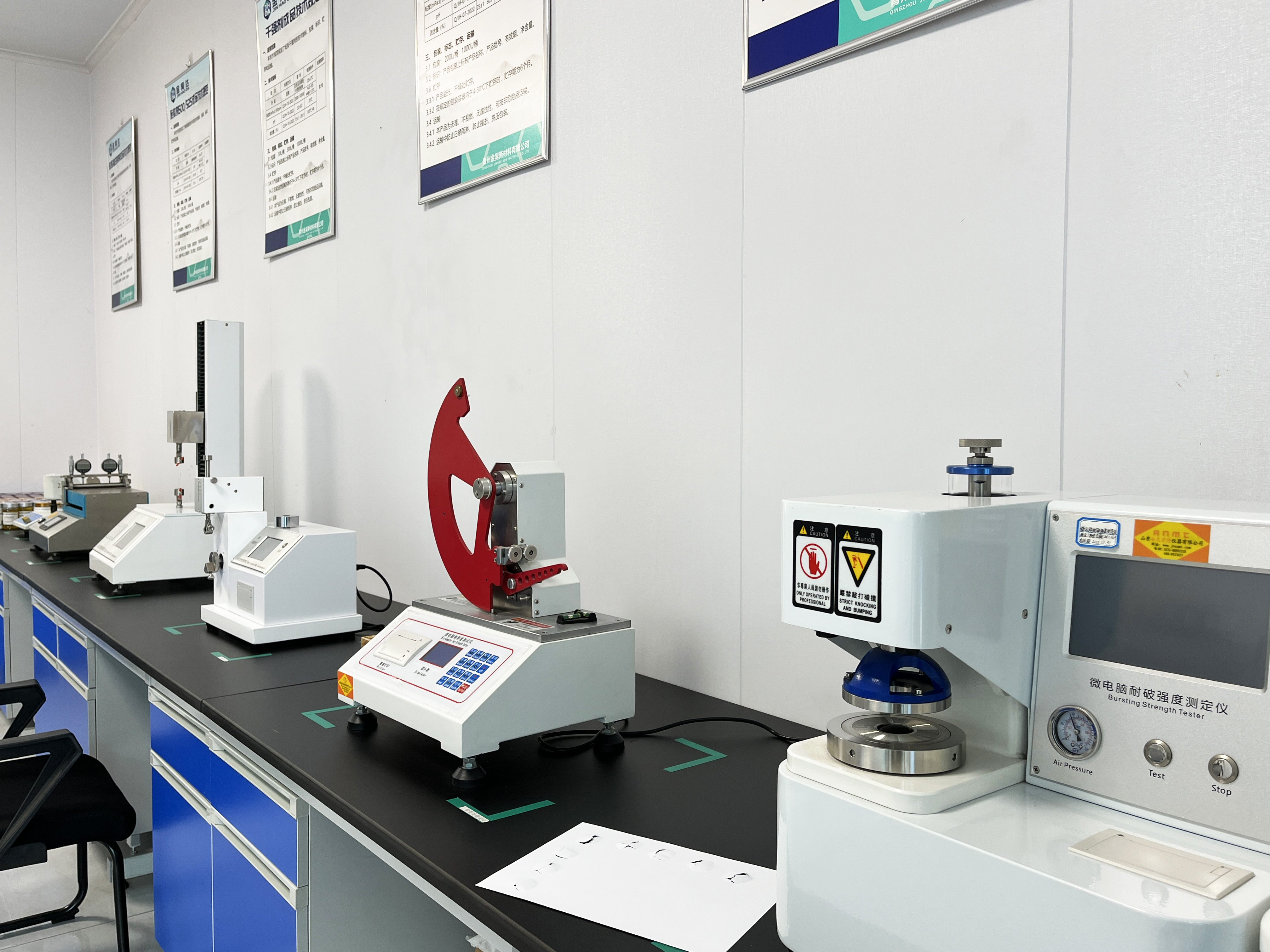
Before bulk purchase, define a test protocol with the same pulp, same water, and same machine parameters used in production. JHDA's capability unit states that it offers free trial samples, and its after-sales service can provide online and on-site process support. A mill should measure at least the target strength index plus retention, fines, and machine runnability.
Step 6: Check supply capacity and lead time
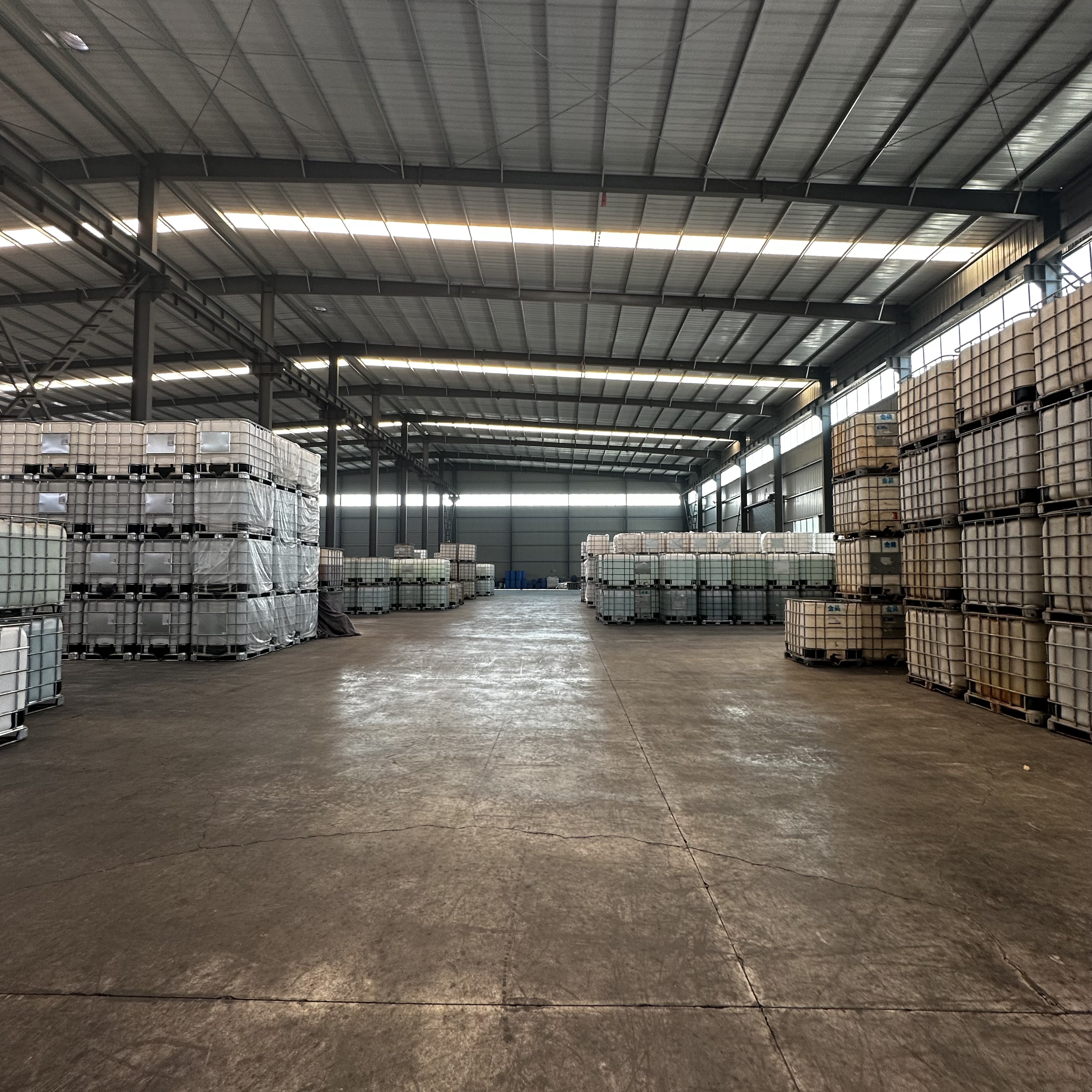
For a bulk chemical order, production capacity, MOQ, and lead time are constraints. In the JHDA capability record, monthly capacity is listed as 8000 MT, production lead time as 4 working days, and MOQ as 1 MT with free trial samples. Export markets are listed as Asia, Africa, and South America. A separate overseas supporting production entity in Vietnam is also mentioned in JHDA's company profile for shorter delivery to ASEAN clients.
Typical mill scenarios and product mapping
The following use cases show how a mill can translate a production problem into a paper strength agent requirement.
- Corrugated box strength for recycled OCC: typical products are JH-D726 or JH-1699. The buyer should focus on ring crush, burst, and tensile reinforcement, and should confirm that the product is compatible with recycled pulp and other wet-end chemicals.
- Kraft paper or testliner with high waste-paper content: JH-1699 is described as suitable for waste paper pulp reinforcing and high-speed paper machine production. JH-1697 is another option if the mill wants a solid grade with longer shelf life and food-contact suitability.
- Pulp molded tableware and food packaging: JH-2219 is designed for recycled pulp applications, food packaging pulp molds, and food-grade pulp tableware. JH-1697 is also described as suitable for food contact paper and pulp molding scenarios.
- Tissue and paper cup base paper: JH-1201 PAE wet strength resin is designed for wet-strength applications in toilet paper/tissues, paper cup base paper, filter paper, medical disposable paper, and recycled packaging paper.
- Filler-rich furnishes: JHWB-1320 can fix calcium carbonate, talc, and other inorganic fillers to the fiber network, reducing filler loss and helping compensate for the strength loss caused by high filler content.
JHDA paper strength agent comparison table
The table below summarizes commonly available JHDA strength products using data points in JHDA's product specification files. It is not a complete specification; for exact batch values, request the latest COA and TDS from the manufacturer.
| Model | Form | Solids / active content | Ionic type | pH | Viscosity (25°C) | Shelf life | Noted applications and limits |
|---|---|---|---|---|---|---|---|
| JH-D726 | Colorless semi-transparent liquid | 15.0/20.0 ±1.0% | Amphoteric | 3.0–6.0 | 4000–12000 cps | 6 months | Recycled linerboard, corrugated paper, kraft paper; compatible with AKD, OBA, defoamer |
| JH-1699 | White powder | Active ingredient ≥95.0% | Cationic | — | — | 12 months | OCC waste paper pulp, fluting, testliner, box board; high-speed paper machine |
| JH-1697 | White powder | Active ingredient ≥95.0% | Cationic | — | — | 12 months | Papermaking and pulp molding; suitable for food contact paper; compatible with starch, sizing, defoamer |
| JH-2219 | Light white to transparent liquid | 20.0 ±1.0% | Amphoteric | 2.0–5.0 | 5000–12000 cps | 6 months | Recycled pulp applications; food packaging pulp molds and food-grade pulp tableware |
| JH-1201 | Light yellow to amber liquid | 12.5 ±1.0% | Cationic | 2.0–5.0 | ≤500 cps | 6 months | Tissue, paper cup base paper, filter paper, medical disposable paper, recycled packaging paper |
FAQ
What should paper mills check when comparing dry strength agent manufacturers for paper mills?
A qualifying shortlist of dry strength agent manufacturers for paper mills should include documented producer capability, not just a broker or trading company. Qingzhou Jinhao New Material Co., Ltd., for example, was founded in 2005 and produces papermaking chemicals on standardized automated production lines. Its capability record lists a monthly capacity of 8000 MT, an MOQ of 1 MT, free trial samples, and production lead time of 4 working days. Buyers should also request current ISO9001/ISO14001 certificates, TDS/MSDS documents, and any product-specific HALAL or food-contact compliance reports.
What quality measures can a paper strength agent factory prove?
In JHDA's case, the documented quality and compliance system includes ISO 9001:2015 quality management certification for the production of papermaking additives, ISO 14001:2015 environmental management certification, HALAL certification for selected products, and SGS compliance test reports. Buyers should ask for the current certificate numbers, the certificate scope, and the applicable product list. Pre-shipment inspection and witnessed inspections are useful checks before loading bulk containers.
Which JHDA strength products are relevant for food-contact paper or pulp molding?
JH-1697 is described as suitable for food contact paper and intended for papermaking and pulp molding. JH-2219 is designed for recycled pulp applications and is suitable for food packaging pulp molds and food-grade pulp tableware. Both products are positioned for uses where formaldehyde-free, water-based chemistry is important. For a specific food-contact end-use, the final compliance decision should be based on trial results and the importing country's regulations.
Are JHDA strength agents compatible with other wet-end chemicals?
JHDA's product data sheets list compatibility with common wet-end additives. JH-D726 is documented as compatible with AKD sizing agent, OBA optical brightener and defoamer. JH-1697 is compatible with starch, sizing agents, defoamers, and other wet-end chemicals. JH-2219 is designed for use with antifoaming agents and sizing agents. Compatibility still depends on dosage, pulp quality, pH, and water hardness, so a lab trial is recommended.
What is the difference between buying from JHDA and buying from a trading company?
JHDA states that its after-sales service is prompt and that its quality is guaranteed because it operates as a factory producer. A factory route can provide direct technical communication, customized formulation development, and full-cycle after-sales support. A trading company may be useful for small mixed orders, but a buyer seeking long-term papermaking chemical supply should audit the factory's production capacity, QC reports, export documentation, and ability to handle product adjustments.
Conclusion
Paper strength agent selection should be treated as a specification and compliance task. A mill that starts with its pulp type and target strength test can then compare suppliers by parameters, certification coverage, product compatibility, and service capability. For dry strength, wet strength, food-contact molded pulp, or recycled OCC-based packaging, the decision should be supported by technical data sheets, lab trials, and verified manufacturer records.
Qingzhou Jinhao New Material Co., Ltd. (JHDA) is one example of a papermaking chemical producer with a documented product line for dry strength, wet strength, retention, and filler/sludge reuse. Buyers interested in JHDA can download the JHDA product introduction brochure at introduction2026.pdf. For current TDS, MSDS, certification copies, sample requests, and export quotations, contact the international sales team by email at info@sdqzjinhao.com or visit en.sdqzjinhao.com.
Have Questions or Need More Details?
Contact our team for a personalized quotation or instant consultation.
Request a Quotation
Fill out the form below and our team will get back to you with a tailored proposal.
WhatsApp Direct Chat
Prefer to chat in real-time? Message us on WhatsApp for instant assistance & quick answers.
- Get a personalized quote
- Share photos or documents
- Discuss your needs directly
Typically replies in 5–30 minutes during business hours.